Smithfield zoning board approves ADU at 7000 Howard Drive with conditions to limit bedroom count and runoff
November 06, 2025 | Smithfield, Providence County, Rhode Island
This article was created by AI summarizing key points discussed. AI makes mistakes, so for full details and context, please refer to the video of the full meeting. Please report any errors so we can fix them. Report an error »
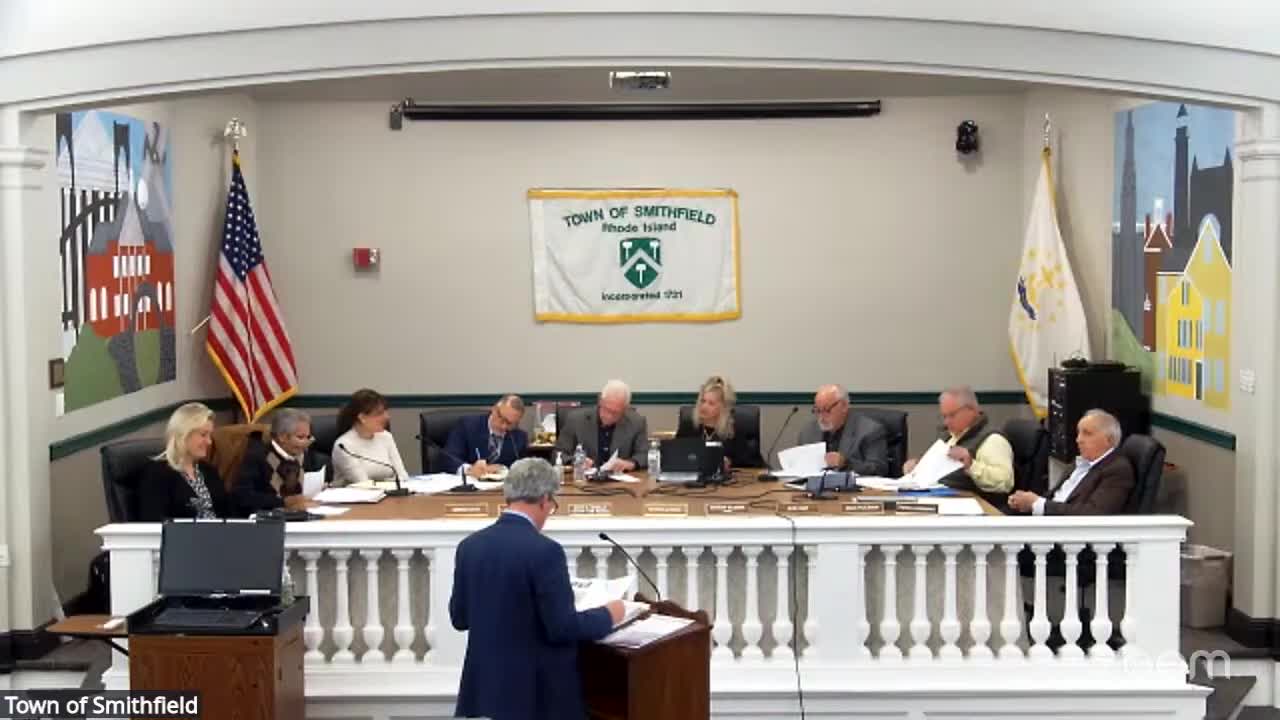
The Smithfield Zoning Board of Review on Nov. 5 approved variances to allow a 592-square-foot accessory dwelling unit (ADU) at 7000 Howard Drive, owner-applicant Heidi Gelsimino told the board. The board voted unanimously to grant the dimensional relief requested for front and rear setbacks and approved the project with two conditions: (1) the interior door between the ADU kitchen and the study must not be a closable door (the opening may be framed but not fitted with a functioning door), and (2) the applicant’s engineer must address any increase in stormwater runoff from the new driveway and ADU, sized for a 1.2-inch design storm on impervious surfaces.
Why it matters: The board’s approval uses new state statutory calculations for setbacks on nonconforming lots; the application was reviewed in light of recent changes to state ADU law. The applicant said the ADU is intended to house a family member recovering from cancer and that long-term occupancy is expected by the owner or the owner’s children rather than an unrelated tenant.
Attorney Tim Kane, representing the applicant, described the lot as ‘‘a unique piece of property’’ and explained the setback math under the state formula for nonconforming lots, saying both the front and rear setbacks compute to approximately 11.1 feet under the statute but that the proposed ADU would sit about 6.8 feet from Nimitz Drive and about 8.8 feet from the rear property line, thus requiring modest variances. Kane also presented the site plan and dimensions and confirmed the proposed ADU size of 592 square feet; the board examined coverage calculations and whether the in-ground pool counted toward lot coverage.
Heidi Gelsimino testified that she has lived at the property for about 21 years and that the ADU is intended for her mother, who recently was diagnosed with cancer and has chemotherapy-related neuropathy. She said long-term occupancy would be by herself or her children if not by her mother.
Board members visited the property and asked for stamped plans and for the engineer to propose a stormwater management solution for any added impervious area. The board also discussed bedroom-count rules under the state enabling statute and required that the ADU not be operable as a two‑bedroom unit by preventing a closable door that could create a second bedroom under the board’s interpretation.
The board’s motion to approve included the two conditions above and passed with ‘‘all in favor’’ recorded. No members of the public spoke for or against the application during the public hearing.
Next steps: The applicant’s engineer must submit revised plans showing the non-closable opening and the stormwater measure; the building-permit process and any required inspections will follow local permitting procedures.
Why it matters: The board’s approval uses new state statutory calculations for setbacks on nonconforming lots; the application was reviewed in light of recent changes to state ADU law. The applicant said the ADU is intended to house a family member recovering from cancer and that long-term occupancy is expected by the owner or the owner’s children rather than an unrelated tenant.
Attorney Tim Kane, representing the applicant, described the lot as ‘‘a unique piece of property’’ and explained the setback math under the state formula for nonconforming lots, saying both the front and rear setbacks compute to approximately 11.1 feet under the statute but that the proposed ADU would sit about 6.8 feet from Nimitz Drive and about 8.8 feet from the rear property line, thus requiring modest variances. Kane also presented the site plan and dimensions and confirmed the proposed ADU size of 592 square feet; the board examined coverage calculations and whether the in-ground pool counted toward lot coverage.
Heidi Gelsimino testified that she has lived at the property for about 21 years and that the ADU is intended for her mother, who recently was diagnosed with cancer and has chemotherapy-related neuropathy. She said long-term occupancy would be by herself or her children if not by her mother.
Board members visited the property and asked for stamped plans and for the engineer to propose a stormwater management solution for any added impervious area. The board also discussed bedroom-count rules under the state enabling statute and required that the ADU not be operable as a two‑bedroom unit by preventing a closable door that could create a second bedroom under the board’s interpretation.
The board’s motion to approve included the two conditions above and passed with ‘‘all in favor’’ recorded. No members of the public spoke for or against the application during the public hearing.
Next steps: The applicant’s engineer must submit revised plans showing the non-closable opening and the stormwater measure; the building-permit process and any required inspections will follow local permitting procedures.
Don't Miss a Word: See the Full Meeting!
Go beyond summaries. Unlock every video, transcript, and key insight with a Founder Membership.
✓
Get instant access to full meeting videos
✓
Search and clip any phrase from complete transcripts
✓
Receive AI-powered summaries & custom alerts
✓
Enjoy lifetime, unrestricted access to government data
30-day money-back guarantee
