Smithfield board hears wide-ranging briefing on state zoning enabling-act changes; impacts range from ADUs to lot unmerging
November 06, 2025 | Smithfield, Providence County, Rhode Island
This article was created by AI summarizing key points discussed. AI makes mistakes, so for full details and context, please refer to the video of the full meeting. Please report any errors so we can fix them. Report an error »
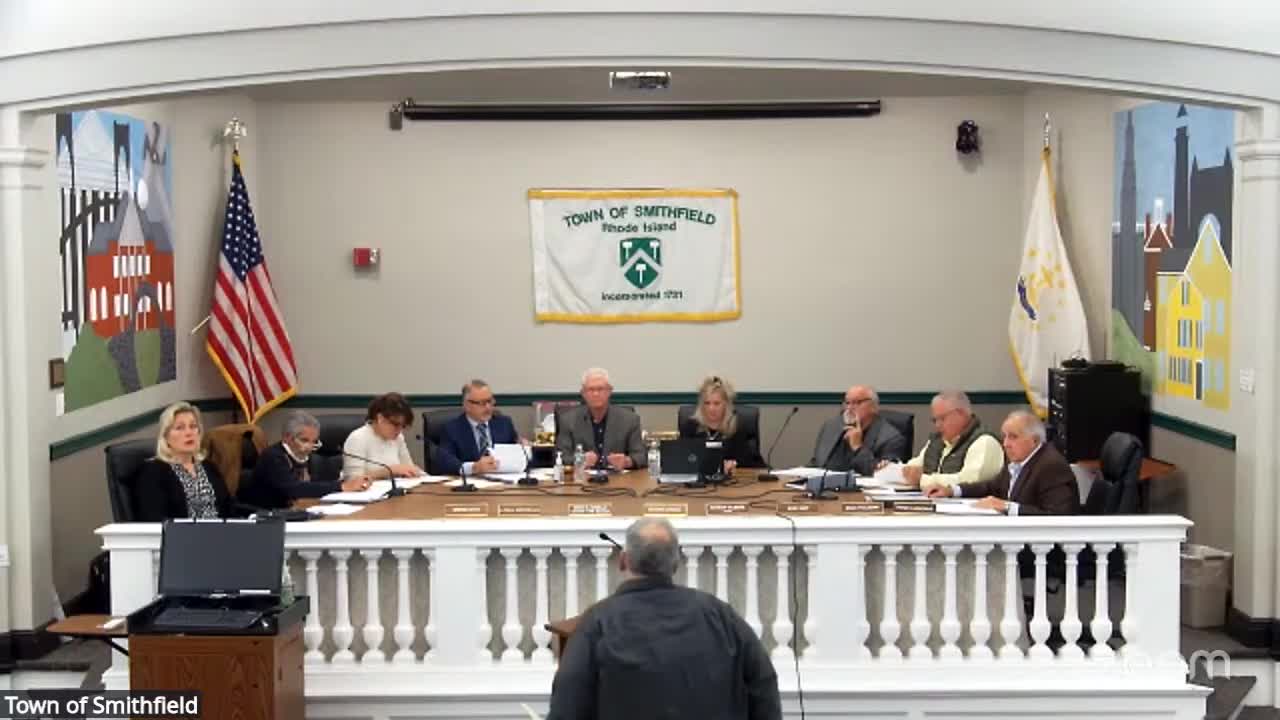
Planning staff led a detailed, hour-plus discussion on Nov. 5 about recent and forthcoming changes to the state zoning enabling act and how the town will implement them. The presentation covered multiple subjects that will affect how the board and planning department process applications going forward: the new uniform ADU standards (statute 45-24-73), adjustments to lot coverage and setback calculations on nonconforming lots (e.g., references to 45-24-38(b) in local practice), a 200-foot-radius lot‑size averaging rule for subdivision/minor‑lot adjustments, and the statutory authority to unmerge lots that had been merged for tax purposes.
Staff told the board that some uses formerly processed as special uses have been recast as not-permitted in the ordinance pending adoption of clear criteria; the planning department and planning board are working on drafting permit criteria that could restore a path for review of those uses. The presentation also flagged likely outcomes: broader allowance for duplexes and other multifamily forms in areas previously limited to single-family, more opportunities for the ‘‘missing middle’’ (duplexes, triplexes, small multiplexes), and potential avenues for co-living or rooming-house conversions under new state rules. Staff noted utilities and septic constraints remain important practical limits: while 45-24-73 constrains municipalities from requiring separate water and sewer lines for ADUs unless a state agency requires it, septic capacity and bedroom-count rules remain determinants of what is feasible on a given property.
Board members asked detailed technical questions about how the rules will be incorporated into the local zoning ordinance and about specific policy choices (for example, whether separate utilities would ever be required, and how bedroom counts for septic design will be enforced). Staff said there is not a fixed timeline for every ordinance amendment and that changes will be folded into periodic updates, but emphasized the town will need to act to incorporate statutory changes so future applicants have clear, locally applicable standards.
Why it matters: The state-level changes the board discussed will affect how many ADUs and other housing types can be authorized by right or through administrative review, how lot subdivisions or unmergers can proceed, and the criteria the town uses to evaluate formerly special uses such as small-scale animal raising. Several board members recommended the town provide summaries or training for the board to keep pace with statutory changes.
Staff told the board that some uses formerly processed as special uses have been recast as not-permitted in the ordinance pending adoption of clear criteria; the planning department and planning board are working on drafting permit criteria that could restore a path for review of those uses. The presentation also flagged likely outcomes: broader allowance for duplexes and other multifamily forms in areas previously limited to single-family, more opportunities for the ‘‘missing middle’’ (duplexes, triplexes, small multiplexes), and potential avenues for co-living or rooming-house conversions under new state rules. Staff noted utilities and septic constraints remain important practical limits: while 45-24-73 constrains municipalities from requiring separate water and sewer lines for ADUs unless a state agency requires it, septic capacity and bedroom-count rules remain determinants of what is feasible on a given property.
Board members asked detailed technical questions about how the rules will be incorporated into the local zoning ordinance and about specific policy choices (for example, whether separate utilities would ever be required, and how bedroom counts for septic design will be enforced). Staff said there is not a fixed timeline for every ordinance amendment and that changes will be folded into periodic updates, but emphasized the town will need to act to incorporate statutory changes so future applicants have clear, locally applicable standards.
Why it matters: The state-level changes the board discussed will affect how many ADUs and other housing types can be authorized by right or through administrative review, how lot subdivisions or unmergers can proceed, and the criteria the town uses to evaluate formerly special uses such as small-scale animal raising. Several board members recommended the town provide summaries or training for the board to keep pace with statutory changes.
Don't Miss a Word: See the Full Meeting!
Go beyond summaries. Unlock every video, transcript, and key insight with a Founder Membership.
✓
Get instant access to full meeting videos
✓
Search and clip any phrase from complete transcripts
✓
Receive AI-powered summaries & custom alerts
✓
Enjoy lifetime, unrestricted access to government data
30-day money-back guarantee
