Lake County approves $80,000 in short‑term hunger relief as federal SNAP benefits are delayed
November 06, 2025 | Lake County, California
This article was created by AI summarizing key points discussed. AI makes mistakes, so for full details and context, please refer to the video of the full meeting. Please report any errors so we can fix them. Report an error »
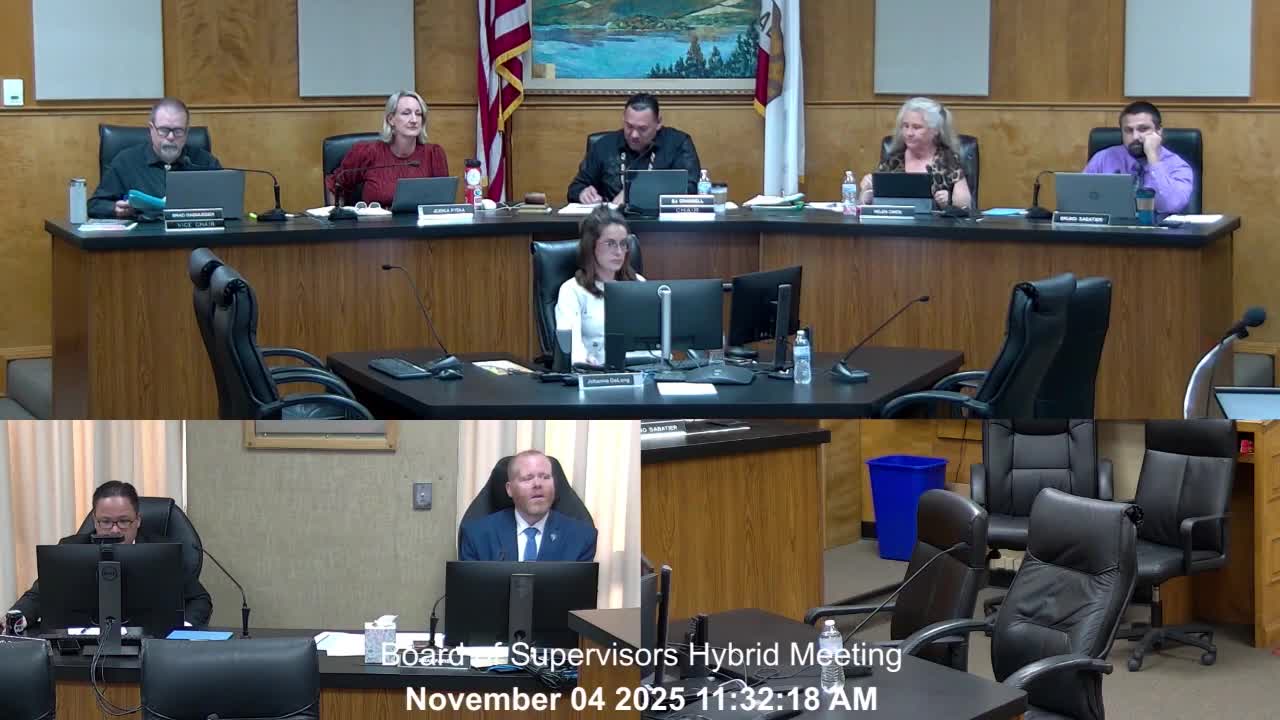
The action came after a standing update from Social Services Director Rachel Dillman Parsons, who described state and federal timelines and said the U.S. Department of Agriculture had indicated the potential for partial benefit issuance. District officials and local food‑service groups warned many families could go without significant food assistance through Thanksgiving. "If the shutdown continues, many of our residents will not receive full November benefits in time," Dillman Parsons said during the board presentation. She described immediate operational options — partnering with Clear Lake Gleaners (the county’s designated food bank), purchasing ready‑to‑distribute meal kits and MREs, and supporting meal programs run by local churches and civic groups — and outlined that county funds used in this way are not likely to be reimbursed by federal or state emergency programs.
Board members emphasized speed and oversight. After discussion of legal and budgetary risks, the board voted to fund $40,000 per week for two weeks, conditioned on staff developing quick MOUs so community groups can be paid to expand meal service and to document expenditures. The board also approved forming an "ad hoc work group for hunger relief" to advise staff on distribution geography, potential partners, and eligibility verification (so support is targeted to CalFresh households). The motion carried 5–0.
County staff said the funds would be used to buy food and to contract directly with community meal providers; staff would avoid paying administrative overhead from the allocation. Dillman Parsons said the department would prioritize distribution through the Clear Lake Gleaners, peer‑support centers and other providers already serving high‑need ZIP codes, and would require receipts and scope‑of‑work documentation from funded organizations. She told supervisors that WIC benefits and other safety‑net programs remain open and are being used in coordination with local pantries.
The board directed staff to return to the supervisors as soon as practical with MOUs and recommended partner lists and to reconvene the ad hoc group if the outage extends beyond the two weeks. The county clarified that any use of realignment funds or a formal disaster declaration would not entitle the county to federal reimbursement for this specific spending; supervisors said that reality factored strongly into limiting the initial commitment to two weeks.
View the Full Meeting & All Its Details
This article offers just a summary. Unlock complete video, transcripts, and insights as a Founder Member.
30-day money-back guarantee
Sponsors
Proudly supported by sponsors who keep California articles free in 2025

