Board directs staff to pursue Article 27 changes, seeks tiered setbacks and asks planning commission review; cautious approach to an odor EIR
November 06, 2025 | Lake County, California
This article was created by AI summarizing key points discussed. AI makes mistakes, so for full details and context, please refer to the video of the full meeting. Please report any errors so we can fix them. Report an error »
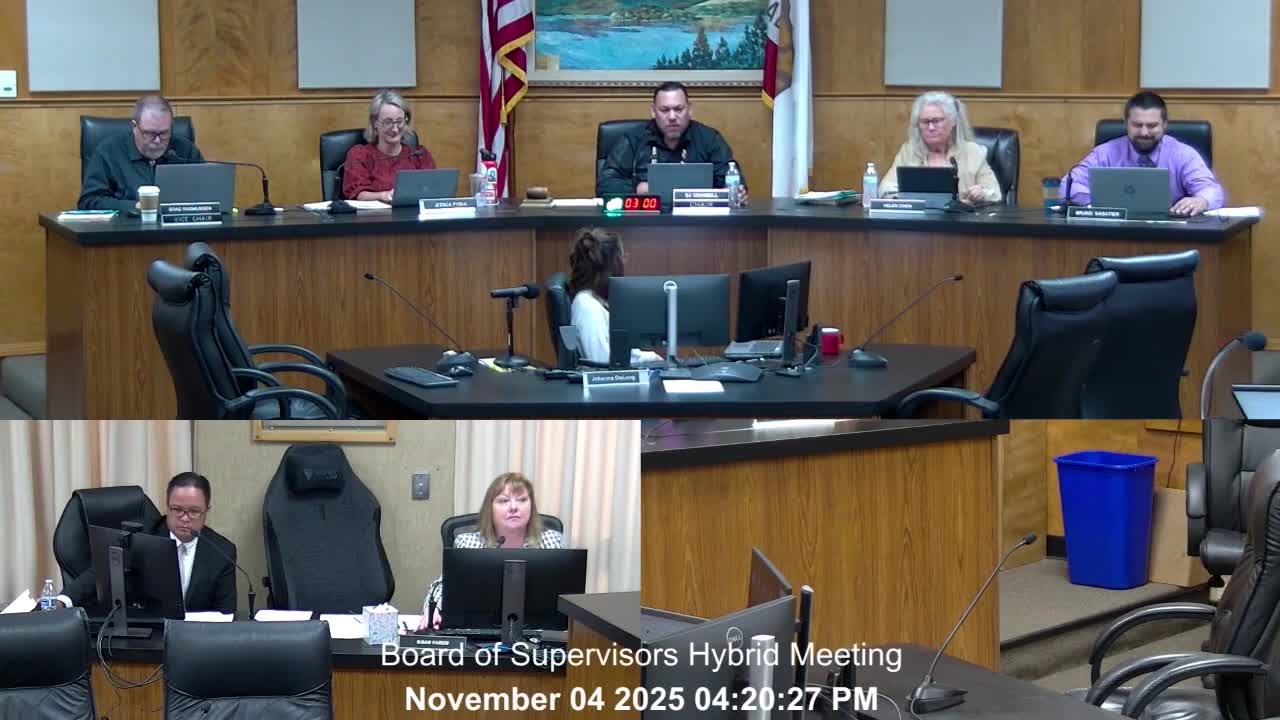
Board members and members of the public debated several high‑impact topics: setbacks, the maximum size of commercial canopy, water use and monitoring, odor mitigation and whether the county should commission a programmatic environmental impact report (EIR) focused on odor and water thresholds. Supervisors expressed a strong preference for a "tiered" setback approach (smaller setbacks for small canopy footprints, larger for larger commercial canopies) rather than a single blanket distance; at least three supervisors asked staff to design setback tiers keyed to canopy footprint and zoning context. Several supervisors also asked staff to clarify and align county water setbacks with State Water Resources Control Board guidance (for example, 150 feet for perennial or Class I water bodies and 50 feet for ephemeral courses), and to treat greenhouse foundations differently when appropriate.
On the question of an odor‑focused programmatic EIR, staff presented a consultant cost estimate (example estimate of roughly $250,000 and a timeline measured in months) and recommended the board consider a focused programmatic EIR to develop defensible odor thresholds and mitigation measures. The board did not authorize procurement of the study that day; instead supervisors asked staff to continue work on ordinance edits that qualify for the "common sense" CEQA exemption and to return with a planning commission referral and with options for a programmatic EIR focused on water and odor if the board wishes to pursue it later. Several members of the public and industry representatives urged the county to avoid tax and regulatory changes that make legal cultivation nonviable, and urged careful calibration so local farms and processors remain competitive across the state.
View the Full Meeting & All Its Details
This article offers just a summary. Unlock complete video, transcripts, and insights as a Founder Member.
30-day money-back guarantee
Sponsors
Proudly supported by sponsors who keep California articles free in 2025

