Board approves additional short-term borrowing of $5 million for cash flow; members ask for clearer public communication
November 06, 2025 | Oshkosh Area School District, School Districts, Wisconsin
This article was created by AI summarizing key points discussed. AI makes mistakes, so for full details and context, please refer to the video of the full meeting. Please report any errors so we can fix them. Report an error »
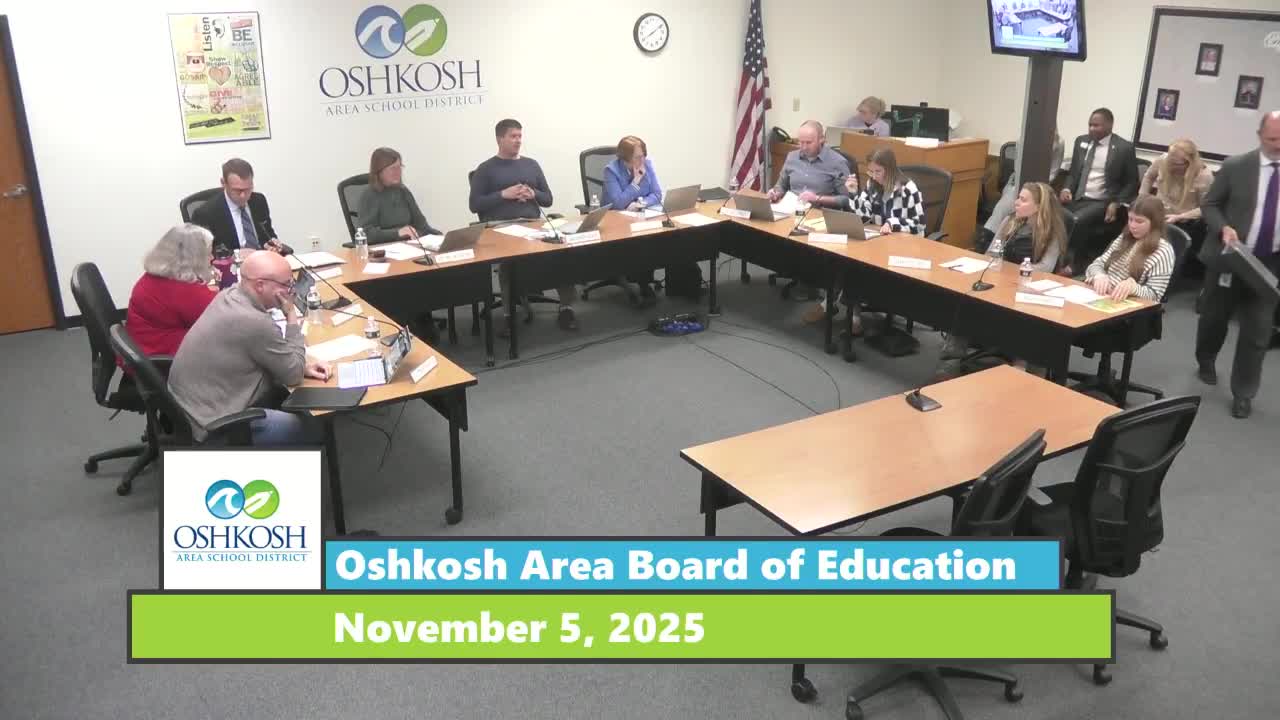
Mister Drew Neenetz, the district business officer, described the request as a cash-flow measure rather than a change to the district’s operating budget. “This is truly a cash flow issue. It has nothing to do with the budget,” he said, explaining that weekly health-care claims were higher than anticipated during the summer and that some state grant reimbursements were delayed, pushing required cash outlays forward.
Board members probed how the borrowing affects the budget and taxpayers. Board member DeWitt said the district needed to do a better job explaining the mechanics to the public: “When people see a headline that the district needs to borrow $5,000,000 more, the everyday taxpayer doesn’t understand,” she said, urging clearer communication about timing and purpose. Several board members acknowledged the additional interest cost but said they would support the borrowing to avoid interruptions to payroll and vendor payments.
The board approved the additional borrowing in a roll-call vote. The district’s present plan is to draw the extra short-term amount only until the next round of state and local revenues arrive and then repay the borrowed funds.
Why it matters: Many school districts manage similar lines of credit because state aid and large grant reimbursements arrive at uneven intervals; short-term borrowing is used to smooth those timing differences. Board members said the larger goal remains rebuilding the district’s fund balance and addressing any structural budget gaps to reduce future reliance on short-term borrowing.
Supporting quote: Neenetz said, “I should have come out for just a $15,000,000 line of credit from the get go…lesson learned,” describing the unforeseen summer health claims that strained cash on hand.
Ending: The board approved the temporary borrowing and asked staff to report how interest costs will be managed and how the district will improve public communication about cash-flow needs.
View the Full Meeting & All Its Details
This article offers just a summary. Unlock complete video, transcripts, and insights as a Founder Member.
30-day money-back guarantee
Sponsors
Proudly supported by sponsors who keep Wisconsin articles free in 2025

