House adopts resolution backing DOJ request for unredacted voter file after heated debate
November 06, 2025 | 2025 House Legislature MI, Michigan
This article was created by AI summarizing key points discussed. AI makes mistakes, so for full details and context, please refer to the video of the full meeting. Please report any errors so we can fix them. Report an error »
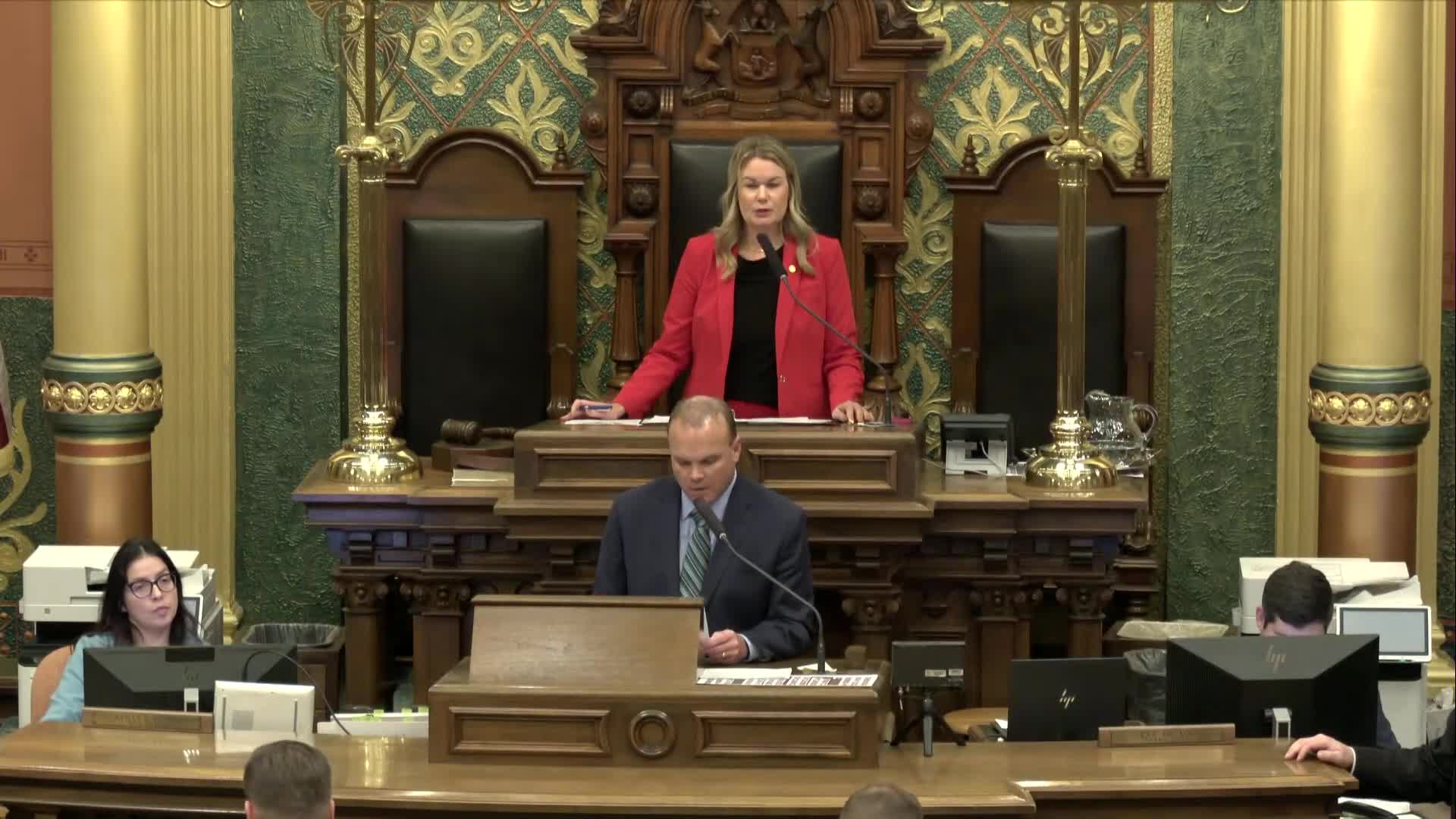
Representative Luke Fox, sponsor of the resolution, told the House the measure is a declaration ‘‘that the Michigan House of Representatives stands with the Department of Justice’’ and said the request is intended to verify the accuracy of Michigan’s voter rolls ahead of future elections. ‘‘If, and I say if, there’s nothing wrong with a qualified voter file, there should be nothing to hide,’’ Fox said on the floor.
Representative Cerner Glue opposed the resolution, arguing the DOJ request ‘‘directly violates state and federal privacy laws’’ and would expose Social Security numbers, driver’s license numbers and other private information that could open Michigan citizens to identity theft. ‘‘The federal government has absolutely no authority over voter registration,’’ Cerner Glue said. ‘‘There is absolutely no reason the department needs our Social Security numbers, our driver’s license numbers, and other private voter information.’’
Floor action included the adoption of an amendment identified as Amendment 1 before the roll call. After debate the House adopted the resolution by voice vote; the clerk then opened the board for electronic cosponsorship signatures. The resolution’s text asks the state’s chief election official to execute statutory duties by releasing an unredacted copy of the qualified voter file to the extent permitted by law.
The resolution does not itself compel the Secretary of State to release records; it expresses the sense of the House and urges compliance with the DOJ request. The debate on the chamber floor highlighted a split between members who framed the issue as one of transparency and election integrity and those who framed it as a matter of privacy and statutory limits on data sharing.
Provenance: Transcript statements supporting and opposing the resolution appear beginning at 01:32:46 and concluding at 01:39:32, per the clerk’s reading and members’ floor remarks.
Don't Miss a Word: See the Full Meeting!
Go beyond summaries. Unlock every video, transcript, and key insight with a Founder Membership.
30-day money-back guarantee
Sponsors
Proudly supported by sponsors who keep Michigan articles free in 2025

