Fort Myers Beach and Lee County School District explore deal: town offers lease of historic campus while requesting ~$12M toward a new resilient school
November 06, 2025 | Fort Myers Beach, Lee County, Florida
This article was created by AI summarizing key points discussed. AI makes mistakes, so for full details and context, please refer to the video of the full meeting. Please report any errors so we can fix them. Report an error »
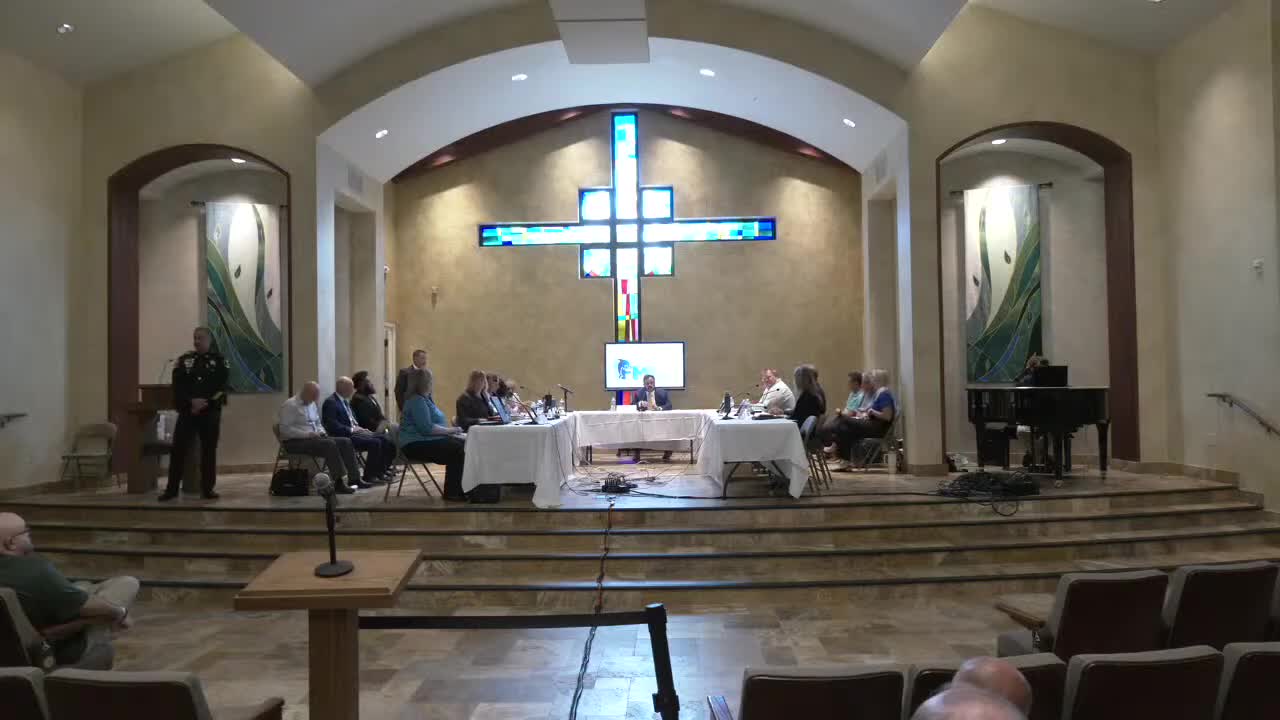
The town urged the district to honor an interlocal agreement (ILA) that the town says requires the district to renovate and reopen the Fort Myers Beach Elementary campus on its original site, and asked the district to withdraw any demolition plans for the historic school building. "Reopening Fort Myers Beach Elementary School is more than a building. It's a symbol of resilience," Fort Myers Beach Town Manager Will McCann said in his opening remarks.
The district, represented by Superintendent Denise Carlin and board members, said it has invested in stabilization and repairs but that later storms produced additional, material damage and that enrollment on the island has declined. "Before Hurricane Ian, enrollment averaged between 50 and 59 students... this year enrollment has dropped to 41 students," Dr. Denise Carlin said, adding that only about 20 enrolled students appear to live on the island. The district said engineering assessments show degraded structural elements and estimated additional repairs of roughly $7 million to $10 million on top of prior expenditures. District staff also described FEMA and state funding processes and legal constraints that limit the school board's authority over facilities.
Both sides described prior funding actions. The town and multiple speakers cited an obligation letter from FEMA for approximately $11,344,424.03 toward Fort Myers Beach Elementary repairs; the district confirmed it has received an obligation letter for roughly $11 million related to Ian and said FEMA obligations are creditable against a district LAP loan and that federal and state historic‑preservation procedures (including Section 106) must be followed before irreversible actions. District staff and a FEMA consultant clarified that terms like "mitigation" can mean different things (emergency protective measures versus long‑term hazard mitigation) and that code and standards shape what FEMA will fund.
Public comment was strongly in favor of preserving the school and the historic campus. Parents, former staff and local business leaders described the school as an economic and social anchor that helps recruit employees and keep families on the island. "We have a school because the community built it; please bring our school back," parent speakers and Chamber leaders said. A second‑grader who spoke during public comment said simply, "I love the beach school. I want to go back."
After public comment and a short caucus, the town put a specific proposal on the table as a path to settlement: the town would accept a long‑term, nominal lease of the historic campus (the town described the lease as a nominal $1/year, long‑term / "hundred‑year" style arrangement subject to legal review), take responsibility for rehabbing and reusing the historic structure for municipal or community purposes, and the town requested that the district contribute roughly $11–$12 million toward construction of a new, elevated, storm‑resilient school campus elsewhere on the property or at an adjacent site. The town said it could initially operate an island school as a municipal charter or municipal program while the new facility is built and that local builders and developers have expressed interest in partnering on a resilient design.
District leaders did not reject the proposal outright. They reiterated statutory and constitutional limits on the school board's authority to transfer or permanently encumber school property and noted required reviews by the Florida Department of Education and federal agencies for certain funding and disposition steps. Superintendent Carlin said she would not present a formal recommendation to the board until the district had complete technical information and legal analysis, but she described the district as open to discussion and to exploring solutions that preserve educational access for Fort Myers Beach students.
No votes or formal actions were taken at the hearing. Mediator Derek Rooney directed staff and counsel for both parties to continue negotiations and to report progress to their respective governing bodies: the town planned to place an update before its council in mid‑November and the district planned to report to its board in December. The parties agreed to exchange technical and legal proposals and to try to move the negotiations forward before the holidays.
What remains undecided are technical scope and funding details (precise cost estimates and funding sources for a new school), the legal form of any property transfer or lease, and whether the district will formally endorse a district contribution. The hearing produced a procedural pathway for further negotiation rather than a final resolution.
The mediated session produced three immediate, concrete outcomes: extensive public testimony on the community value of the school and concerns about transparency; technical clarifications from the district and FEMA consultant about the scope of damage and federal funding rules; and a town proposal that would keep the historic building in community hands while seeking district funds to build a new, resilient school. Next steps are staff/attorney negotiations and reports to the parties' governing boards in the coming weeks.
View the Full Meeting & All Its Details
This article offers just a summary. Unlock complete video, transcripts, and insights as a Founder Member.
30-day money-back guarantee
Sponsors
Proudly supported by sponsors who keep Florida articles free in 2025

