Corona survey shows rising community events, sense of community; city stresses sampling differences
November 06, 2025 | Corona City, Riverside County, California
This article was created by AI summarizing key points discussed. AI makes mistakes, so for full details and context, please refer to the video of the full meeting. Please report any errors so we can fix them. Report an error »
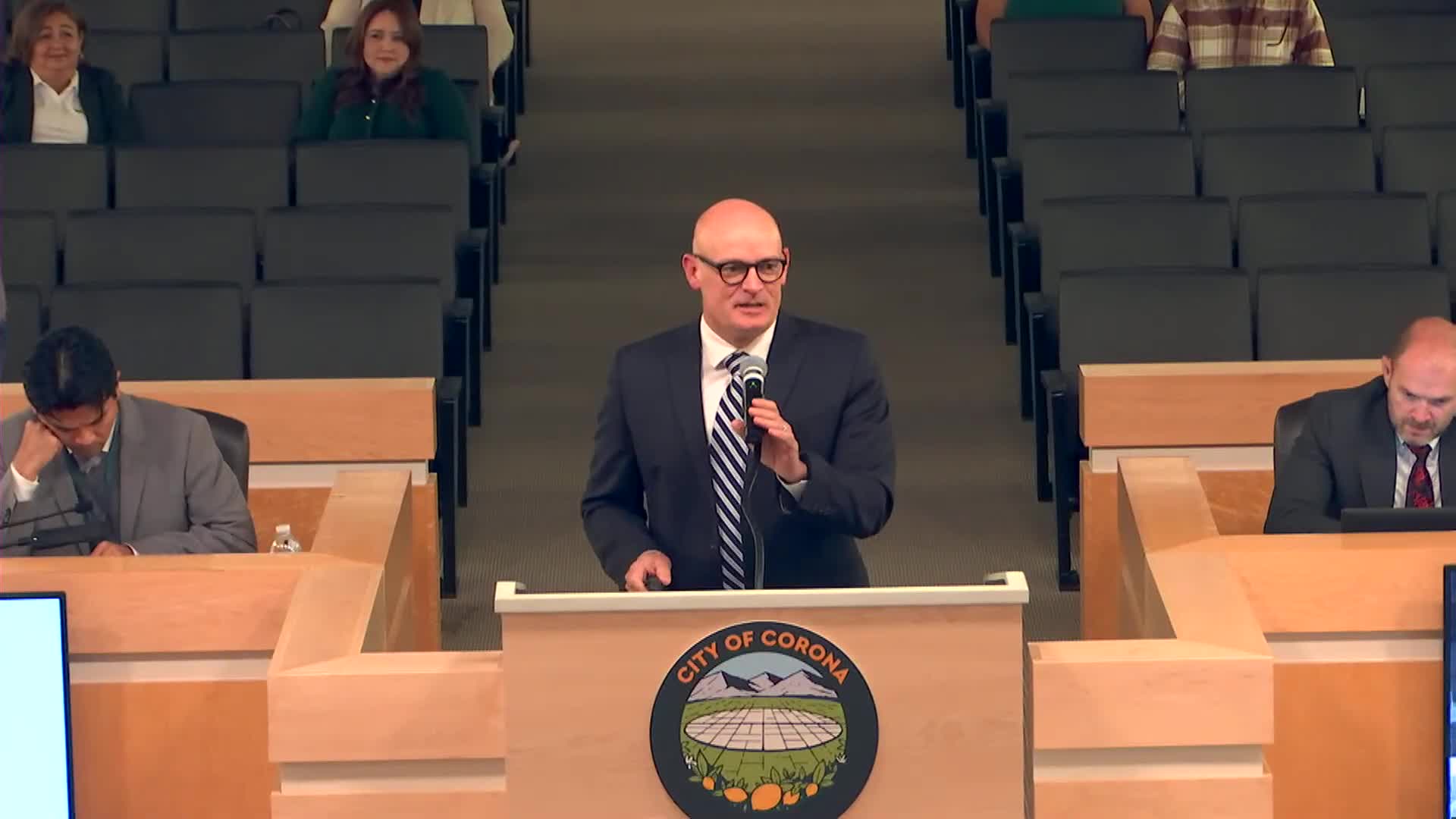
Assistant City Manager Justin Tucker, who led the presentation, said the city conducted a random, scientifically sampled survey of 8,000 households (652 completed) plus an open, voluntary survey that gathered 900 responses. "To me, this is one of the most enjoyable parts of my job," Tucker told the council, and he emphasized that the scientific sample and the open sample show different patterns.
Tucker said the scientific sample showed several changes that were outside the margin of error: a 4% increase in positive views of the city’s efforts to reduce homelessness, a 5% increase in sense of community and a 9% rise in residents’ reports of the variety and frequency of community events. At the same time the city’s response rate dropped compared with prior years; staff reported the sampled survey produced a roughly 3.7% margin of error. Tucker cautioned that the open, voluntary survey tends to skew more negative than the random sample, and that difference matches research about opt‑in surveys posted on social media.
Public commenters told the council they remained skeptical of survey results and methodology. "Everybody knows that the city doesn't ask a question unless they know the answer," said Joe Morgan during public comment. Another resident asked how park-condition findings square with repeated complaints at public meetings about specific parks. "I don't understand where how these statistics ... tend to create any kind of vision for you all to make a decision," the resident said.
Tucker said the city will attach the full technical report to the agenda and that the staff used a scientific method the report documents. He described efforts to balance mailed notices, email and a small incentive ($50 gift card) to raise response rates and said the 652 scientifically sampled responses still exceed many benchmark sample sizes used in national community surveys.
Council members thanked staff and asked follow-up questions about sampling, outreach and representativeness; Tucker and staff said they would provide additional detail on sampling distribution across districts and demographic subgroups to the council and post the full report with methodology to the city website.
Ending note: Council discussion focused on how to use both the representative (random) and open (voluntary) responses when setting priorities, and staff promised to publish the full methodology and response breakdown for public review.
Don't Miss a Word: See the Full Meeting!
Go beyond summaries. Unlock every video, transcript, and key insight with a Founder Membership.
30-day money-back guarantee
Sponsors
Proudly supported by sponsors who keep California articles free in 2025

