Council directs phased optimization of Historic Civic Center; theater and restrooms prioritized amid tenant concerns
November 06, 2025 | Corona City, Riverside County, California
This article was created by AI summarizing key points discussed. AI makes mistakes, so for full details and context, please refer to the video of the full meeting. Please report any errors so we can fix them. Report an error »
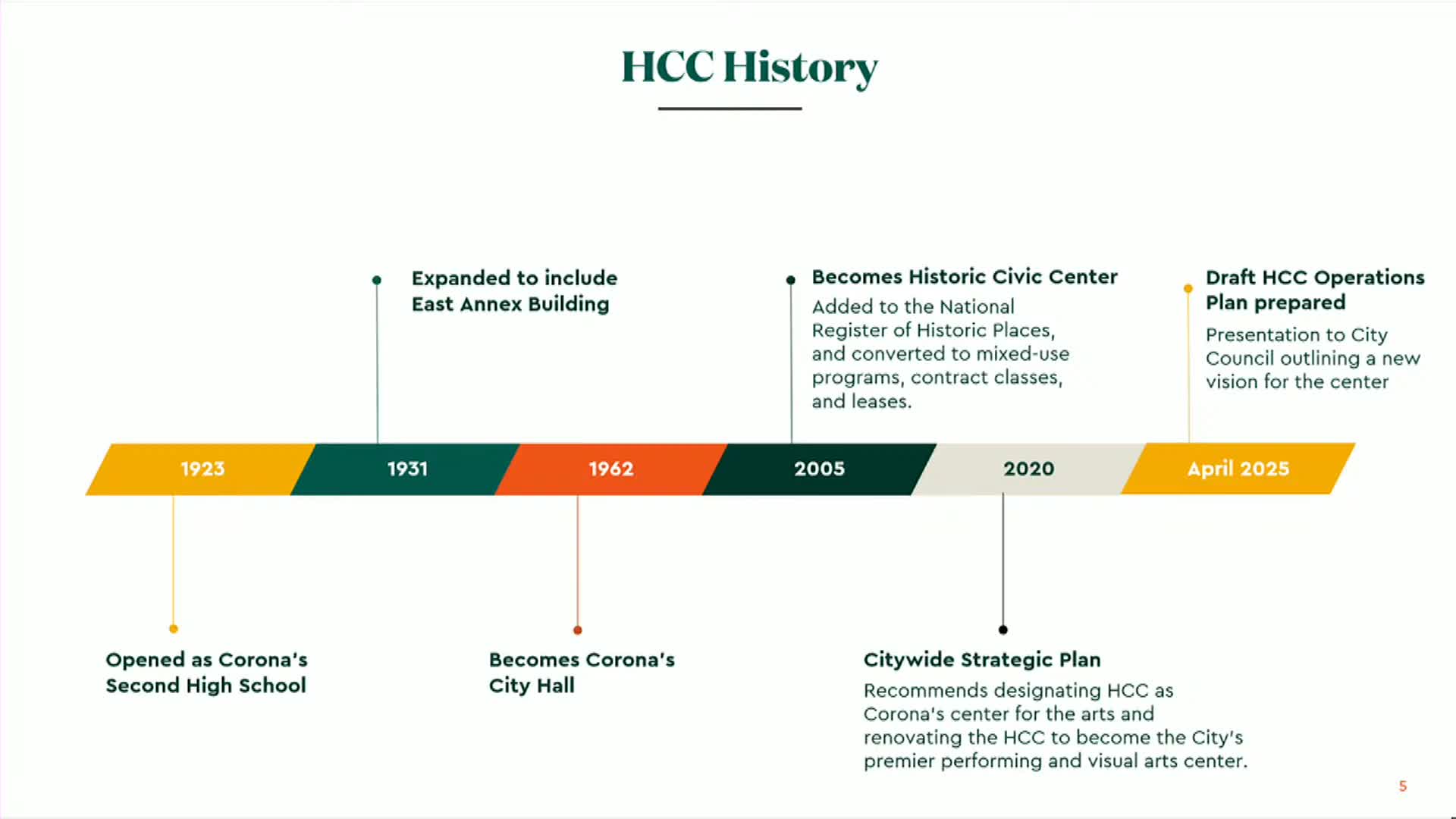
"We would like to make the HCC a thriving center for the arts in Corona," Finch told the council during the staff presentation, laying out proposed suite improvements, theater technology upgrades, and a staffing model to support expanded programming. Staff said improvements could include new floors, lighting and acoustic work; an updated theater technical package; classroom consolidation for arts instruction; and a secured First‑Floor gallery space for the Corona Art Association.
Arts tenants and preservation advocates spoke at length. Christian Arts Theater, the Corona Symphony Conservatory, YMCA Music School, OBC Theatre and the Corona Art Association described their current schedules and program needs; several asked for training-space and storage. OBC Theatre urged a different sequencing: "These upgrades should come first before any new programs are launched," OBC’s Amanda Calacanis said, arguing the theater’s technical and restroom deficits limit the types of rentals and events the city can reasonably host. Historic Preservation Society representatives raised concerns about preservation and cited the need for a documented environmental/industrial‑hygiene review: one speaker said earlier asbestos surveys showed constrained access in parts of the building and asked staff to confirm abatement or encapsulation work before expanding youth programming.
Council direction and next steps. After discussion, a majority of councilmembers signaled support for a phased approach (Option 2) that would: (1) relocate non‑arts tenants as reasonable; (2) renovate vacant suites and begin targeted programming; (3) prioritize planning and design work for the theater and restroom upgrades first; and (4) phase additional suite upgrades as program demand grows. Several councilmembers asked staff to return quickly with a design plan and cost estimate for theater/restroom work so the city can begin targeted improvements and reduce lost-event revenue caused by current facility limits.
Staff will work with arts partners on relocation options, consider alternate city facilities (e.g., library heritage room or other municipal sites) for some displaced nonprofits, and pursue a planning/design timeline that allows early theater improvements. The council did not adopt a formal ordinance; the record shows direction to pursue phased optimization with specific near-term prioritization of theater infrastructure and health‑safety checks (including cultural‑resource and environmental review as needed).
Ending note: The council emphasized transparency and tenant collaboration; staff was asked to return with design documents and a prioritized cost schedule for theater and restroom improvements before broader implementation of new programs.
Don't Miss a Word: See the Full Meeting!
Go beyond summaries. Unlock every video, transcript, and key insight with a Founder Membership.
30-day money-back guarantee
Sponsors
Proudly supported by sponsors who keep California articles free in 2025

