Morgan County hearing explores commercial ambulance fee options to shore up EMS funding
November 06, 2025 | Morgan County, West Virginia
This article was created by AI summarizing key points discussed. AI makes mistakes, so for full details and context, please refer to the video of the full meeting. Please report any errors so we can fix them. Report an error »
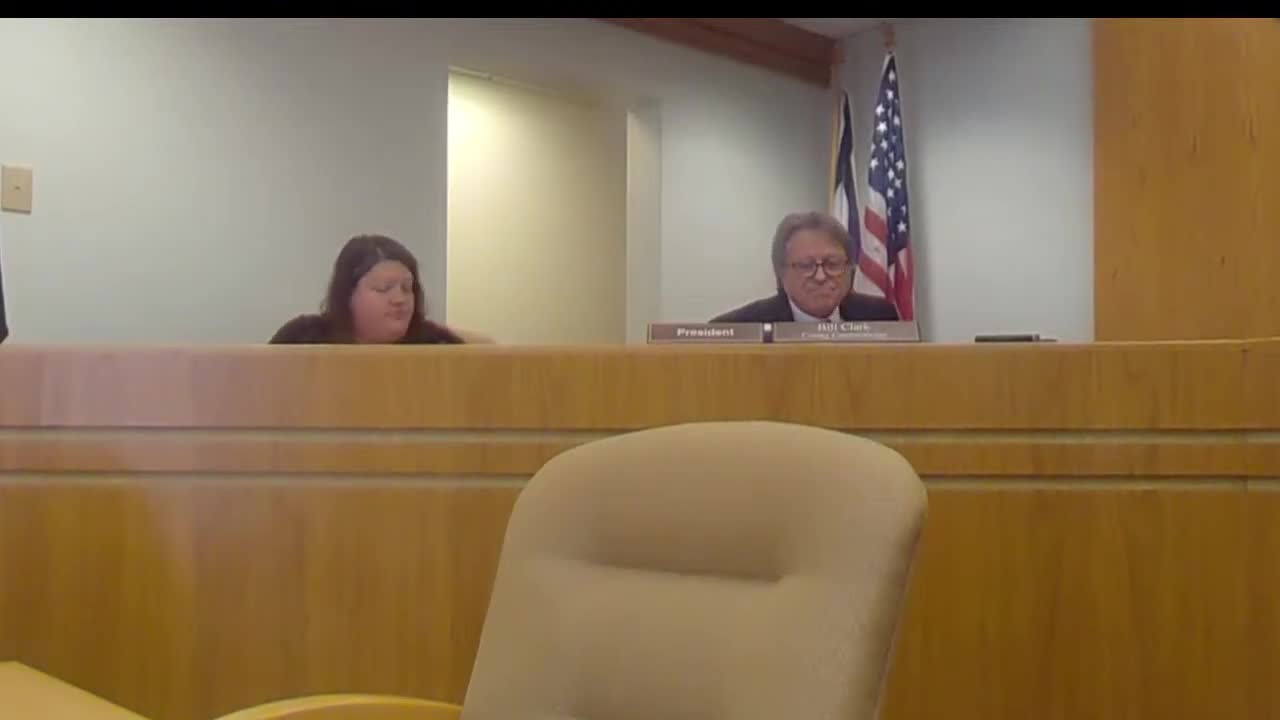
Morgan County held a public hearing to gather input on proposals to increase and restructure the county’s ambulance/EMS fee as officials weigh options to cover rising operating costs, recruitment and retention challenges and an ongoing budget shortfall.
The discussion focused on several alternatives: a tiered square‑footage approach using data already collected for fire fees, a model based on employer employee counts (as described by Berkeley County), a flat commercial fee, and longer‑term funding via a referendum or tax change. Staff and residents also discussed issuing an RFP for EMS service versus continuing the current one‑year contract and the administrative steps needed to build billing systems and amend the county ordinance.
Why it matters: speakers said national‑level cost increases for vehicles, fuel and medical supplies have driven up the cost of providing advanced life support. Commissioners and members of the public said the county needs a sustainable revenue source so EMS providers can maintain 24/7 coverage, retain EMTs and invest in capital needs.
Key proposals and data discussed
- Square‑footage tier (staff proposal): staff outlined a tiered schedule that would start with a $150 base for 0–2,000 square feet and increase for larger properties, with a cap for properties above 100,000 square feet. Staff noted the county already has square‑footage records from the fire department, which would reduce new data collection work.
- Employee‑count model (Berkeley County example): commenters described Berkeley County’s approach of charging a maximum fee and allowing businesses to attest to employee counts before bills are finalized. That approach was discussed as a possible alternative but raised verification and administrative‑cost concerns.
- Flat commercial fee scenarios: participants ran illustrative scenarios using the county’s inventory of roughly 269 commercial properties. One speaker noted that a hypothetical flat $500 commercial fee applied to the county’s commercial property count would generate about $134,500; other scenarios mentioned targeted revenue amounts, including a $200,000 shortfall tied to the current contract year, a $369,000 estimate and a higher projection described by one commenter as $1,540,350 (referred to during the hearing as a high‑end projection).
- Residential fee: staff and residents confirmed the residential ambulance fee is currently a flat charge collected via property tax bills; speakers cited the county’s current residential fee as $1.50 and noted neighboring Hampshire’s residential fee recently rose to $1.75 (as presented by commenters).
Administrative, legal and equity considerations
- Verification and privacy: several speakers raised concerns about the administrative burden and privacy implications of building an employee‑count system (for example, how to verify foot traffic or employee totals without collecting invasive data).
- Business competitiveness and equity: business owners and commissioners said they did not want the county to appear "anti‑business." Participants urged options that avoid disproportionately affecting small storefronts or businesses with large square footage but few on‑site employees (for example, self‑storage facilities).
- Exemptions and tax‑exempt entities: attendees asked whether tax‑exempt institutions such as churches and schools would be excluded or charged under a commercial schedule. The hearing record contains back‑and‑forth on this question; staff noted the difference between a fee and a tax and said the authority to apply particular exemptions would need to be reviewed as part of ordinance changes.
Procurement and timeline issues
- RFP vs. contract: commissioners discussed issuing an RFP for EMS service as an option to control costs and service levels, but several speakers warned that an RFP requires active county oversight and ongoing contract management. Some participants argued that local control of EMS could increase administrative demands.
- Ordinance, referendum and implementation timing: staff and commissioners said a change that converted the fee into a county tax would require a referendum. They also discussed practical deadlines for building the billing system (even with the same vendor) so bills could begin going out; staff asked for time to consult legal counsel on ordinance amendment requirements.
Next steps and outreach
Commissioners and staff concluded the hearing by asking for more outreach to business owners, follow‑up data from Berkeley County to verify benchmarking methods, and at least one evening public session to allow wider participation. Scheduling constraints were discussed; staff proposed an additional public input meeting followed by a formal public hearing and a timeline to have vendor code and billing systems ready if a change is approved.
Speakers emphasized the hearing was a fact‑finding and outreach step rather than final action. No ordinance change or fee increase was adopted at the hearing.
The discussion focused on several alternatives: a tiered square‑footage approach using data already collected for fire fees, a model based on employer employee counts (as described by Berkeley County), a flat commercial fee, and longer‑term funding via a referendum or tax change. Staff and residents also discussed issuing an RFP for EMS service versus continuing the current one‑year contract and the administrative steps needed to build billing systems and amend the county ordinance.
Why it matters: speakers said national‑level cost increases for vehicles, fuel and medical supplies have driven up the cost of providing advanced life support. Commissioners and members of the public said the county needs a sustainable revenue source so EMS providers can maintain 24/7 coverage, retain EMTs and invest in capital needs.
Key proposals and data discussed
- Square‑footage tier (staff proposal): staff outlined a tiered schedule that would start with a $150 base for 0–2,000 square feet and increase for larger properties, with a cap for properties above 100,000 square feet. Staff noted the county already has square‑footage records from the fire department, which would reduce new data collection work.
- Employee‑count model (Berkeley County example): commenters described Berkeley County’s approach of charging a maximum fee and allowing businesses to attest to employee counts before bills are finalized. That approach was discussed as a possible alternative but raised verification and administrative‑cost concerns.
- Flat commercial fee scenarios: participants ran illustrative scenarios using the county’s inventory of roughly 269 commercial properties. One speaker noted that a hypothetical flat $500 commercial fee applied to the county’s commercial property count would generate about $134,500; other scenarios mentioned targeted revenue amounts, including a $200,000 shortfall tied to the current contract year, a $369,000 estimate and a higher projection described by one commenter as $1,540,350 (referred to during the hearing as a high‑end projection).
- Residential fee: staff and residents confirmed the residential ambulance fee is currently a flat charge collected via property tax bills; speakers cited the county’s current residential fee as $1.50 and noted neighboring Hampshire’s residential fee recently rose to $1.75 (as presented by commenters).
Administrative, legal and equity considerations
- Verification and privacy: several speakers raised concerns about the administrative burden and privacy implications of building an employee‑count system (for example, how to verify foot traffic or employee totals without collecting invasive data).
- Business competitiveness and equity: business owners and commissioners said they did not want the county to appear "anti‑business." Participants urged options that avoid disproportionately affecting small storefronts or businesses with large square footage but few on‑site employees (for example, self‑storage facilities).
- Exemptions and tax‑exempt entities: attendees asked whether tax‑exempt institutions such as churches and schools would be excluded or charged under a commercial schedule. The hearing record contains back‑and‑forth on this question; staff noted the difference between a fee and a tax and said the authority to apply particular exemptions would need to be reviewed as part of ordinance changes.
Procurement and timeline issues
- RFP vs. contract: commissioners discussed issuing an RFP for EMS service as an option to control costs and service levels, but several speakers warned that an RFP requires active county oversight and ongoing contract management. Some participants argued that local control of EMS could increase administrative demands.
- Ordinance, referendum and implementation timing: staff and commissioners said a change that converted the fee into a county tax would require a referendum. They also discussed practical deadlines for building the billing system (even with the same vendor) so bills could begin going out; staff asked for time to consult legal counsel on ordinance amendment requirements.
Next steps and outreach
Commissioners and staff concluded the hearing by asking for more outreach to business owners, follow‑up data from Berkeley County to verify benchmarking methods, and at least one evening public session to allow wider participation. Scheduling constraints were discussed; staff proposed an additional public input meeting followed by a formal public hearing and a timeline to have vendor code and billing systems ready if a change is approved.
Speakers emphasized the hearing was a fact‑finding and outreach step rather than final action. No ordinance change or fee increase was adopted at the hearing.
Don't Miss a Word: See the Full Meeting!
Go beyond summaries. Unlock every video, transcript, and key insight with a Founder Membership.
✓
Get instant access to full meeting videos
✓
Search and clip any phrase from complete transcripts
✓
Receive AI-powered summaries & custom alerts
✓
Enjoy lifetime, unrestricted access to government data
30-day money-back guarantee
