Livonia council reviews 3% PILOT for Villa Saint Clair senior housing; item placed on Nov. 17 consent agenda
November 06, 2025 | Livonia, Wayne County, Michigan
This article was created by AI summarizing key points discussed. AI makes mistakes, so for full details and context, please refer to the video of the full meeting. Please report any errors so we can fix them. Report an error »
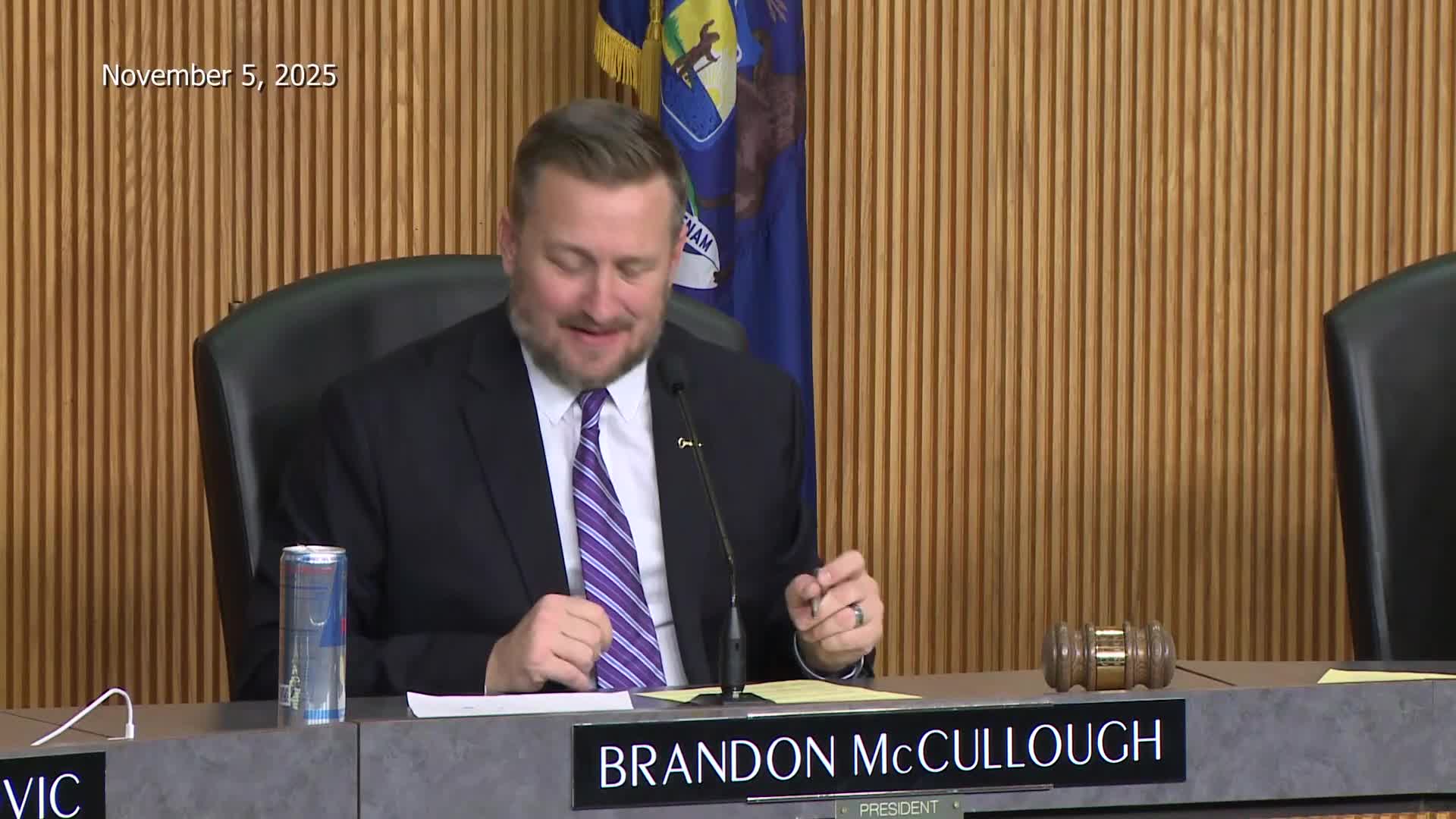
The application, presented by representatives from MHT Housing and the Felician Sisters, seeks PILOT treatment under chapter 3.12 of the city's Code of Ordinances. Sean Bannon, chief financial officer for the Felician Sisters, said the congregation has operated in North America for more than a century and described the project as a way to continue that mission: "the Felician sisters have a hundred 50 year history in North America of serving those in need, including here in Livonia for nearly a century." Zach Ormsby of MHT Housing described MHT as co-developer, general contractor and property manager.
Council members questioned project details. A council member read the estimate that a 3% PILOT would equate to roughly $24,000 a year based on the pro forma shown to council; staff explained that the PILOT payment is calculated from annual shelter rents minus utilities and would therefore change if rents change. On term length, staff noted the city's ordinance caps such agreements at a maximum of 50 years unless council determines a longer aggregate term is necessary; staff said the typical horizon used in similar federal-aided mortgage projects results in renewal or refinancing discussions when financing cycles complete.
Presenters said the development will use low-income housing tax credits and that the Livonia Housing Commission will provide 32 housing choice vouchers to units in the project. On unit size and amenities, MHT told the council one-bedroom units would be roughly 700 square feet and two-bedrooms generally range up toward 850–1,000 square feet; some units will be fully ADA-accessible. Construction was estimated on a roughly 16-month schedule, with renovations expected to begin after next summer, and exterior modifications would be minimized to preserve historic fabric while the team coordinates with the State Historic Preservation Office and the local historic commission.
Council members and staff emphasized the financial scale: presenters listed total development cost in the packet at about $25 million. Questions included which utilities are included in tenant payments (water/trash/sanitary paid by the development; electricity tenant-paid), whether an elevator exists (two elevators will be replaced/upgraded), and whether service animals would be allowed (service animals accepted; pet policies to be finalized). The city and project team agreed to follow historic review procedures and noted rehabilitation and financing details will be refined as project approvals and funding close.
The council moved to place the item on the Nov. 17 regular meeting consent agenda. No final ordinance or PILOT agreement was adopted at the Nov. 5 study session; the transcript records placement on the consent agenda and discussion but no final vote on a PILOT agreement.
Don't Miss a Word: See the Full Meeting!
Go beyond summaries. Unlock every video, transcript, and key insight with a Founder Membership.
30-day money-back guarantee
Sponsors
Proudly supported by sponsors who keep Michigan articles free in 2025

