Decatur County panels approve 171‑foot tower after resident raises RF concerns; applicant and staff cite federal limits
November 06, 2025 | Decatur County, Indiana
This article was created by AI summarizing key points discussed. AI makes mistakes, so for full details and context, please refer to the video of the full meeting. Please report any errors so we can fix them. Report an error »
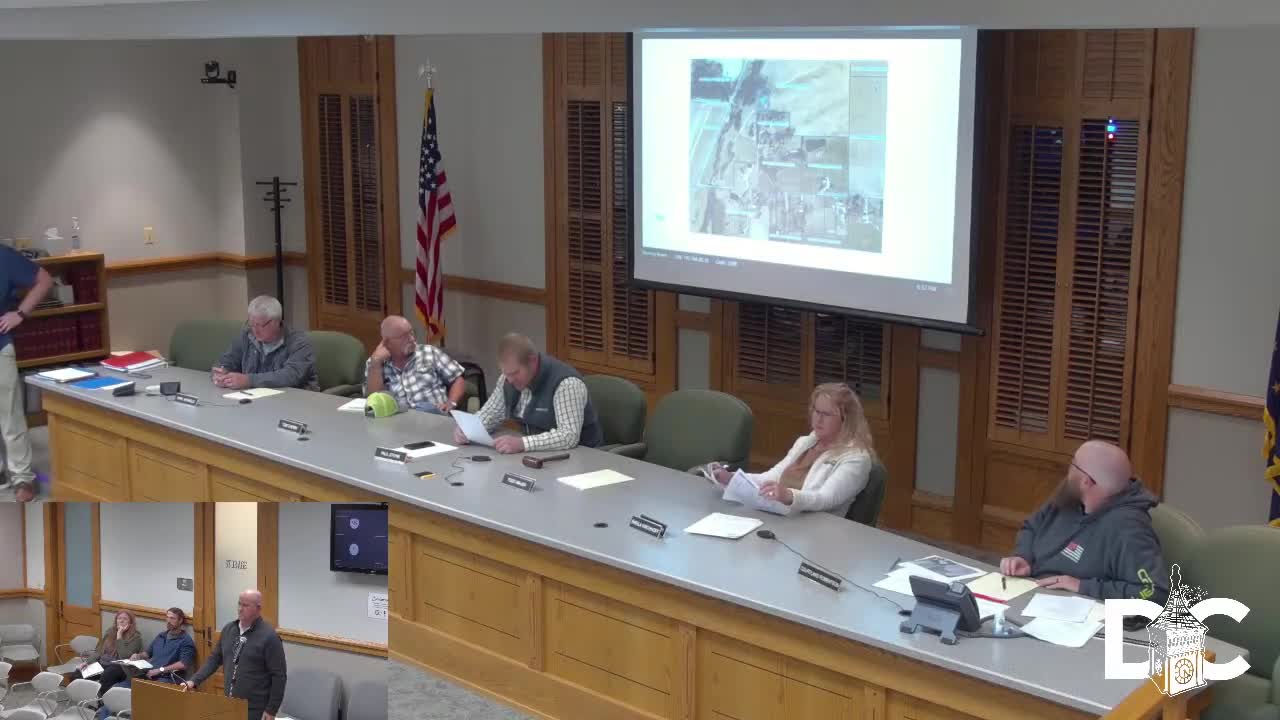
Applicant representatives (appearing for Jason Riggs) described a 100‑by‑100 lease area (60‑by‑60 to be fenced), a 171‑foot monopole structure and minimal on‑site utilities other than fiber and power; a microwave backhaul was noted as a contingency. Verizon was identified as the initial anchor tenant. The applicant said the tower was proposed to fill a coverage gap in hilly, heavily treed terrain where modern high‑frequency signals do not propagate as far as older analog systems.
A nearby resident, Emily Rell, told the commission she and her family are home frequently and asked that the tower be located farther from their house because of concerns about radio‑frequency (RF) radiation. She cited studies and asked for a roughly 500‑foot setback. The applicant provided maps and an RF summary showing predicted ground‑level exposure well below FCC limits, and said monopoles under 200 feet typically do not require obstruction lighting.
County staff and a meeting participant referenced the Telecommunications Act of 1996 when discussing the county's authority to deny a wireless siting application on health grounds; staff suggested the board could table the matter for legal research but noted federal law limits local denials premised on health effects. The applicant offered to provide engineered fall‑zone documentation and suggested relocation would be difficult because of topography, parcel size and prior survey, geotechnical and FAA work already completed.
After discussion the Area Plan Commission voted to approve the rezoning/application (recorded votes include a single recorded "no" vote by one commissioner and affirmative votes from the other members present). The application then proceeded to the Board of Zoning Appeals for a permanent special exception and a variance to permit the 171‑foot height where the county maximum is 30 feet; the BZA approved the special exception and height variance and instructed the applicant to stay in contact with the office about conditions and permitting.
The record shows commissioners and the applicant discussed fall‑zone engineering, distance to neighbor dwellings (the applicant cited an approximate 330 feet to the nearest dwelling), the lack of required lighting under 200 feet, and the role the tower would play in improving cellular and emergency services in the area. The applicant and owner emphasized occasional service outages for emergency calls and broadband needs on the property and nearby roads.
The commission and BZA approvals impose the regular permit and documentation requirements that apply to telecommunications facilities; the applicant indicated they would provide engineered fall‑zone certification to the county as part of follow-up documentation.
Don't Miss a Word: See the Full Meeting!
Go beyond summaries. Unlock every video, transcript, and key insight with a Founder Membership.
30-day money-back guarantee
Sponsors
Proudly supported by sponsors who keep Indiana articles free in 2025

