Socorro ISD board grants one parent grievance, takes no action on another and denies a third
November 06, 2025 | SOCORRO ISD, School Districts, Texas
This article was created by AI summarizing key points discussed. AI makes mistakes, so for full details and context, please refer to the video of the full meeting. Please report any errors so we can fix them. Report an error »
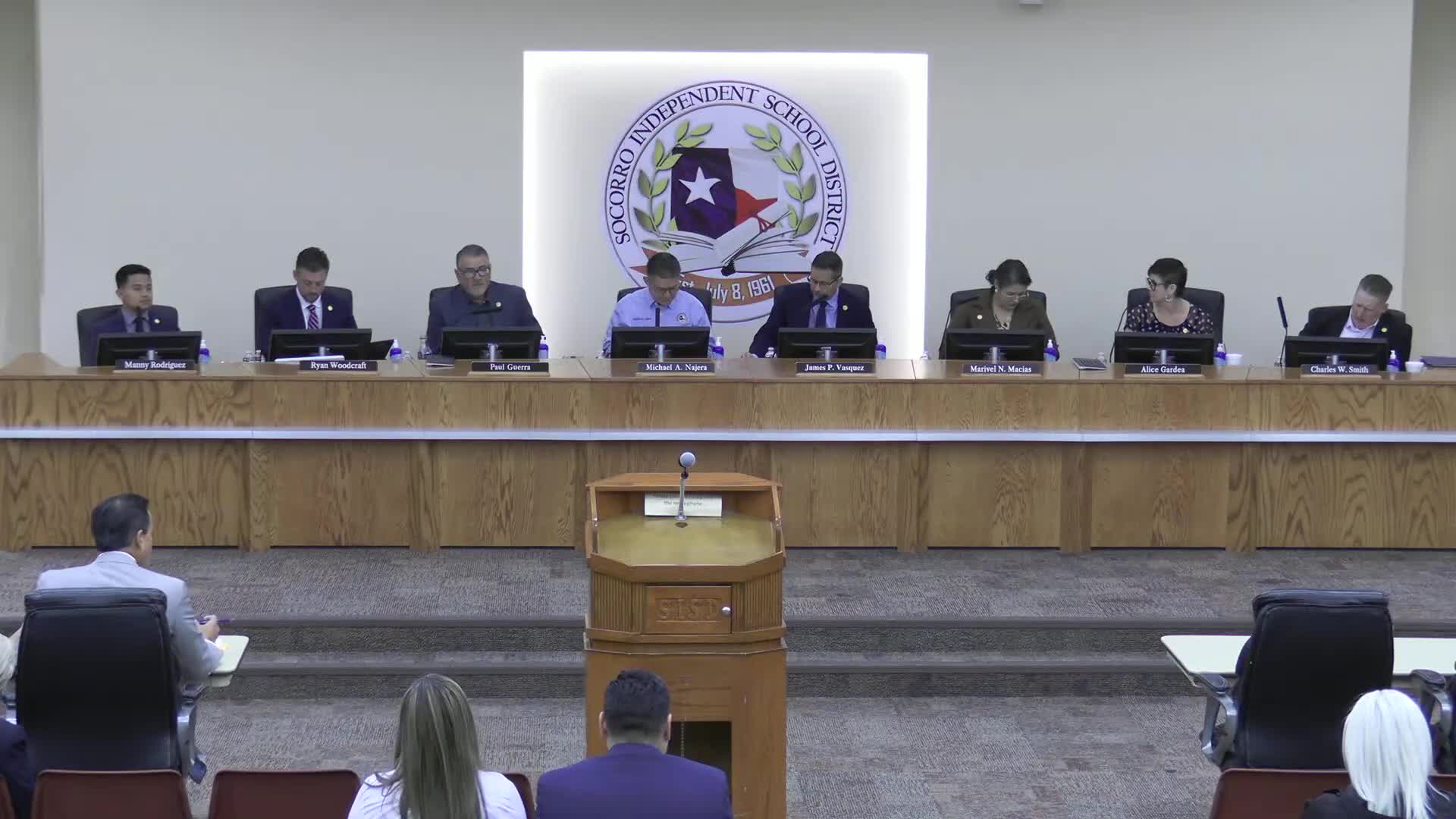
After returning to open session at 6:12 p.m., the board discussed the first grievance filed by L.D. but, with no motion offered, “chose to take no action,” leaving in place the prior hearing officer's decision and preserving the parents' right to continue an appeal to the Texas Education Agency, the board announced.
Trustee Woodcraft criticized recent state laws during the discussion, saying they represented "another case of state overreach into local matters" and arguing that "these decisions should be made between parents, educators, and administrators, not politicians." The transcript shows Woodcraft repeatedly framed the legal changes as limiting local discretion.
The board then considered a second complaint (T.D.). Board President Najera moved to grant the grievance and to "provide instructions to Mr. Vasquez to be sure that we have systems in place to support instances like Mr. Lee's where a student wants to use their preferred legal name in any possible instance," and Trustee Woodcraft seconded. The motion carried; the board announced the grievance was approved and directed Superintendent Vasquez to implement the requested administrative supports.
A third complaint (E.C.) was heard in closed session under the cited Texas Government Code exceptions. After returning to open session later the board received additional comment, and Trustee Woodcraft moved to deny that grievance. The motion was seconded and the board voted to deny the complaint.
The board noted that, when it denies or takes no action on a grievance, appellants retain appeal options to TEA. The board also directed staff to review internal processes and to report back on implementation timelines where it had issued instructions.
The meeting record shows the grievances were handled in closed session as permitted by Texas law and that trustees debated local autonomy and statutory mandates during public remarks prior to motions.
View the Full Meeting & All Its Details
This article offers just a summary. Unlock complete video, transcripts, and insights as a Founder Member.
30-day money-back guarantee
Sponsors
Proudly supported by sponsors who keep Texas articles free in 2025

