Connecticut subcommittee reviews GPS alert program for domestic-violence cases, cites contact and alert-fatigue challenges
November 06, 2025 | Judiciary, House of Representatives, Committees, Legislative, Connecticut
This article was created by AI summarizing key points discussed. AI makes mistakes, so for full details and context, please refer to the video of the full meeting. Please report any errors so we can fix them. Report an error »
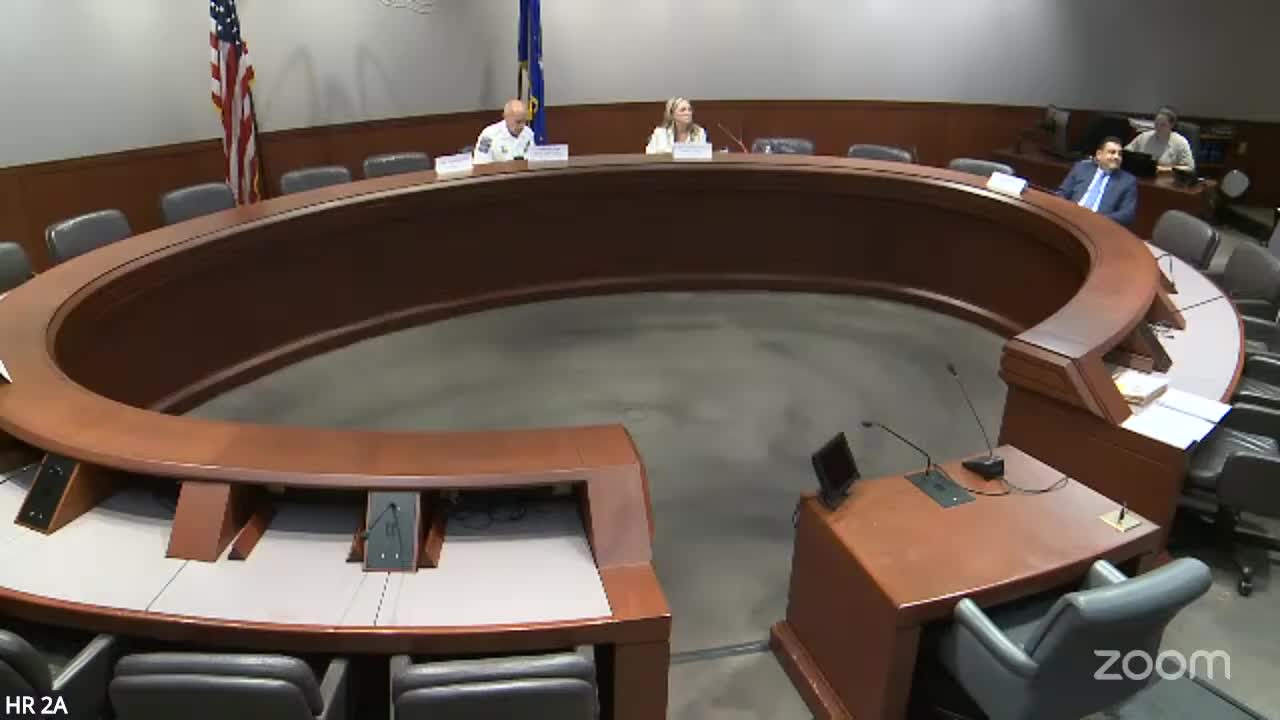
The program, managed operationally by family relations counselors and monitored by a vendor, is intended to support victim safety by notifying victims and law enforcement when a monitored defendant enters exclusion or mobile zones. "Actively as of yesterday, we have 311 defendants on alert notification GPS statewide," said Joe Detuno, director of family services for Connecticut’s Judicial Branch, adding that there are "313 victims currently participating, with 244 of those carrying a device." Detuno said family relations counselors participate at six points in each case: pre-arraignment screening, installation, case management, reporting violations, and program termination.
Why it matters: The subcommittee emphasized that the program’s public-safety aim is to reduce risk to victims and to inform law enforcement responses, but members also flagged gaps between written model policy and current statewide practice. Cochairs said the GPS section of the model policy (cited in meeting materials as page 20) needs updating to reflect how alerts, triage and follow-up currently occur.
How defendants are placed and who decides: Family relations counselors conduct risk assessments and identify statutory criteria for recommendation to the court. Detuno explained that the statutory criterion most clearly tied to GPS is a violation of a protective order, and that family relations recommends cases to prosecutors and judges but does not itself order monitoring. "We indicate to the court which defendants meet the statutory criteria, and we let the judge know what level of participation the victim wishes to have," Detuno said. Assistant legal counsel John Delbarro noted that "serious domestic violence" is often used in practice to justify recommending GPS but that it is not spelled out in the statute; judges and prosecutors make final decisions about release conditions.
Victim participation, confidentiality and alert effects: Advocates said they use conditional language when explaining GPS to victims because enrollment, participation level and confidentiality have limits. Shauna Harrington, director of legal advocacy at CCADV, and Andrea O'Connor of Umbrella Center for Domestic Violence Services described options victims may accept: stationary exclusion zones around a fixed address (2,500 feet) and mobile-device participation with a roughly 1,000-foot radius that moves with the victim. O'Connor warned that "this is a rigorous program. They're going to get a lot of alerts," and that frequent notifications can be triggering: "the device could be nowhere near them or nowhere near their area completely ... but yet within that mile."
Operational roles and alert flow: Detuno and Capt. Ryan Maynard of the Connecticut State Police described the vendor and law-enforcement workflow. Sentinel Offender Services texts and calls victims on an alert and notifies dispatch; Sentinel has a live-monitoring line that can remain connected to police. "If there's a violation and there's evidence at that moment, we're going to make an arrest on-site," Captain Maynard said. Family relations later triages alerts, verifies tamper or noncompliance, and provides reports to prosecutors for charging decisions or bond review.
Types of alerts and how they are handled: Detuno defined several alert types and how they are treated: stationary-zone violations (fixed address, mapped at installation), mobile-zone alerts (dynamic proximity notifications), strap/device tamper (when a device is removed), low-battery notifications, and buffer-zone pre-alerts intended for victim awareness only. He said strap tamper and willful noncompliance are most likely to prompt prosecutorial action; low-battery and buffer alerts generally do not go to law enforcement unless they are linked to other noncompliance.
Vendor and hotline follow-up: Rosario, a Safe Connect coordinator, described the hotline’s role as a 24/7 follow-up service that checks on victims after alerts, offers resources, and emails summary outcomes to the family-violence victim advocate and family relations. She said Safe Connect will make two contact attempts (text/email preferred by some clients), then call if no response, and forward results to court-based advocates for any needed action.
Key operational issues flagged by the committee: speakers identified several recurring problems:
- Timely victim contact: if correct phone numbers are not available at arraignment, the screening and enrollment process can stall and courts are less likely to impose GPS later. (Andrea O'Connor, Joe Detuno)
- Alert volume and "alert fatigue": mobile and buffer alerts can be frequent—especially in dense urban areas—and may overwhelm victims and local responders. (Andrea O'Connor, Shauna Harrington)
- Law-enforcement resource strain: frequent nonemergency alerts can require repeated officer follow-up; administrators reported local mitigation strategies and case-level triage to reduce unnecessary dispatches. (Capt. Ryan Maynard, Joe Detuno)
- Data access and retention: Detuno said Sentinel holds location "points" (he estimated about three years) and that requests for points for trial evidence must be routed through Family Relations and the court.
Decisions and next steps: Committee cochairs said the GPS language in the draft model policy needs revision to match current practice and to clarify law-enforcement responsibilities. The group also noted that any proposal to expand GPS use beyond current statutory criteria would likely require statutory change, additional funding, and legal review for constitutional issues. Cochair Alaric Fox summarized those trade-offs and tasked the group with drafting updates for the GPS section ahead of the next meeting.
What the committee did take formal action on: the group approved the minutes of the Aug. 19, 2025 meeting; two members recorded abstentions and the motion passed.
A note on sources and attribution: quotes and numerical counts in this article come from subcommittee presenters and court staff during the Nov. 6 meeting: Joe Detuno (director of family services, Judicial Branch), Capt. Ryan Maynard (Connecticut State Police), Andrea O'Connor (Umbrella Center for Domestic Violence Services), Shauna Harrington (CCADV), and Rosario (Safe Connect coordinator).
Don't Miss a Word: See the Full Meeting!
Go beyond summaries. Unlock every video, transcript, and key insight with a Founder Membership.
30-day money-back guarantee
Sponsors
Proudly supported by sponsors who keep Connecticut articles free in 2025

