New Shoreham council work session pivots to deer as a public-health issue; draft resolution planned
November 06, 2025 | New Shoreham, Washington County, Rhode Island
This article was created by AI summarizing key points discussed. AI makes mistakes, so for full details and context, please refer to the video of the full meeting. Please report any errors so we can fix them. Report an error »
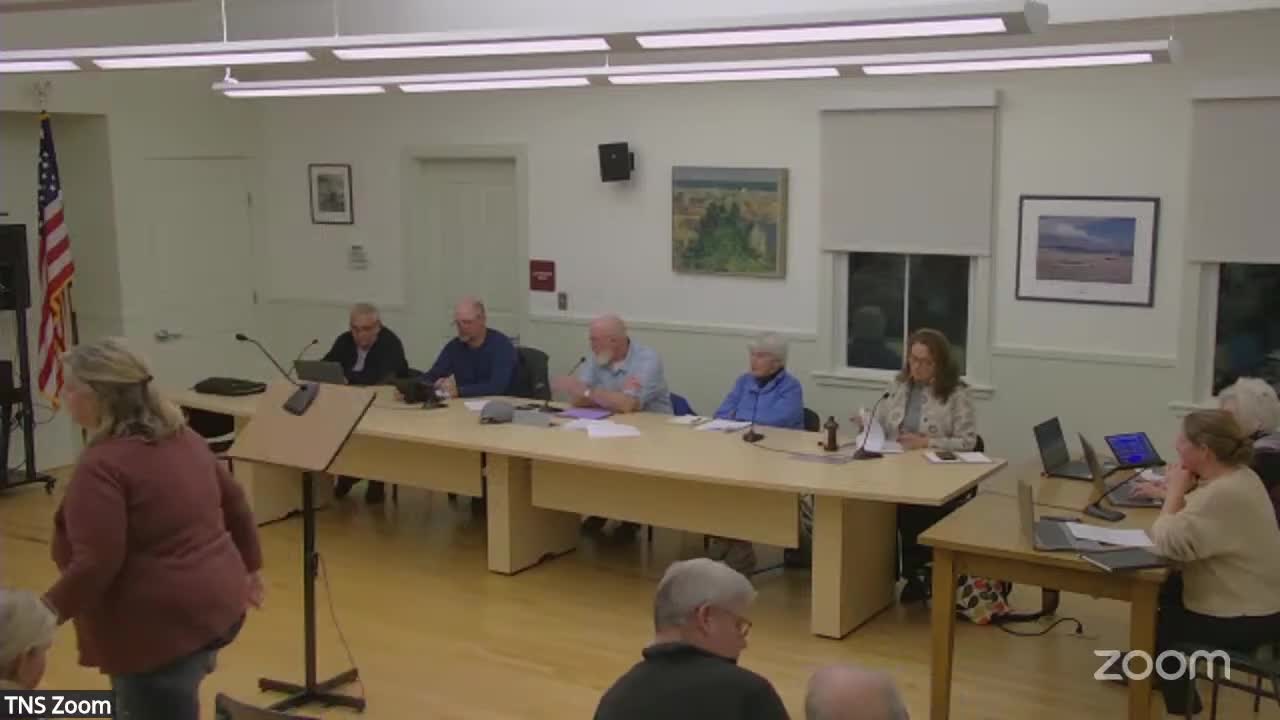
At a Nov. 5 New Shoreham Town Council work session, Council member Amy opened a lengthy discussion asking the council to treat the island's deer problem as a public-health issue and said she will present a draft resolution for a future meeting.
"I think we have to shift away from viewing this as a deer management issue, to viewing it as a public-health issue," Amy said, noting recent diagnoses and rising community concern. She told the council she plans to seek engagement from the Rhode Island Department of Health and the Department of Environmental Management and, if necessary, pursue state-level rule changes to allow more aggressive local action.
Why it matters: speakers said infections linked to ticks appear to be increasing on Block Island, including Lyme disease and alpha-gal syndrome, a tick-related allergy that can make some people unable to tolerate mammal meat. Those public-health consequences generated calls for faster, broader action than prior, deer-focused management approaches.
What council members and residents proposed and debated
- Draft resolution: Amy said she will present a resolution stating the town wants to address deer as a public-health matter and to request technical assistance and possible rule exceptions from state agencies.
- Data gap: several speakers noted the town has not yet received the state flyover deer-count data DEM collected earlier in the year and called for that information before prescribing specific harvest targets.
- Policy options discussed: participants weighed a menu of measures including expanded weekend hunting, stricter baiting rules, a revised bounty to favor doe harvests, contracting professional sharpshooters, pilot medication or contraceptive programs, a refrigerated-storage ("reefer") truck to facilitate processing and removal of harvested deer, and targeted closures of hiking areas during intensive harvest operations.
- Public-safety and public-opinion concerns: Police Chief Paul said he is opposed to expanding weekend hunting without tight controls, citing safety and the large number of residents and visitors on weekends. Chris Blaine, a longtime hunter and resident, advocated for practical steps such as refrigerated storage to increase harvests, while Joan and others emphasized research presented by Professor Sam Telford (Tufts) that links deer abundance and tick-borne disease incidence and urged a stronger public-health framing.
- Pilot programs and precedent: some speakers urged piloting nonlethal or technological solutions (for example, medication to break the pathogen cycle or genetically modified-mouse trials reported elsewhere) and pointed out that other special arrangements had been made previously for pilot harvest or management programs.
No formal action or vote was taken on Nov. 5. Council members and residents asked staff to: (1) obtain the state deer-count report and other relevant data from DEM; (2) consult the Department of Health about public-health thresholds and reporting; and (3) return with a draft resolution and recommended next steps at an upcoming council meeting.
Quotes from the meeting
"If we had an environmental issue in a community of our size that was making the number of people get sick, the people would be going crazy about it," Amy said, summarizing why she wants the council to reframe the issue.
Police Chief Paul said he is "steadfast against weekend hunting," citing safety and the risk of bringing hunters unfamiliar with island geography into areas with houses and high visitor presence.
Next steps and what to watch
Amy said she will bring a draft resolution to a future meeting asking for a state response and authority to pursue more aggressive or tailored measures for Block Island. Council members asked staff to prioritize getting the DEM flyover count and to invite state public-health officials to consult on the town's next actions.
No vote was taken; the council ended the work session after further discussion and offers to form focused working groups to develop an action plan.
"I think we have to shift away from viewing this as a deer management issue, to viewing it as a public-health issue," Amy said, noting recent diagnoses and rising community concern. She told the council she plans to seek engagement from the Rhode Island Department of Health and the Department of Environmental Management and, if necessary, pursue state-level rule changes to allow more aggressive local action.
Why it matters: speakers said infections linked to ticks appear to be increasing on Block Island, including Lyme disease and alpha-gal syndrome, a tick-related allergy that can make some people unable to tolerate mammal meat. Those public-health consequences generated calls for faster, broader action than prior, deer-focused management approaches.
What council members and residents proposed and debated
- Draft resolution: Amy said she will present a resolution stating the town wants to address deer as a public-health matter and to request technical assistance and possible rule exceptions from state agencies.
- Data gap: several speakers noted the town has not yet received the state flyover deer-count data DEM collected earlier in the year and called for that information before prescribing specific harvest targets.
- Policy options discussed: participants weighed a menu of measures including expanded weekend hunting, stricter baiting rules, a revised bounty to favor doe harvests, contracting professional sharpshooters, pilot medication or contraceptive programs, a refrigerated-storage ("reefer") truck to facilitate processing and removal of harvested deer, and targeted closures of hiking areas during intensive harvest operations.
- Public-safety and public-opinion concerns: Police Chief Paul said he is opposed to expanding weekend hunting without tight controls, citing safety and the large number of residents and visitors on weekends. Chris Blaine, a longtime hunter and resident, advocated for practical steps such as refrigerated storage to increase harvests, while Joan and others emphasized research presented by Professor Sam Telford (Tufts) that links deer abundance and tick-borne disease incidence and urged a stronger public-health framing.
- Pilot programs and precedent: some speakers urged piloting nonlethal or technological solutions (for example, medication to break the pathogen cycle or genetically modified-mouse trials reported elsewhere) and pointed out that other special arrangements had been made previously for pilot harvest or management programs.
No formal action or vote was taken on Nov. 5. Council members and residents asked staff to: (1) obtain the state deer-count report and other relevant data from DEM; (2) consult the Department of Health about public-health thresholds and reporting; and (3) return with a draft resolution and recommended next steps at an upcoming council meeting.
Quotes from the meeting
"If we had an environmental issue in a community of our size that was making the number of people get sick, the people would be going crazy about it," Amy said, summarizing why she wants the council to reframe the issue.
Police Chief Paul said he is "steadfast against weekend hunting," citing safety and the risk of bringing hunters unfamiliar with island geography into areas with houses and high visitor presence.
Next steps and what to watch
Amy said she will bring a draft resolution to a future meeting asking for a state response and authority to pursue more aggressive or tailored measures for Block Island. Council members asked staff to prioritize getting the DEM flyover count and to invite state public-health officials to consult on the town's next actions.
No vote was taken; the council ended the work session after further discussion and offers to form focused working groups to develop an action plan.
View the Full Meeting & All Its Details
This article offers just a summary. Unlock complete video, transcripts, and insights as a Founder Member.
✓
Watch full, unedited meeting videos
✓
Search every word spoken in unlimited transcripts
✓
AI summaries & real-time alerts (all government levels)
✓
Permanent access to expanding government content
30-day money-back guarantee
