Chautauqua County holds emergency session as SNAP benefits pause; staff to evaluate voucher model with regional food bank
November 06, 2025 | Chautauqua County, New York
This article was created by AI summarizing key points discussed. AI makes mistakes, so for full details and context, please refer to the video of the full meeting. Please report any errors so we can fix them. Report an error »
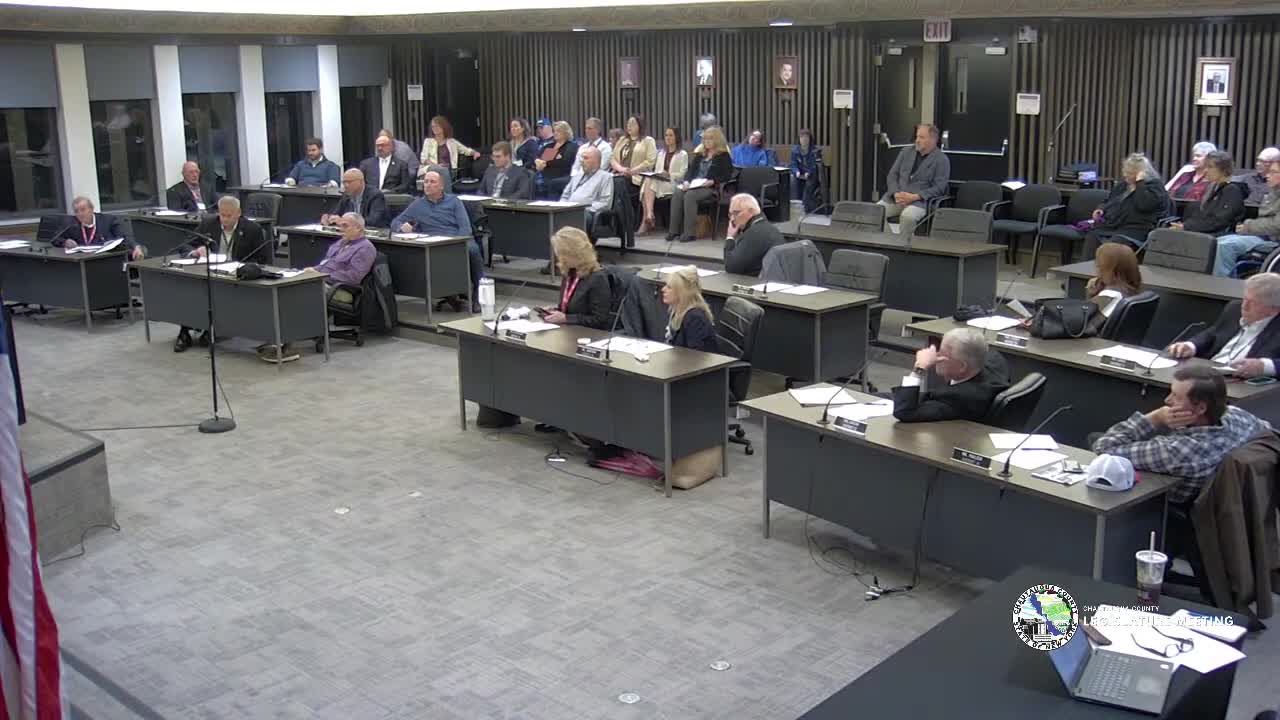
County staff and agency directors detailed contingency plans and limits. Carmelo Hernandez, commissioner of mental hygiene and social services, said the state will manually adjust SNAP records and issue mass communications to recipients once the federal formula is determined: "People will get benefits, this month. There will be a mass communication that will come out." He also said HEAP — described as 100% federally funded — was delayed from Nov. 17 to Nov. 24.
Dana Corwin, director of the Office for Aging, described existing meal programs for older adults and emergency supplies the county can deploy; she reported 4,367 SNAP recipients age 60 or older in the county. John Anderson, deputy commissioner of social services, said DSS has staff ready to process emergency cases and can provide walk-in and outreach services: "If people are in need, they should come see us."
Anna Morgan, county attorney, told legislators the county has legal options such as entering contracts with established nonprofit food pantries or making targeted donations, but it cannot legally "step in" to operate SNAP or place money directly on EBT cards. "Can the state intervene? Yes," Morgan said, but absent state or federal action the county must rely on local emergency tools and carefully scoped contracts.
Public commenters and volunteers pressed for immediate aid and for accountability. Connie Griffith, a volunteer co‑manager of a Fredonia food pantry, urged two actions: weekly release of unallocated county funds to pantries until SNAP is restored and creation of a contract-based voucher system modeled on Feed More Western New York to ensure fiscal accountability. She told the legislature that FedBasket in Fredonia served 270 meals in the first hour of its monthly pantry distribution and estimated that represented about $3,550 in meals at roughly $5 each.
Legislators pressed staff for numbers and options. DSS reported roughly 22,325 individuals enrolled in SNAP across about 12,743 cases; several legislators and staff said food pantries number "about 30" in county guides but that the list and capacity vary by locality. County staff agreed to attempt a county-level estimate of the cost to cover SNAP for one month and to report back. Officials repeatedly cautioned that the potential county cost would be large and that reimbursement from federal or state sources is not guaranteed.
The legislature asked staff to evaluate the Feed More voucher/contract model Connie Griffith proposed and to return with recommendations. Legislator Carl made a motion to request the evaluation and staff accepted the assignment; there was no appropriation or formal vote to fund EBT benefits. The chair and commissioners said the county team's plan will be updated as more information arrives from the state and OTDA; staff said they are meeting daily with state officials.
Several other program details were clarified during the meeting: WIC and other non‑SNAP benefits were reported as continuing; certain cash assistance and safety‑net emergency payments remain available through DSS; schools continue to provide free school meals; and county officials said they can use existing home‑delivered and congregate meal contracts to expand service if required.
Legislators requested regular updates and additional written materials explaining program eligibility, funding sources and how county programs intersect with pantries and school feeding programs. County counsel and DSS staff agreed to provide a written summary and to explore contracting, donation pathways, and the legal implications of sending funds to 501(c)(3) pantries.
The meeting ended with staff commitments to: (1) provide a county cost estimate for 1 month of SNAP-equivalent benefits if possible, (2) evaluate the Feed More voucher/contract proposal and return a recommendation, and (3) continue daily coordination with state OTDA and partners. No county appropriation or change to SNAP/EBT distribution was authorized at the meeting.
Don't Miss a Word: See the Full Meeting!
Go beyond summaries. Unlock every video, transcript, and key insight with a Founder Membership.
30-day money-back guarantee
Sponsors
Proudly supported by sponsors who keep New York articles free in 2025

