Cottonwood Heights staff propose smaller chicken-coop setback, new enforcement for permits
November 06, 2025 | Cottonwood Heights, Salt Lake County, Utah
This article was created by AI summarizing key points discussed. AI makes mistakes, so for full details and context, please refer to the video of the full meeting. Please report any errors so we can fix them. Report an error »
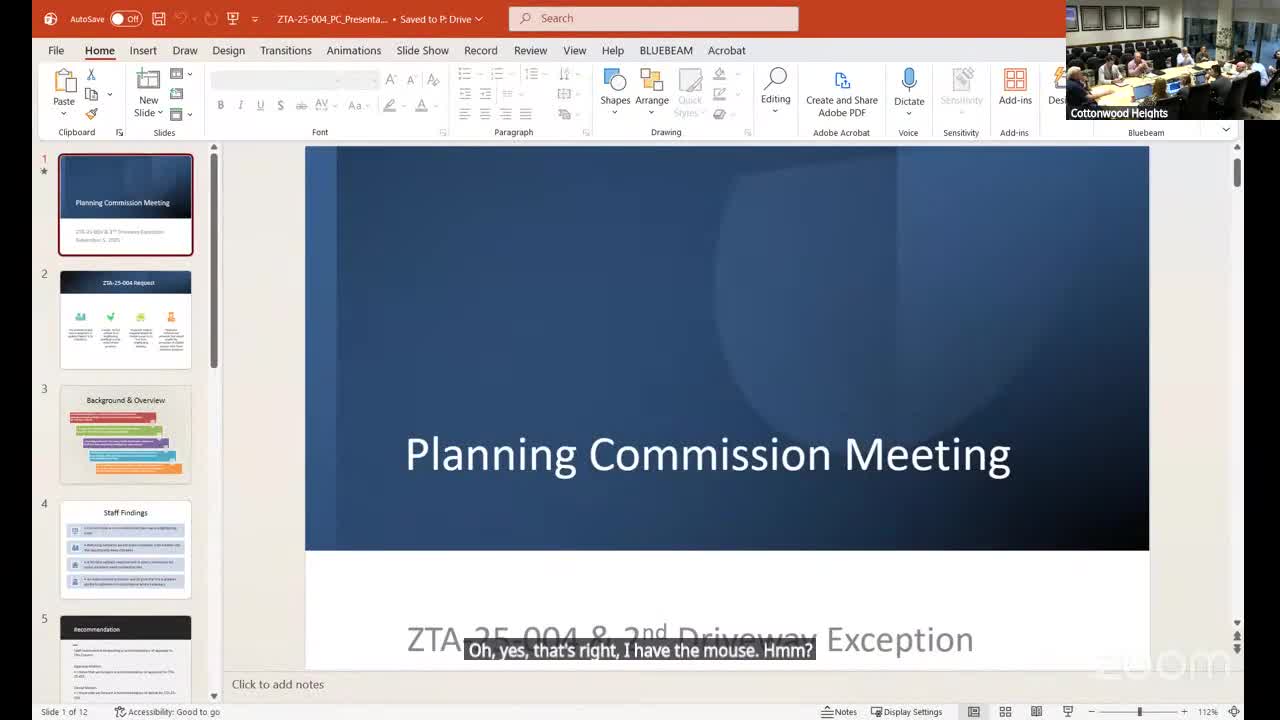
The proposal comes after a public comment last August highlighted that some homeowners who wanted chickens had no location in their yards that complied with the existing 40-foot standard. Staff told the council that Salt Lake County health officials commonly recommend setbacks in the 25'035 foot range and that a 25-foot setback would be acceptable from a public-health perspective. Staff also said the current city code lacks an enforcement provision specific to chicken permits and that code enforcement recommended adding one to address noise, sanitation and odor complaints.
Under the draft language staff presented, the city could investigate alleged violations upon complaint or observation and verify violations by inspection or other credible evidence. If a property receives three or more verified violations of any provision of the chapter within a 12-month period, staff said the city may revoke the chicken-keeping permit after written notice; revoked permit holders would be required to remove chickens within 30 calendar days and would not be eligible to reapply until one full year has passed.
Staff described other operative parts of the code: permits are renewable annually and require an on-site inspection; the code limits households to six chickens and prohibits roosters; coops must meet accessory-building setbacks (at least 3 feet from the property line under current language). Staff also confirmed the city measures the separation distance to the closest point of a neighboring dwelling, consistent with practices used by other Salt Lake Valley municipalities.
Councilmembers raised several practical and administrative concerns. Some favored keeping the measurement tied to neighboring dwellings because it better addresses noise and odor impacts; others argued a property-line measurement is easier to administer and reduces disputes tied to what a neighbor has built. Several councilmembers suggested keeping a 25-foot dwelling-based standard while increasing the property-line minimum from the existing 3 feet to 10 feet to reduce the chance that a coop placed near a property line would create access or maintenance problems.
Council and staff also discussed permitting and utilities: temporary extension cords and portable heat lamps typically do not trigger a building permit, staff said, but permanent electrical outlets or fixed utilities would require a building permit and inspection. Staff recommended developing a short public guidance sheet explaining permit, inspection and utility requirements to reduce noncompliance.
Staff said on record that roughly 13'15 households currently hold permits (records dating from 2020 to present) and acknowledged there may be additional unpermitted coops. Several councilmembers asked staff to clarify enforcement language to allow investigation upon staff observation as well as upon receipt of a complaint.
Next steps: staff will refine the draft ordinance language (including the suggested property-line minimum and the enforcement-trigger wording) before the public hearing and planning commission recommendation. If the council approves the change after the required hearings, the amendment would replace the 40-foot dwelling setback with the newly adopted standard and add the enforcement provisions described by staff.
Don't Miss a Word: See the Full Meeting!
Go beyond summaries. Unlock every video, transcript, and key insight with a Founder Membership.
30-day money-back guarantee
Sponsors
Proudly supported by sponsors who keep Utah articles free in 2025

Excel Chiropractic

