La Joya ISD reports mixed early math results; district expands partner coaching and spot checks
November 06, 2025 | LA JOYA ISD, School Districts, Texas
This article was created by AI summarizing key points discussed. AI makes mistakes, so for full details and context, please refer to the video of the full meeting. Please report any errors so we can fix them. Report an error »
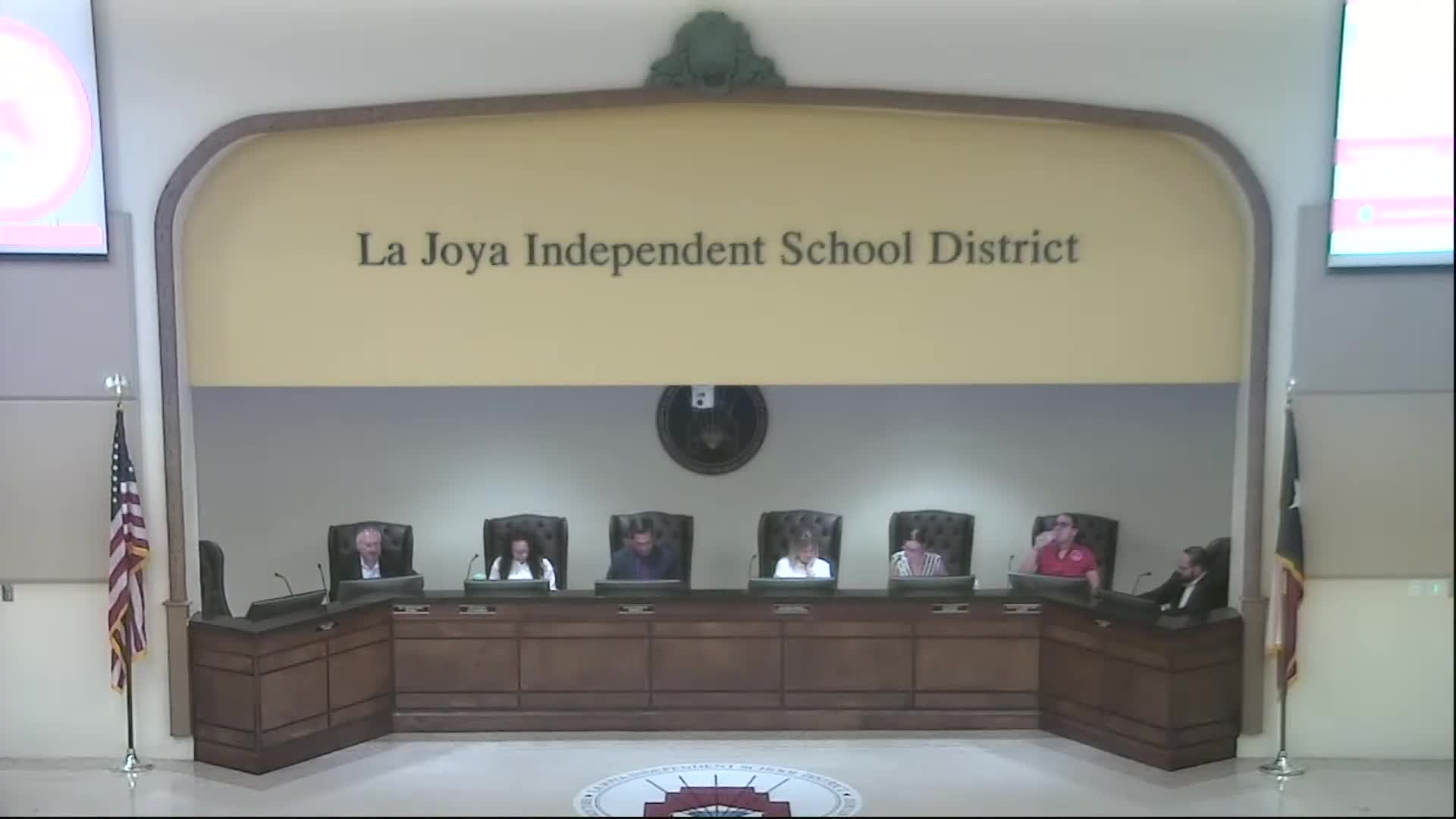
Dr. Little, presenting the Goal Progress Measure (GPM) 2.1–2.3 update on early math, told the board the district’s starting points are mixed: ‘‘we are coming in this school year at a higher level than last year’’ for several GPM measures, but kindergarten and some pre-K math indicators are behind where the district needs to be to meet end-of-year targets. She noted that changes in NWEA norming affect year-to-year comparisons and that the Texas Kindergarten Entry Assessment (TXKEA) — not MAP — provides kindergarten baseline data.
The nut graf: District leaders said they will lean on a combination of partner coaching, instructional planning calendars (IPCs), and frequent, short spot checks to identify and correct instructional gaps quickly. Dr. Little emphasized that the district has already begun partner visits and will expand them: ‘‘you've had a 180 plus classroom visits by Great Minds throughout our elementary schools’’ and ‘‘70 plus visits’’ from Carnegie in secondary grades, she said.
Details: Dr. Little said pre-K math started roughly 7 points lower this year and that the district’s pre-K rapid letter naming and vocabulary measures began higher than last year, but math is a relative weakness. Disaggregated data show at pre-K emergent bilingual students in one area were at or above the district average, while students served by special education trailed by about 20 percentage points. Dr. Little cautioned that these are grade-level (cohort) comparisons, not longitudinal cohort tracking.
Dr. Little described the district’s spot-check process: each cycle visits six classrooms per campus (10–15 minutes each) and every campus is visited five times per year (about 30 classroom observations across the year for larger campuses). Spot checks operate inside a three-day window so observers can see authentic instruction; teams debrief with principals immediately to identify campus-level trends and near-term actions.
Board members asked about regional comparisons to MAP norms, partner start dates, grade scope and teacher participation. In response, Dr. Little said NWEA norms are national and the district does not receive a regional peer dataset from NWEA, that the Great Minds and Carnegie partnerships began last school year when the district implemented new high-quality instructional materials (HQIM) in math, and that partners now support roughly kindergarten through eleventh-grade math instruction. She said nearly every school has held after-school or Saturday planning sessions and principals are required to schedule those sessions at least every six weeks; when teachers do not engage, principals hold accountability conversations.
On campus follow up, Dr. Sorensen and Dr. Little pointed to Clinton Elementary, where district leaders and instructional teams spent multiple days with grade-level teachers after a spot check. They reported ‘‘significant improvement in just two weeks’’ after focused coaching and principal follow-up.
What’s next: District staff said the extra support approved at a prior meeting will roll into classrooms this month, spot check cycle 2 has begun, and the district will provide a December update on local unit-assessment data that will show mid-fall progress.
Statements and context: ‘‘This is the work that we continue to do day in and day out in the district,’’ Dr. Little said, describing a mix of coaching, IPCs, and accountability. The presentation repeatedly emphasized immediate, short-cycle corrective actions (lesson-by-lesson mastery checks) rather than waiting for multi-week assessments.
Sources: Presentation and Q&A with Dr. Little at the La Joya ISD board meeting (topic introduced at 00:10:22, presentation material/documentation and Q&A continued through 00:34:14).
View the Full Meeting & All Its Details
This article offers just a summary. Unlock complete video, transcripts, and insights as a Founder Member.
30-day money-back guarantee
Sponsors
Proudly supported by sponsors who keep Texas articles free in 2025

