Council hears workshop on infill and flag‑lot code changes; planning commission recommended easing single‑family size requirement
November 05, 2025 | Logan City Council, Logan, Cache County, Utah
This article was created by AI summarizing key points discussed. AI makes mistakes, so for full details and context, please refer to the video of the full meeting. Please report any errors so we can fix them. Report an error »
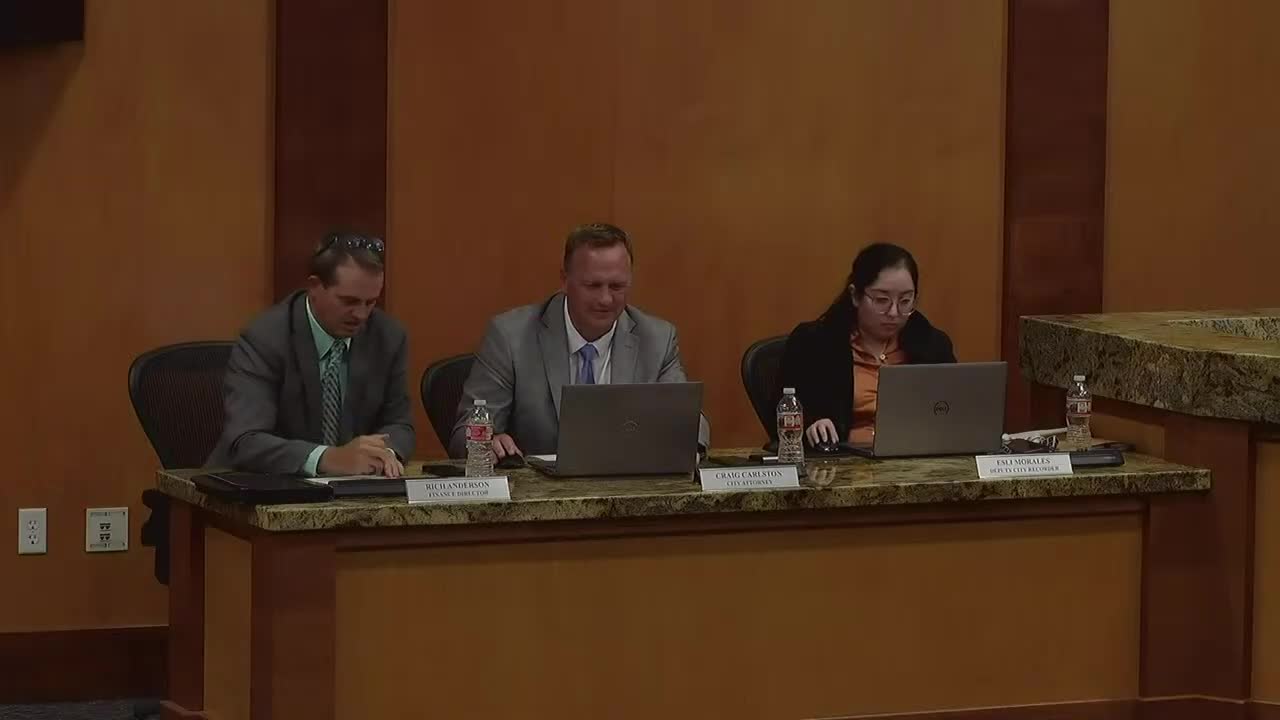
City staff member Ross Holly described the revisions as clarifying two categories: single‑family flag lots (one additional home accessed by a shared private driveway) and middle‑of‑block infill (three to six new single‑family homes or three to 20 multifamily units). "Infill is generally defined as building inwardly," Holly explained while illustrating examples of flag lots, private access roads and mid‑block infill configurations. The presentation stressed tradeoffs: infill can better utilize existing infrastructure but may create tight site conditions that affect character and emergency access.
Planning commission members recommended reducing the previous 150% supplemental lot‑size requirement for single‑family flag lots to a 100% lot size and increasing setback requirements to 125% to provide additional buffer. Holly said the planning commission approved the package by a 4‑1 vote; commissioner David Lewis voted against the size reduction and preferred retaining the 150% requirement to preserve more spacing.
Council members debated the long‑term effects on block connectivity and emergency access. The proposal allows private access roads owned by homeowners' associations; those private roads would not receive city snow removal and could affect garbage collection depending on configuration. Staff noted a 20‑foot minimum shared driveway width to allow fire and emergency apparatus access and said the fire marshal will review each subdivision application for hydrant spacing and ladder‑truck requirements.
Council members voiced competing priorities: one concern was that small private cul‑de‑sacs could make later block redevelopment more difficult and reduce long‑term connectivity; another was that overly strict public‑street requirements could disincentivize infill development. Staff said projects that exceed threshold unit counts (e.g., more than 20 multifamily units) would be required to create a public street and new block standard.
Public comment at the planning stage included two speakers in favor and one developer in opposition who asked for narrower streets and tighter setbacks to enable his project. Staff closed the workshop noting the planning commission recommendation and that next steps include drafting final ordinance language and coordinating with Public Works and the fire marshal for technical standards.
Don't Miss a Word: See the Full Meeting!
Go beyond summaries. Unlock every video, transcript, and key insight with a Founder Membership.
30-day money-back guarantee
Sponsors
Proudly supported by sponsors who keep Utah articles free in 2025

Excel Chiropractic

