Spring ISD reports gains in college, career and military readiness; staff outline steps to reach 100% CCMR goal
November 05, 2025 | SPRING ISD, School Districts, Texas
This article was created by AI summarizing key points discussed. AI makes mistakes, so for full details and context, please refer to the video of the full meeting. Please report any errors so we can fix them. Report an error »
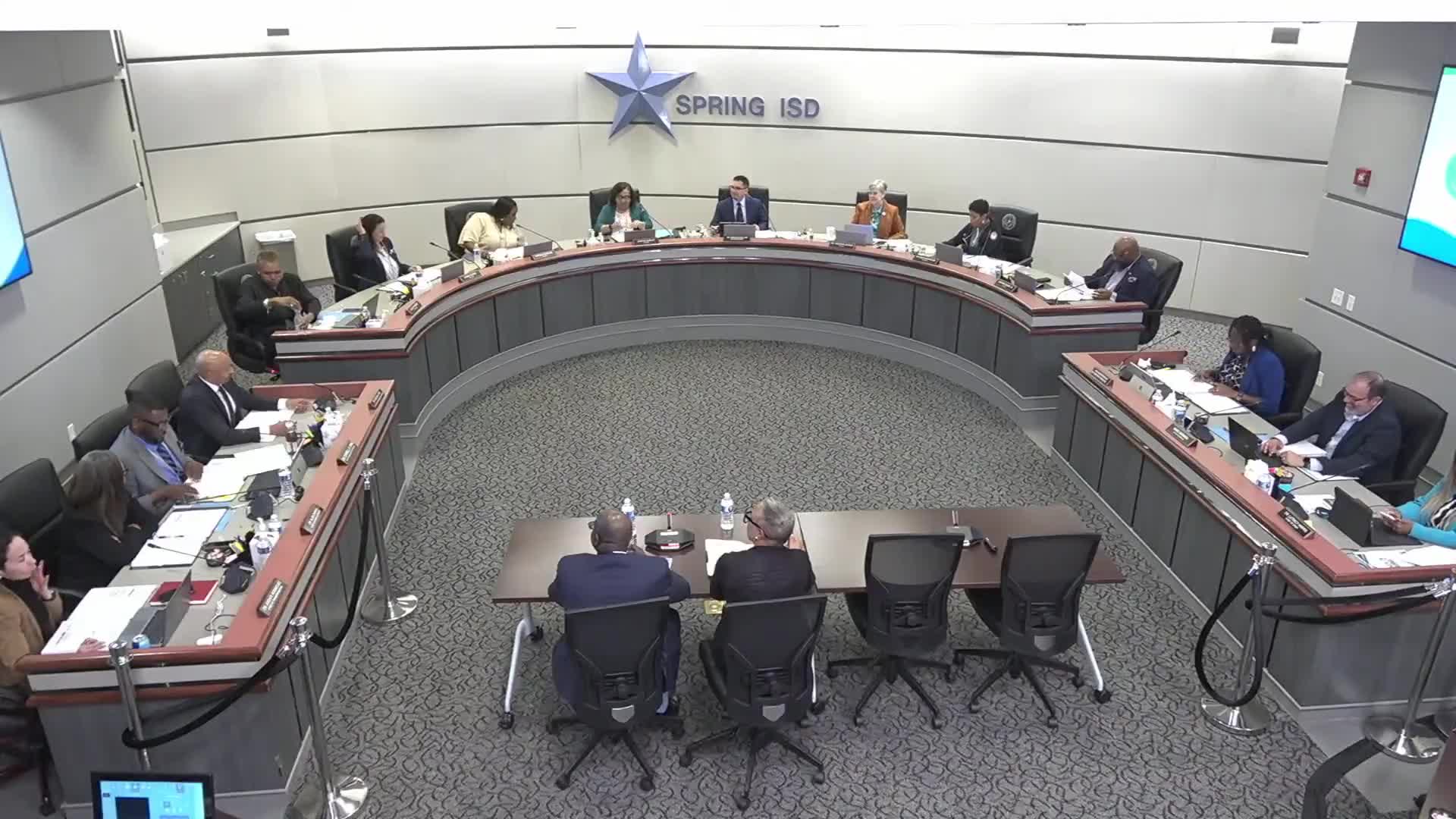
Dr. Michael Love, chief of innovation and student support services, said the district's internal estimate for the Class of 2025 is about 75% of graduates meeting CCMR criteria, up roughly 22 percentage points from the prior reporting year. "As you see here, our Lone Star Governance Framework ... our cumulative score that we are guesstimating is 75 percentage points," he told trustees during the work session.
District staff attributed the improvement to expanded dual-credit enrollment, targeted campus CCMR teams, and new data workflows that correct student pathway coding. Dr. Guillory, the district's student data and compliance officer, described weekly monitoring of PEIMS and dual-credit submissions and said the district created a CCMR web page and distributed materials directly to students. Mr. Hayward, the CTE compliance coordinator, said Spring High School had about 200 students who completed the Texas College Bridge in math and that the district now has nearly 400 students in Texas College Bridge programs.
Trustees pressed staff on details. Trustee Correa asked whether the ACT counts reflected registered students or those who actually tested; staff said the presentation's first column showed the number of students on the opportunity roster and that follow-up data (actual testers and pass rates) were tracked and updated weekly. Trustee Hodges asked whether college maps used in the presentation included historically Black colleges and universities; staff said the slide used a stock image and was not exhaustive.
Staff told trustees they were improving the accuracy of CTE pathway coding so students show as "completers" rather than earlier labels of "explorers" or "participants." Mr. Hayward said that with improved data workflows Spring ISD now estimates industry-based certification (IBC) and industry credential (IVC) points to be higher than previously reported and that currently about 48–51% of students were on track as completers depending on ongoing coding adjustments.
Trustees and staff discussed outreach strategies to increase testing and awareness. Staff described campus CCMR nights, targeted conversations with student athlete groups, and use of college counselors to promote testing. Trustee Correa asked whether AP and test fees were a barrier; staff confirmed reduced-price AP exam fees exist ($26 for qualifying students versus $90 for non-qualifying) and the board discussed whether district subsidy or targeted assistance should be revisited.
Why it matters: CCMR points are a state accountability measure that indicate a graduate has met a postsecondary-ready benchmark via tests, dual credit, IBCs, military enlistment or similar pathways. The board set ambitious internal targets that would require continued data verification and expanded participation across high schools and career-technical programs.
Staff said next steps include continued weekly data validation, more targeted dual-credit enrollment efforts, continued promotion of Texas College Bridge and TSIA, and outreach to students and families. Trustees asked for continued weekly updates and more granular breakdowns of AP, dual-credit and ACT/TSIA participation by campus.
Don't Miss a Word: See the Full Meeting!
Go beyond summaries. Unlock every video, transcript, and key insight with a Founder Membership.
30-day money-back guarantee
Sponsors
Proudly supported by sponsors who keep Texas articles free in 2025

