First 2025–26 budget review: staff report enrollment decline, staffing adjustments and bond proceeds activity
November 05, 2025 | SPRING ISD, School Districts, Texas
This article was created by AI summarizing key points discussed. AI makes mistakes, so for full details and context, please refer to the video of the full meeting. Please report any errors so we can fix them. Report an error »
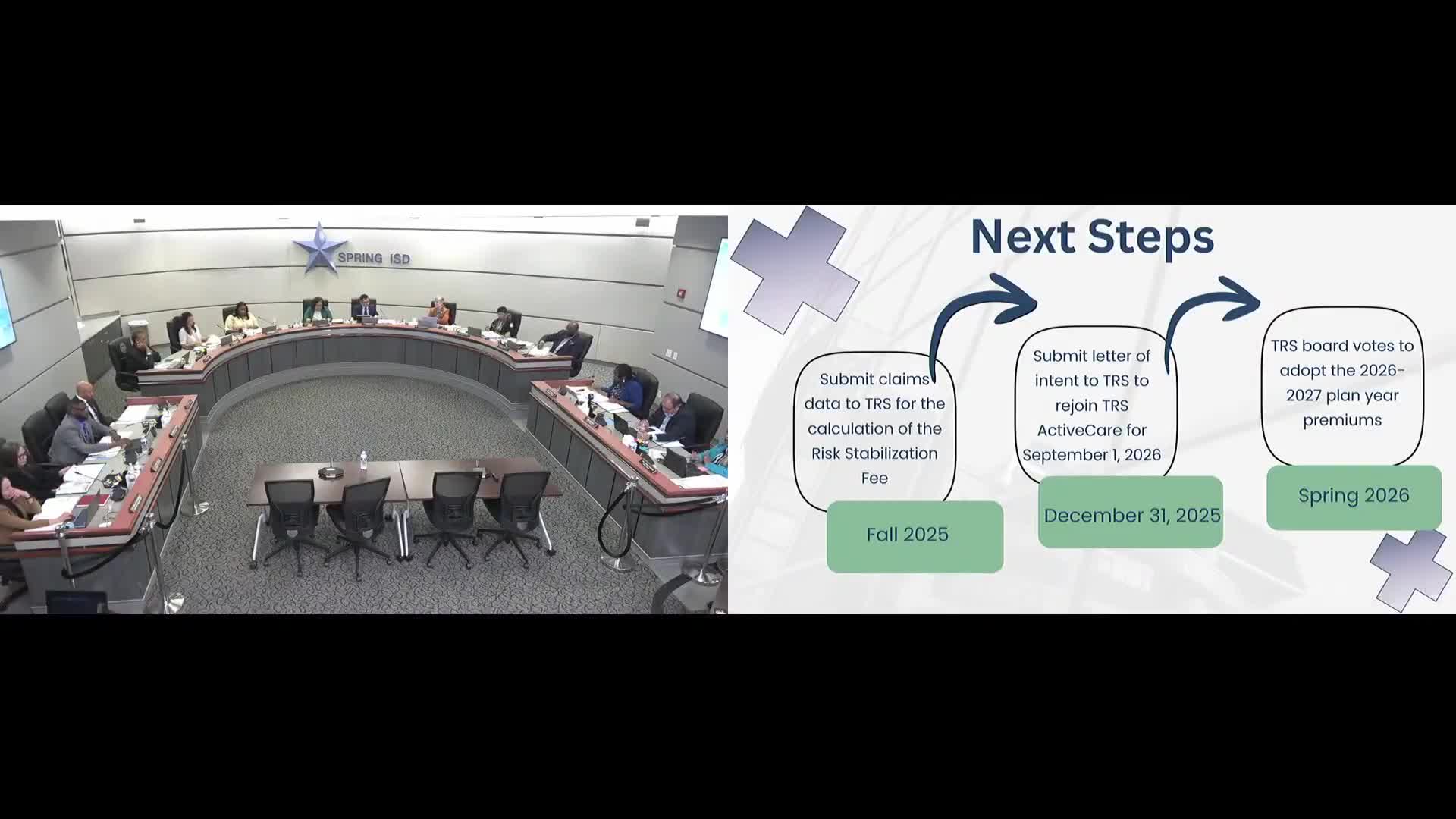
Deputy Superintendent Westbrooks said the district recorded an enrollment decline of about 1,100 students compared with prior projections; staff used conservative early-year attendance numbers and estimated a local revenue shortfall of roughly $6.5 million tied to the enrollment change. The presentation included an increase to state aid (estimated $14 million in the package) and an adjustment for TRS on-behalf accounting.
On staffing the administration reported the net result of leveling and closures equaled a decrease of 29.5 full-time-equivalent positions after closing 53 positions and adding several others where campus needs required. Westbrooks said work to keep the net reorganization cost low produced a current net estimate of $150,000 and that staff were looking for additional vacant positions to reduce that number further.
The packet also reflected large capital and debt-service transactions: the district completed a combined bond sale and refunding that generated net proceeds and premium and allowed the district to lower the interest-and-sinking tax rate from the initially posted 44¢ to 42¢ for the current year by using capitalized interest and premium to cover near-term interest. Staff noted that the district's debt service fund balance increased as a result of the bond transactions.
Trustees asked follow-up questions on special-education staffing and stipends (administration said stipends were added for several special-education roles in this year's compensation plan), vacancy counts (208 unfilled vacancies as of Oct. 3, with 148 covered by interim staff), and outreach to recover lost enrollment (communications, chief of staff and school leadership were cited as responsible offices). Finance staff said a corrected fund-balance typo would be fixed in the board packet before Tuesday.
Why it matters: Enrollment and staffing changes directly affect revenue, staffing levels and campus services; stage-one budget adjustments inform decisions about priorities and any midyear corrective measures.
Administration said it will return with a second budget review as more data (tax roll values, final snapshot attendance numbers and refined state aid estimates) becomes available.
View the Full Meeting & All Its Details
This article offers just a summary. Unlock complete video, transcripts, and insights as a Founder Member.
30-day money-back guarantee
Sponsors
Proudly supported by sponsors who keep Texas articles free in 2025

