Palatka planning board unanimously recommends comprehensive plan update, sends draft to City Commission
November 05, 2025 | Palatka, Putnam County, Florida
This article was created by AI summarizing key points discussed. AI makes mistakes, so for full details and context, please refer to the video of the full meeting. Please report any errors so we can fix them. Report an error »
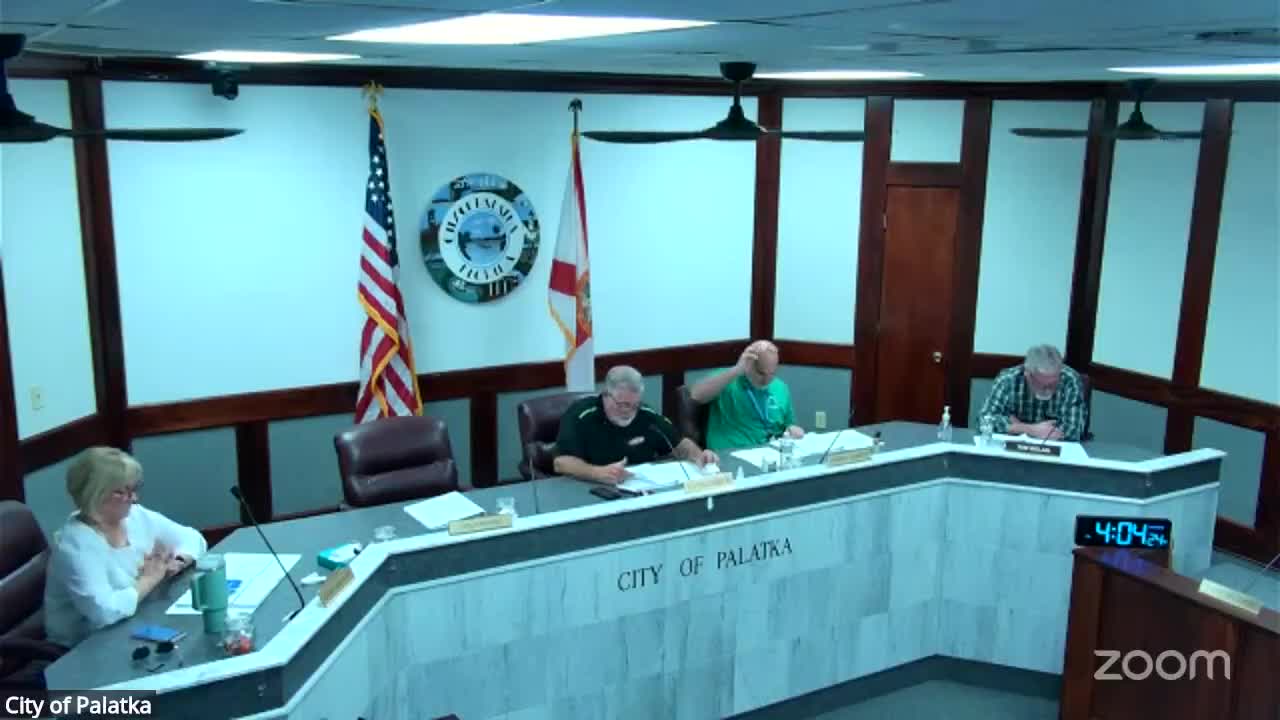
Consultant Kathy Ebaugh, who led the presentation, said the draft is “your new comprehensive plan. It is exactly 300 pages,” and described three goals for the update: maintain consistency with state law, implement the city’s previously adopted vision and align with current planning best practices. The presentation listed revisions to every required element, including future land use, housing, transportation, parks and conservation, and noted optional chapters on historic preservation and economic development.
Why it matters: The comprehensive plan sets citywide policy that guides zoning, capital improvements and development review. The board’s recommendation moves the draft to a transmittal hearing before the City Commission (proposed Dec. 11), followed by the state coordinated review (60 days) and a planned adoption sometime in February.
Key changes and recommendations
- Planning horizon: The draft extends the planning horizon to 2045; staff explained the extension will guide population, transportation, parks and utility planning through that date.
- Downtown and future land use: The plan creates a downtown future‑land‑use designation that mirrors an existing zoning classification, promotes mixed‑use development and clarifies when planned unit developments (PUDs) are appropriate.
- Housing: The housing element emphasizes diversifying housing types, promoting affordability and rehabilitating substandard units so they meet current codes.
- Transportation: The transportation element, prepared with a transportation consultant, emphasizes multimodal connections (pedestrian, bicycle, transit and auto), recommends updating the long‑range transportation plan (LRTP) as an implementation step and suggests modes as varied as a water ferry to augment connectivity. The consultant noted that, numerically, no roadways currently meet the statutory definition of a failing facility but projected some corridors could reach deficiency within 10 years and urged LRTP work and coordination with FDOT.
- Parks and recreation: The draft moves the city’s level‑of‑service (LOS) standards into the capital improvements element and recommends revising LOS standards to account for accessibility and distribution of park space across neighborhoods rather than relying solely on total acreage.
- Public facilities and capital improvements: The update adopts and implements the city’s water supply plan and consolidates LOS standards into the capital improvements element; staff noted the five‑year capital improvement schedule provided with the draft is still a working document.
- Intergovernmental coordination: The ICE element recommends pursuing an interlocal agreement with Putnam County to resolve enclave/service boundary issues and better coordinate school, transportation and facility planning.
- Private property rights: The draft includes the new private property rights element required under current Florida statute.
Public comment and requested edits
During the hearing, public commenter Allegra Kitchens requested several wording changes and policy edits. Kitchens recommended changing mandatory language in selected policies (the word “shall”) to discretionary language (“may” or “consider”), argued against naming a single arts organization in the economic development language and urged caution on infill policies that could conflict with the community’s preference for wooded lots. Kitchens said the draft’s economic policy sentence “The city shall establish a staff position such as economic development coordinator” conflicts with the city code’s relationship with the chamber of commerce; staff later clarified that the city code designates the chamber as the designated economic development representative for certain grant functions and that language can be clarified.
Consultant response and staff direction
Kathy Ebaugh acknowledged statutory constraints (noting some language is required by state statute) and agreed to work with staff on clarifying language. She signaled willingness to remove the specific arts organization name from the economic development policy and to revise Main Street language to “consider” or “may consider” reestablishment rather than a mandatory “shall,” per board direction.
Board action
A board member moved to recommend the draft comprehensive plan to the City Commission “with the recommended changes as noted.” The motion was seconded and the board voted aye; the motion passed unanimously. The board instructed staff and the consultant to incorporate the agreed edits before transmittal to the City Commission. The consultant restated the near‑term process: transmittal to the City Commission (proposed Dec. 11), a state coordinated review period of 60 days and final adoption anticipated in February.
Next procedural steps and administration
Staff announced that Alex (planning staff) will handle future meeting administration duties for the planning department (minutes, notices and packages).
View the Full Meeting & All Its Details
This article offers just a summary. Unlock complete video, transcripts, and insights as a Founder Member.
30-day money-back guarantee
Sponsors
Proudly supported by sponsors who keep Florida articles free in 2025

