County staff warn HR 1 changes and outdated eligibility system could shift SNAP costs to Beltrami County
November 05, 2025 | Beltrami County, Minnesota
This article was created by AI summarizing key points discussed. AI makes mistakes, so for full details and context, please refer to the video of the full meeting. Please report any errors so we can fix them. Report an error »
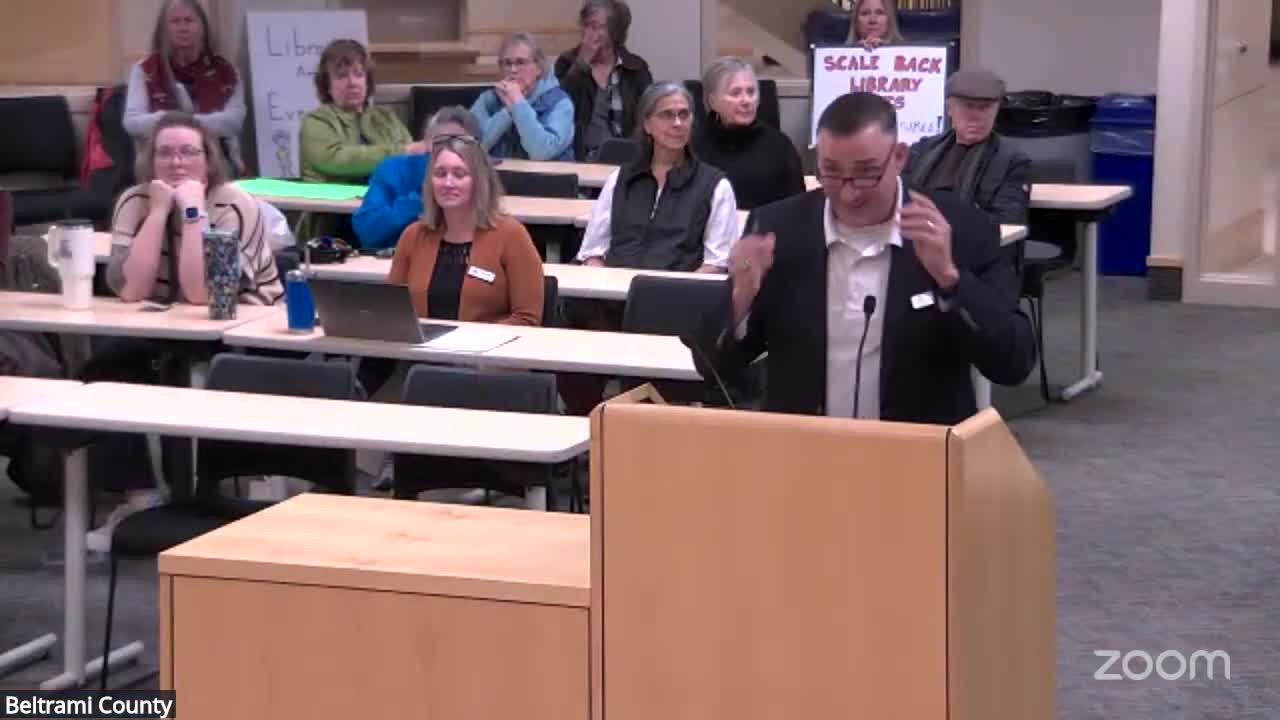
‘‘A payment error happens when someone’s eligibility or benefit amount is determined incorrectly, and these errors are not the result of fraud,’’ Kurt said. He emphasized the SNAP payment error rate measures dollar‑amount discrepancies, not case counts, and that the federal QC process can require reviewers to reverify and interview recipients to redetermine correct benefit amounts.
Kurt told the board that in federal FY2025 the state pulled six Beltrami cases for QC review over seven months; one of those cases produced an overpayment of $155 against a total audited benefit amount of $1,584, which equated to a 9.79% error figure on that limited sample. He noted that the federal QC statistical samples the state uses are not sized to give county‑level statistical certainty (for a reliable county error rate with a 95% confidence interval, a much larger sample would be required), so the local interpretation of a state‑level error rate can be misleading.
Under changes tied to HR 1, Kurt said, if a state’s SNAP payment‑error rate exceeds federal thresholds the state can face financial consequences that may be passed to counties. He also cited a reduction in administrative reimbursement (from 50% to 25% in recent proposals) as a separate source of potential county levy exposure.
Kurt and other staff pointed to the county’s eligibility IT system (Maxis, a long‑standing system), which they said was originally developed in the early 1990s and requires manual workarounds that increase the risk of data entry errors. He recommended state‑level modernization of eligibility systems, simplification of verification requirements, and consideration of federal demonstrations or waivers (for example, extending recertification intervals for elderly and disabled recipients) to reduce administrative touches that create errors.
Board members asked clarifying questions about whether recipients with work or income can receive benefits (Kurt explained SNAP eligibility remains income‑based and time‑limited rules apply for able‑bodied adults without dependents) and whether contingency federal funds being discussed nationally would reach local EBT cards; Kurt said distribution and timing were still unclear.
Kurt summarized potential county exposure from two vectors: a benefit dollar‑error cost shift (estimated conceptually at up to about $800,000 given Beltrami’s roughly $8 million in annual SNAP benefits if a 10% shift occurred) and a reduced administrative reimbursement exposure (roughly $250,000 using current reimbursement levels). He urged modernization of systems and clearer state guidance to reduce error rates and county vulnerability.
No formal action was taken; commissioners requested further materials and suggested staff provide a demonstration of the legacy eligibility system so board members can better understand administrative burdens when they consider legislative priorities.
Don't Miss a Word: See the Full Meeting!
Go beyond summaries. Unlock every video, transcript, and key insight with a Founder Membership.
30-day money-back guarantee
Sponsors
Proudly supported by sponsors who keep Minnesota articles free in 2025

