Neighbors and Oak Hills HOA oppose Cornell Road transitional housing plan, demand safety safeguards and transparency
November 05, 2025 | Washington County, Oregon
This article was created by AI summarizing key points discussed. AI makes mistakes, so for full details and context, please refer to the video of the full meeting. Please report any errors so we can fix them. Report an error »
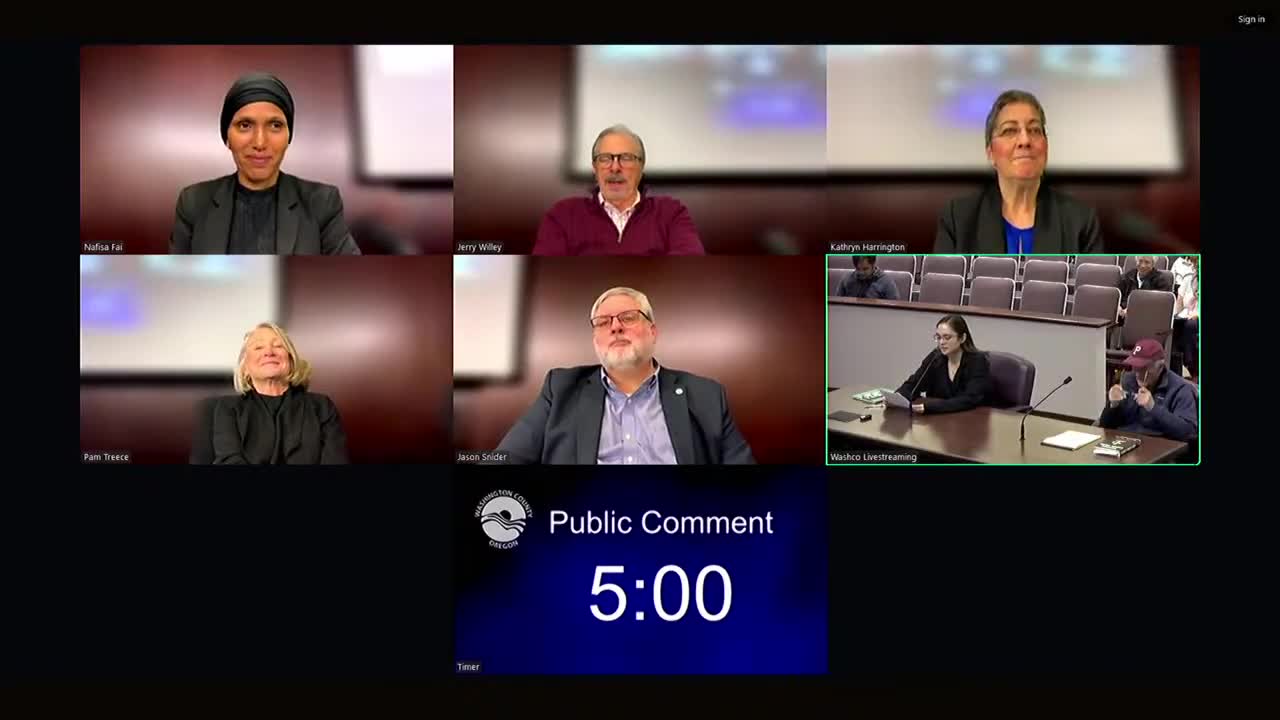
Stephanie Davidson told the board she is not opposed to addiction recovery services generally but said neighbors learned about the countypurchase only after the property changed hands. "By intentionally concealing the true nature of this project for so long, the county denied us, your constituents, a meaningful opportunity to have input into this process at a time when it mattered," Davidson said. She asked the board to explain what laws or grant terms prevent background checks and to provide any data the county relied on to justify the current approach.
Megan Hill, board president of the Oak Hills Homeowners Association, said the neighborhood "formally opposes this project in its current form" and listed specific demands: mandatory background checks for all residents, staff and volunteers; categorical exclusion of violent and high-risk sex offenders; 24/7 on-site professional security and surveillance; an enforceable good-neighbor agreement cosigned by the county with dedicated funding for safety measures; and public reporting of safety incidents. "Compassion without accountability is negligence," Hill said.
Both speakers challenged county statements that state or federal law preclude certain safety conditions. Hill cited Oregon administrative rule OAR 255-060-0009 (residence requirements for certain registered offenders) to argue the rule applies to permanent housing and not transitional housing and that probation officers may grant exceptions. She said county communications that implied categorical protections were available were inaccurate and created false security.
Chair Jerry Harrington responded that the board is not ignoring community concerns and described the pace of government: "I want to understand these very same questions too, but I actually have to work at the speed of government." Harrington said the county would continue the process while acknowledging neighbors' concerns and urged continued engagement.
Speakers asked the board for specific information, including the legal basis for restrictions the county says it cannot impose, any grant terms that limit background checks, and the data the county relies on to justify a no-barriers approach. The board heard these requests but did not take an immediate vote or change of course during the meeting.
View the Full Meeting & All Its Details
This article offers just a summary. Unlock complete video, transcripts, and insights as a Founder Member.
30-day money-back guarantee
Sponsors
Proudly supported by sponsors who keep Oregon articles free in 2025

