Texas Supreme Court to decide whether amended pleading can cure missing certificate of merit
November 05, 2025 | Supreme Court of Texas, Judicial, Texas
This article was created by AI summarizing key points discussed. AI makes mistakes, so for full details and context, please refer to the video of the full meeting. Please report any errors so we can fix them. Report an error »
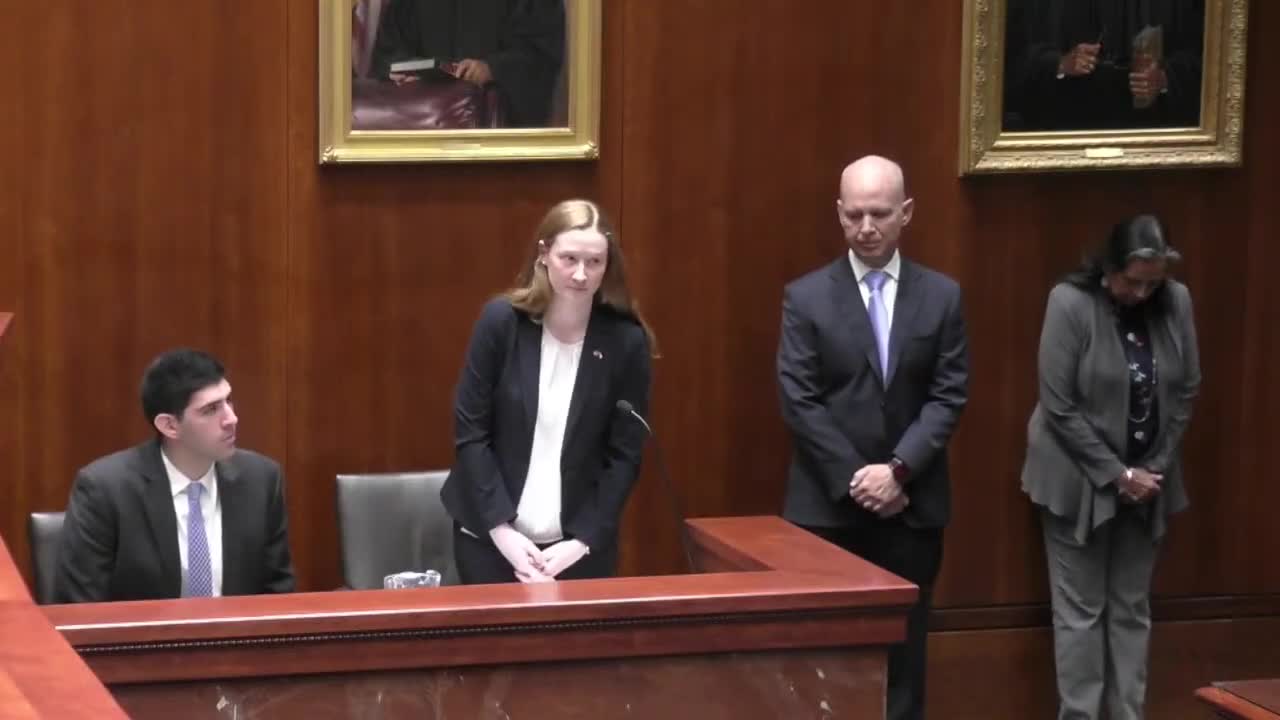
The issue, the justices were told, governs whether a later filing is treated as the “first-filed” pleading for purposes of the contemporaneous statutory requirement and how the statute-of-limitations analysis should proceed. Counsel for the respondent, Miss McFarland, said the dismissal provision is a sanction intended to deter meritless claims but not a “death penalty,” and that the legislature intended claimants should receive a second opportunity to comply with the certificate requirement. McFarland argued the Fourth Court of Appeals’ decision allowing the amended pleading to serve as the operative filing better aligns with the statute’s aim of deterring meritless claims while preserving meritorious ones.
Throughout argument the justices pressed both sides on precedent and practical consequences. Petitioner's counsel relied on this court’s prior decisions (discussed in argument as “Cross,” “Levinson,” and “Cruz”) to say that once a suit is dismissed it is as if the suit was never filed and the plaintiff must start a new cause of action and then, if appropriate, seek consolidation. Respondent’s counsel countered that remanding the parties to refile in a new cause could defeat a claimant’s ability to obtain relief where limitations might bar a refiling, and that trial courts retain discretion to grant leave to amend or to structure dismissals with a view to fairness.
The justices also explored waiver and relation-back doctrines. Petitioner's counsel emphasized that the question before the court is the mechanical question of how a plaintiff may cure the defect, not whether the claim ultimately relates back for limitations purposes. Respondent’s counsel said that, in practice, courts have read the statute to allow an amended pleading to perform the required function in some circumstances and urged the high court to preserve a meaningful second chance for claimants.
The court heard additional argument on how multi-defendant cases and extensive discovery participation affect waiver analysis, and whether Texas Rules of Civil Procedure (including rules on amendments and consolidation) must be read to give effect to the statute. No decision was announced from the bench; the parties argued that resolving the procedural question would remove the need to litigate statute-of-limitations issues in some post-dismissal contexts.
Don't Miss a Word: See the Full Meeting!
Go beyond summaries. Unlock every video, transcript, and key insight with a Founder Membership.
30-day money-back guarantee
Sponsors
Proudly supported by sponsors who keep Texas articles free in 2025

