San Mateo council directs staff to pursue four reach-code options for cooling upgrades and major home renovations
November 04, 2025 | San Mateo City, San Mateo County, California
This article was created by AI summarizing key points discussed. AI makes mistakes, so for full details and context, please refer to the video of the full meeting. Please report any errors so we can fix them. Report an error »
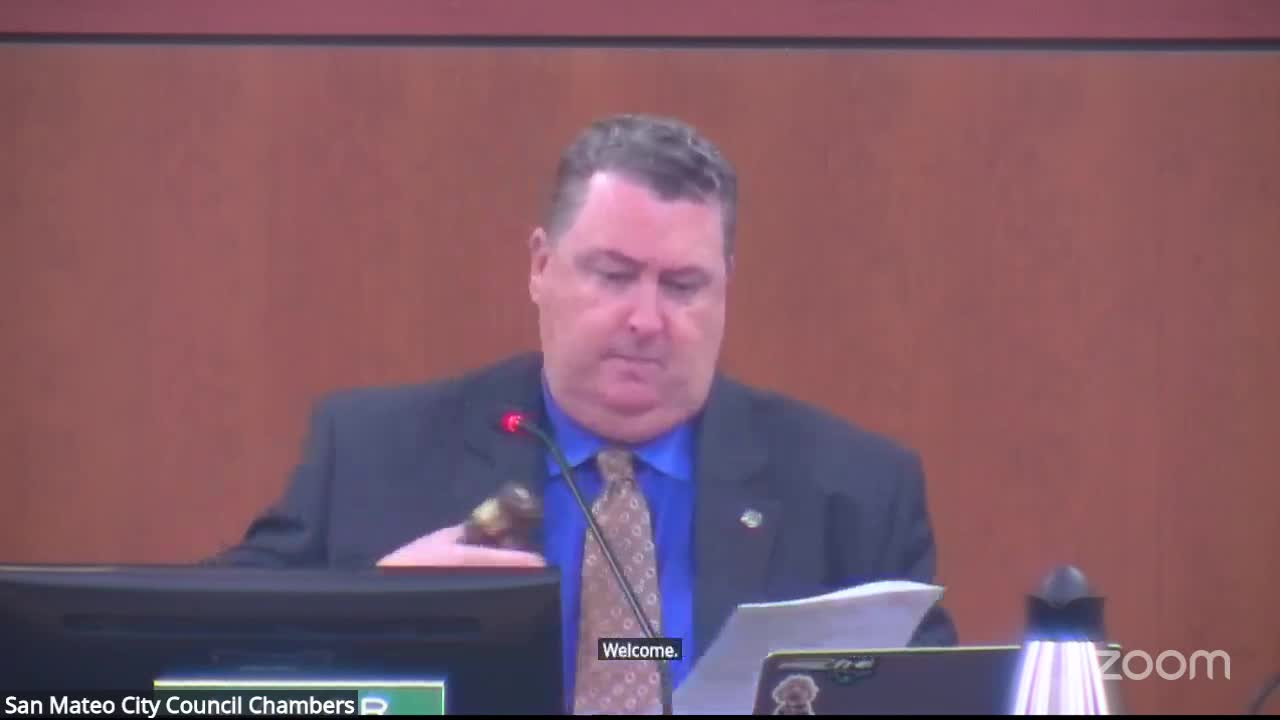
Andrea Chow, sustainability analyst for the City of San Mateo, told the council the options are intended to be adopted as stand-alone ordinances before the next state code cycle begins Jan. 1, 2026, and that adopted ordinances must be filed with the California Energy Commission and the Building Standards Commission before enforcement. Chow said the city’s existing reach codes expire Dec. 31, 2025, and staff presented technical analysis, permit-data summaries and cost-effectiveness studies to support four options.
Why it matters: Buildings account for a substantial share of San Mateo’s greenhouse-gas inventory, and staff told the council reach codes are a targeted way to reduce emissions when property owners are already planning or paying for upgrades. Public commenters representing local clean-energy groups, Acterra and the San Mateo Climate Action Team urged council to adopt all four options, citing indoor-air-quality benefits, available rebates and projected bill savings.
What was proposed: Staff described four options:
- Cooling upgrades for single-family homes, duplexes and townhomes (Option 1): when property owners install or replace an air conditioner they could comply either by installing a heat pump (which provides both heating and cooling) or by installing a conventional air conditioner plus additional efficiency measures. Staff estimated an annual reduction of roughly 257 metric tons of CO2e if the option were implemented.
- Cooling upgrades for nonresidential buildings (Option 2): applies to units roughly in the 5–20 ton range; property owners could install a heat pump or a single-zone air conditioner with a heat-recovery ventilator. Staff estimated about 427 metric tons CO2e/year of reductions from this option.
- FlexPath for major residential renovations (Option 3): projects above a set threshold (staff discussed square-foot and valuation options) would be required to achieve a target score from a menu of energy measures or install a heat pump. Staff presented example thresholds (500, 750, 1,000 sq ft) and target scores (12, 18, 30) and estimated FlexPath could yield about 730 metric tons CO2e/year depending on settings.
- Electric readiness (Option 4): require modest electrical infrastructure work during renovations near gas appliances (for example, water heaters or outdoor appliances) so future electrification is easier; staff had no quantifiable GHG estimate for this option and noted it expands the city’s current kitchen- and laundry-area readiness requirements.
Numbers and incentives: Staff reviewed three years of mechanical-permit data and reported an average of 328 mechanical permits per year across building types, with about 85% for single-family/duplex/townhome projects. The dataset showed roughly 216 heat-pump installations per year and 20–40 standard air-conditioning installations per year. Peninsula Clean Energy currently offers a $1,500 rebate for heat-pump HVAC replacements, a $2,500 rebate for heat-pump water heaters and a $10,000 0% loan; income-qualified households may be eligible for additional rebates or full-service no-cost electrification programs. Staff noted a prior local heat-pump requirement adopted in 2023 was later paused and repealed following a federal court case, and said the current options are structured differently and allow multiple compliance pathways.
Public comment and council response: Ten members of the public spoke. Speakers included representatives of the San Mateo Climate Action Team, Acterra, the Sierra Club and individual residents; most urged adoption of all four options, recommended aggressive FlexPath settings, and emphasized health benefits for people with asthma and other respiratory conditions. Council members asked detailed questions about outreach to equity-priority neighborhoods, how exemptions for economic hardship and technical infeasibility would work, how FlexPath would be incorporated into plan review, and whether adopting cooling requirements now would align with upcoming Bay Area Air District rules that phase out combustion heating equipment.
Council direction: After discussion, the council gave unanimous direction to staff to develop reach-code ordinances for the four options. On FlexPath the majority favored a 1,000-square-foot threshold and a 12-point target score; council asked staff to provide a written update and to revisit FlexPath performance in roughly one year. Staff said ordinances would need to be filed and approved by the California Energy Commission and Building Standards Commission before enforcement (filing and approval can take about four months).
What the council did not do: No ordinance introductions, motions or formal roll-call votes were taken at this meeting; the council provided policy direction to staff to draft ordinances and continue outreach.
Looking ahead: If the council formally introduces ordinances, staff said they would continue contractor and community outreach, coordinate with Peninsula Clean Energy on incentive alignment, and work with the community-development (building/plan-check) team on implementation and permit-review integration.
Selected quotes from the meeting:
"The time when an air conditioning fails is a great time to install a heat pump," said Robert Whitehair of the San Mateo Climate Action Team during public comment.
"Right now is the best time to take action," said Natalie Diaz, a high-school member of 350 Silicon Valley and the San Mateo Climate Action Team.
"These building codes reflect common sense," said Wendy Cho of Acterra, citing health and bill-savings benefits.
Notes: The council repeatedly emphasized the need for targeted outreach to renters, multifamily residents and historically under-resourced neighborhoods and asked staff to clarify eligibility for rebates and income-qualified programs. Council members also requested that staff monitor implementation outcomes and return with a status update in approximately one year.
Don't Miss a Word: See the Full Meeting!
Go beyond summaries. Unlock every video, transcript, and key insight with a Founder Membership.
30-day money-back guarantee
Sponsors
Proudly supported by sponsors who keep California articles free in 2025

