Akron council approves three‑year FOP agreement amid calls for stronger police oversight
November 04, 2025 | Akron, Summit County, Ohio
This article was created by AI summarizing key points discussed. AI makes mistakes, so for full details and context, please refer to the video of the full meeting. Please report any errors so we can fix them. Report an error »
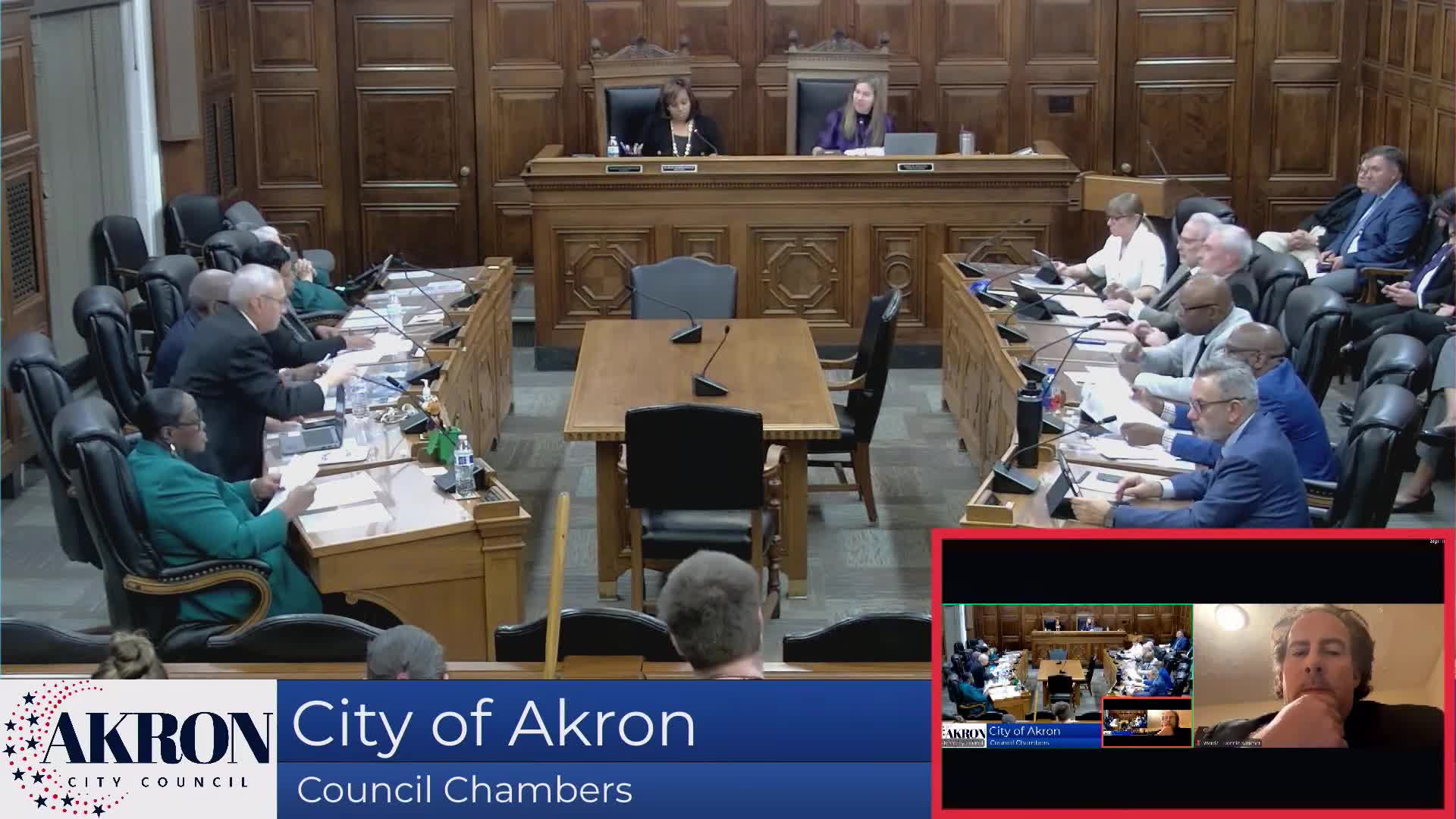
The ordinance, a substitute amendment offered by Mayor Malek, implements terms negotiated for 2025–2027 and was presented under emergency declaration with a request to suspend the rules. The council suspended rules and moved to a vote after committee reports recommended passage.
Why it matters: Council supporters said the compensation changes make Akron competitive with peer agencies and help retain trained officers. Detractors said the agreement overlooks reforms sought by residents and does not give the city’s civilian oversight process meaningful enforcement tools.
Discussion and key points: Councilman Garrett, speaking against the ordinance, said the contract “does nothing to move our community forward” on policing accountability and criticized the civilian oversight process as having “no teeth.” Garrett highlighted a timeline referenced in the agreement (article/section noted in debate) that requires an auditor to file certain complaints within 120 days and said the contract limits disciplinary options, leaving coaching or counseling as the most‑severe near‑term remedies in some cases.
Council members who supported the ordinance, including Councilman Bustill, argued the majority of Akron police officers perform well and that competitive pay is necessary given training costs and recruitment pressures. Councilman McKittrick and others said bargaining negotiations are a side‑by‑side process between the union and the administration and that council’s role is not to rewrite negotiated terms; they also said outstanding questions about non‑bargaining employees would be revisited separately.
After debate, the ordinance was approved on roll call. The vote record shows a single recorded no vote by Councilman Garrett; the council president announced the ordinance passes 12 to 1.
What the vote does not do: The ordinance allocates funding to implement the negotiated agreement; it does not by itself change the scope or authorities of the civilian oversight board beyond what is contained in the negotiated document. Council members said they plan additional internal reviews, including a use‑of‑force review, and staff work with the mayor to examine investigative timelines and other nonfinancial reforms.
Next steps: Council members said they will return to address pay or adjustments for non‑bargaining employees and continue work on oversight and investigations outside the contract process.
View the Full Meeting & All Its Details
This article offers just a summary. Unlock complete video, transcripts, and insights as a Founder Member.
30-day money-back guarantee
Sponsors
Proudly supported by sponsors who keep Ohio articles free in 2025

