City staff outlines economic development plan; BDAB, Echo Northwest and local contractors discuss roles and supplier diversity
November 04, 2025 | Bend, Deschutes County, Oregon
This article was created by AI summarizing key points discussed. AI makes mistakes, so for full details and context, please refer to the video of the full meeting. Please report any errors so we can fix them. Report an error »
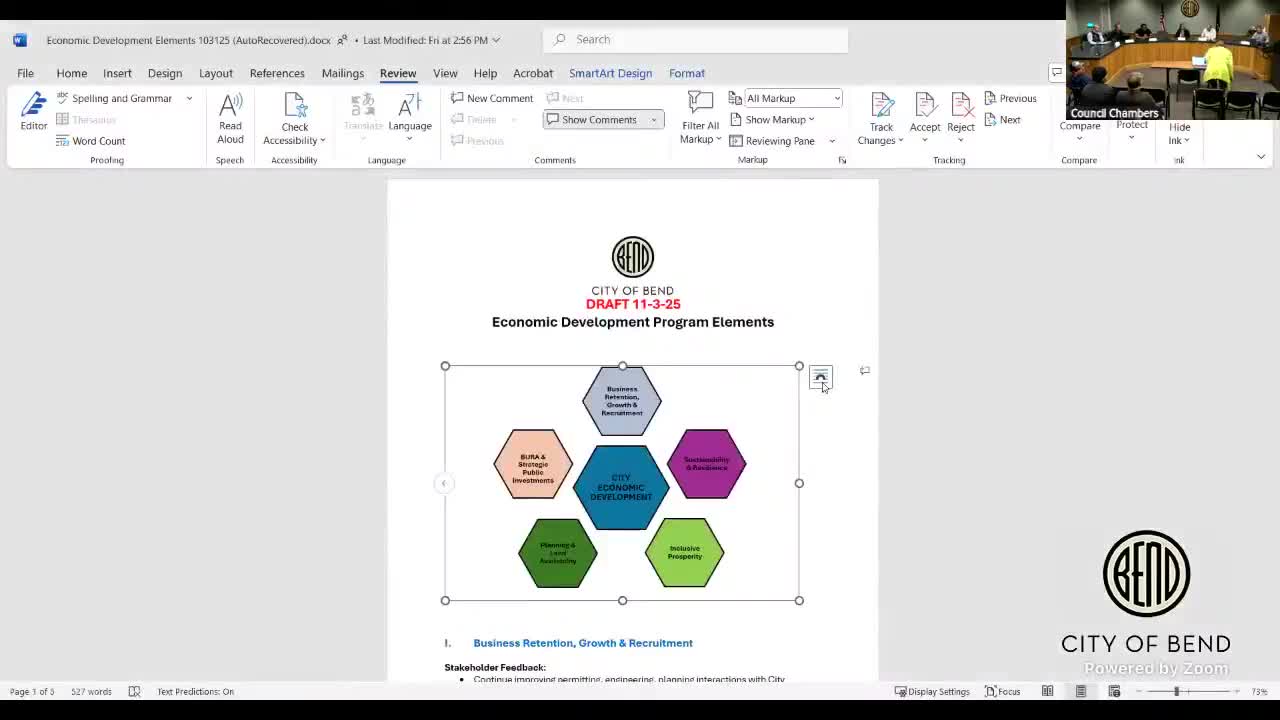
"Business retention and growth feels like where the rubber hits the road," Katie said when describing next steps; staff said they plan to dedicate staff time to a retention program and to partner with regional economic development organizations for entrepreneur support.
Echo Northwest consultant Cadence Petros summarized common Oregon approaches to urban renewal and economic development governance: (1) the council-as-urban-renewal-board model; (2) an independent appointed board model (the Prosper Portland example); and (3) hybrid models that combine elected officials and appointed community members. Petros said tax-increment financing is a key funding source for place-based investment, but state statute limits how much of a city's area may be inside an urban-renewal district (referenced in the presentation as a 15% cap).
Local contractor and PBDG representative Jesus Reyes described supplier-diversity and contractor-development efforts: he urged coordinated training, certification assistance and local outreach so Central Oregon firms can compete for state and federal opportunities. Reyes said PBDG has helped firms obtain certifications and connect with prime contractors and recommended the city support capacity-building and procurement outreach.
During discussion BDAB members raised questions about roles and coordination among advisory bodies (BDAB, CAB), whether BDAB should expand or refine its charter, and the timing of a strategic plan. Katie said the economic-development program budget includes about $128,000 of discretionary program funding through the end of the current biennium and that staff intend to pilot one or more small-business grant programs; staff asked BDAB for input on criteria and distribution priorities.
Decision and next steps: The board asked staff to circulate the draft work plan and notes from recent focus groups, email members for written feedback, and allocate an extended agenda item at the December meeting to discuss BDAB's role and priorities in the economic-development strategy.
View the Full Meeting & All Its Details
This article offers just a summary. Unlock complete video, transcripts, and insights as a Founder Member.
30-day money-back guarantee
Sponsors
Proudly supported by sponsors who keep Oregon articles free in 2025

