Staff proposes SOS‑based cap plus $15 ACP for green power; OPC and Exelon say approach reasonable
November 04, 2025 | Public Service Commission, Independent Agencies, Organizations, Executive, Maryland
This article was created by AI summarizing key points discussed. AI makes mistakes, so for full details and context, please refer to the video of the full meeting. Please report any errors so we can fix them. Report an error »
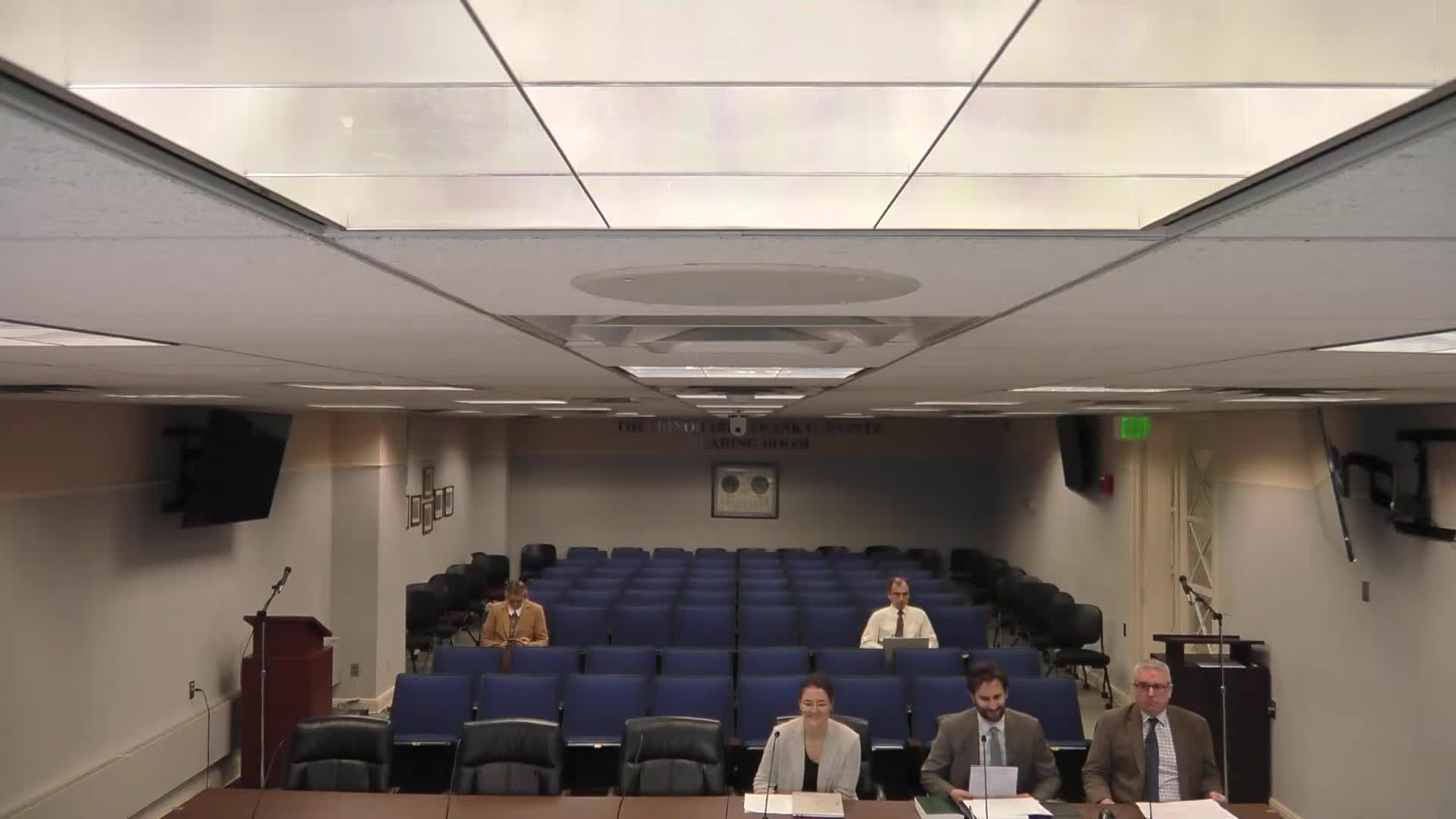
Kevin Mosier, a commission staff member, told the commission that "staff recommends the commission set a maximum price that is based on the most recent 12 month SOS price along with the tier 2 ACP of $15." He said staff had shifted from using the prior year's average tier‑2 REC price reported in the RPS report to using the statutory ACP because the difference is small (about 0.3 cents per kilowatt‑hour) and the ACP method is a more straightforward calculation.
Commissioners questioned whether the cap is intended to spur supplier participation or to protect consumers. Mosier described the recommended cap as primarily a consumer‑protection measure, explaining that "one of the reasons I chose the tier 2 ACP versus the tier 1 is based on the information I've seen, a lot of the suppliers that are currently or were in the past, you know, marketing a green product, we're buying the cheapest possible RECs available." He said staff wants to avoid a situation in which a cap tied to a higher ACP would allow suppliers to buy low‑cost tier‑2 RECs and realize "unfair profits." Mosier also noted that suppliers may file for individual rates above the cap and that staff would review such requests; staff indicated it has in some cases allowed adjustments up to about 150% of the trailing SOS cap to reflect higher REC costs.
The Office of the People's Counsel (OPC) filed comments and told the commission it supports staff's updated recommendation. "We had filed comments on October 10 supporting staff's initial recommendation. We did we do also support staff's updated recommendation to use the, alternative compliance payment, the tier 2, alternative compliance payment instead of the average tier 2 rec price from the previous year's RPS report," said Pauline Racy, a representative for OPC. OPC said its priority is balancing availability of green offers with preventing unfair profits.
Exelon utilities' representative Catherine Moriarty told the panel Exelon "support[s] using the trailing 12 month SOS rate to as a baseline to calculate the green price cap." She said the utilities did not take a firm position on how to calculate the adder, and the utilities' alternative method for determining the SOS component is "completely reasonable," though staff suggested that if the commission adopted the utilities' approach it would still add the tier‑2 ACP capped at $15 as the adder.
Multiple commissioners and parties noted that there were no competitive retail suppliers offering green products during the prior year and that no suppliers had filed for rates above the cap in that period. Commission members and participants discussed the need for transparency and consumer education if the trailing SOS approach is used, so customers can verify how the cap was calculated.
No formal vote or final order was recorded in the transcript of the proceeding. The hearing record shows staff is available for follow up and that the commission will continue the annual process required by statute to set guidelines for green product pricing.
View the Full Meeting & All Its Details
This article offers just a summary. Unlock complete video, transcripts, and insights as a Founder Member.
30-day money-back guarantee
Sponsors
Proudly supported by sponsors who keep Maryland articles free in 2025

