HEBISD updates SmartTag system, requires elementary tags and secondary combo IDs
November 04, 2025 | HURST-EULESS-BEDFORD ISD, School Districts, Texas
This article was created by AI summarizing key points discussed. AI makes mistakes, so for full details and context, please refer to the video of the full meeting. Please report any errors so we can fix them. Report an error »
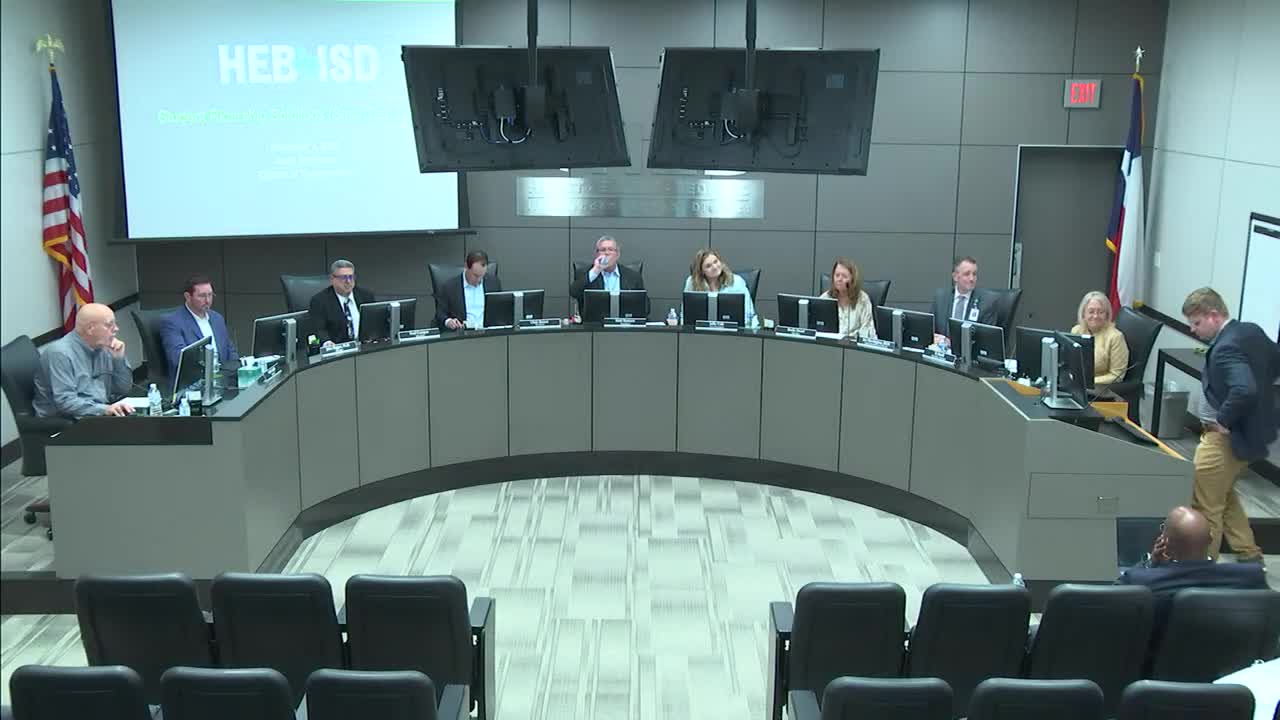
Slemons said the rollout occurred in three phases: implementation and stabilization (May–August 2024, hardware and printers installed and summer-school test drive), growth and optimization (current phase, including required usage and parent app adoption), and a forecasting/innovation phase that includes AI route optimization, fleet management modules and tablets for field trips. He said the parent app was launched in November 2024 and allows parents to receive notifications when a student boards or leaves the bus or when the bus is near a stop.
For the current school year, Slemons said SmartTag is required for all elementary students who ride district buses. Secondary students are issued a “combo” ID badge — a photo ID that also functions as a SmartTag — which the district uses as a visible security standard and as an emergency reunification tool that enables staff to scan students onto any bus and produce an active roster.
Slemons presented operational details: printers at campuses, on-site warehouse stock to speed replacement of lost tags, and reduced routing turnaround (what had taken three to five days can now be updated in 24–48 hours). He said parent app registrations have grown since launch; parents registered on the system number about 1,765, and the transportation staff said average daily riders are approximately 4,200–4,300 students.
Board members asked whether parents can see live bus movement on maps. Slemons said campuses and administrators can see buses moving on a map in the campus portal but that parents receive only notifications and ETA updates (the district recommended not enabling live-map tracking for parents for safety and privacy reasons). He said the capability exists in the vendor product but the district’s recommendation and executive leadership decision was to limit parental access to notifications only.
Slemons described next steps including evaluating AI-based route optimization, a field-trip management module, fleet management tools and piloting tablets for coaches/adult supervisors to scan students on out-of-district trips so an active roster is available.
Board members raised follow-up requests; Slemons committed to provide additional information about multilingual support in the parent app and the count of households with riders that have not registered for the app.
View the Full Meeting & All Its Details
This article offers just a summary. Unlock complete video, transcripts, and insights as a Founder Member.
30-day money-back guarantee
Sponsors
Proudly supported by sponsors who keep Texas articles free in 2025

