Warwick council ratifies three-year contract with firefighters, preserves phased OPEB contribution
November 04, 2025 | Warwick City, Kent County, Rhode Island
This article was created by AI summarizing key points discussed. AI makes mistakes, so for full details and context, please refer to the video of the full meeting. Please report any errors so we can fix them. Report an error »
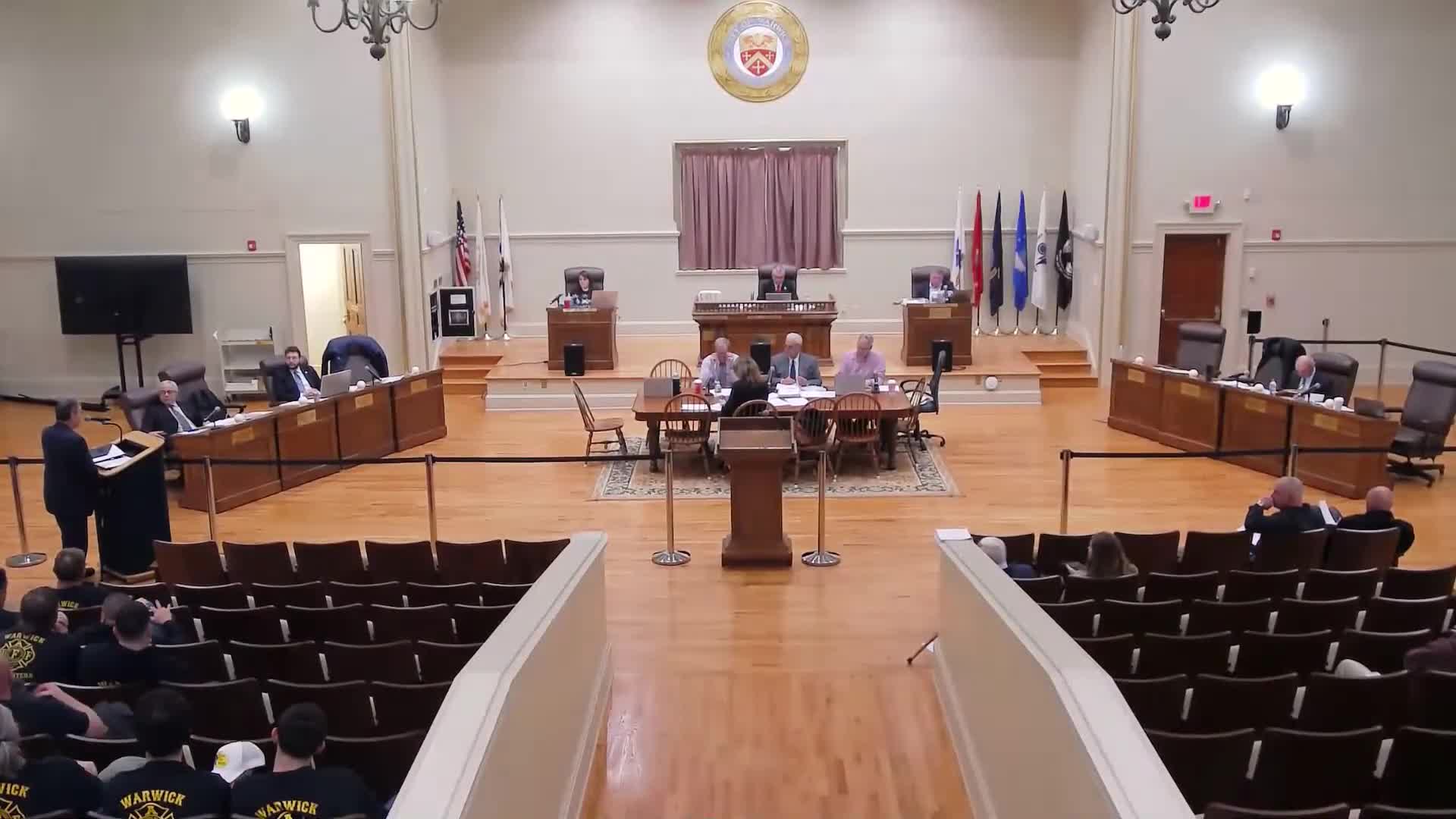
The Warwick City Council ratified a three-year collective bargaining agreement with Warwick Firefighters Local 2748 covering July 1, 2025 through June 30, 2028 after committee review, public comment and council debate.
Under the tentative agreement presented by city negotiators and the union, the contract includes phased salary increases and a schedule that moves employee OPEB contributions (retiree health funding) toward 2 percent by the end of the three-year term. Administration negotiators told the council the deal was negotiated to maintain parity with police contracts and to lock in a long-range plan for OPEB prefunding rather than leaving costs entirely "pay as you go." City officials said the agreement will smooth compensation costs across the budget and reduce arbitration risk if the council rejected the TA and the dispute went to binding arbitration.
Union leaders and the mayor argued the contract was needed to retain trained personnel and to keep Warwick competitive with neighboring departments; they said recruitment losses to departments offering higher starting pay had created retention pressure. The union also reiterated that the negotiated language preserves previously agreed limitations on retiree healthcare and that new hires face different benefit tiers than legacy employees.
The fiscal note prepared by the administration estimated salary and related costs would increase the city's annual outlays for the fire unit by roughly under $1 million per year in each contract year (figures reflect salary steps, raises and net OPEB changes as presented in the fiscal analysis). City negotiators said the incremental property-tax impact to a median homeowner would be modest in the near term and that OPEB prefunding was designed to reduce long-term risk.
Council debate ranged from questions about the long-term affordability of retiree benefits and the city's OPEB funding plan to concerns about recruitment and internal training. The city solicitors and outside counsel warned that rejecting the TA would likely send the case to binding arbitration, an outcome they described as costly and that could produce only a one-year award under state arbitration rules.
The council voted to ratify the tentative agreement after committee review and public comment.
Under the tentative agreement presented by city negotiators and the union, the contract includes phased salary increases and a schedule that moves employee OPEB contributions (retiree health funding) toward 2 percent by the end of the three-year term. Administration negotiators told the council the deal was negotiated to maintain parity with police contracts and to lock in a long-range plan for OPEB prefunding rather than leaving costs entirely "pay as you go." City officials said the agreement will smooth compensation costs across the budget and reduce arbitration risk if the council rejected the TA and the dispute went to binding arbitration.
Union leaders and the mayor argued the contract was needed to retain trained personnel and to keep Warwick competitive with neighboring departments; they said recruitment losses to departments offering higher starting pay had created retention pressure. The union also reiterated that the negotiated language preserves previously agreed limitations on retiree healthcare and that new hires face different benefit tiers than legacy employees.
The fiscal note prepared by the administration estimated salary and related costs would increase the city's annual outlays for the fire unit by roughly under $1 million per year in each contract year (figures reflect salary steps, raises and net OPEB changes as presented in the fiscal analysis). City negotiators said the incremental property-tax impact to a median homeowner would be modest in the near term and that OPEB prefunding was designed to reduce long-term risk.
Council debate ranged from questions about the long-term affordability of retiree benefits and the city's OPEB funding plan to concerns about recruitment and internal training. The city solicitors and outside counsel warned that rejecting the TA would likely send the case to binding arbitration, an outcome they described as costly and that could produce only a one-year award under state arbitration rules.
The council voted to ratify the tentative agreement after committee review and public comment.
Don't Miss a Word: See the Full Meeting!
Go beyond summaries. Unlock every video, transcript, and key insight with a Founder Membership.
✓
Get instant access to full meeting videos
✓
Search and clip any phrase from complete transcripts
✓
Receive AI-powered summaries & custom alerts
✓
Enjoy lifetime, unrestricted access to government data
30-day money-back guarantee
