Lacey holds public hearing on 2026 revenue sources as city projects lower beginning cash and slower new construction
November 04, 2025 | Lacey, Thurston County, Washington
This article was created by AI summarizing key points discussed. AI makes mistakes, so for full details and context, please refer to the video of the full meeting. Please report any errors so we can fix them. Report an error »
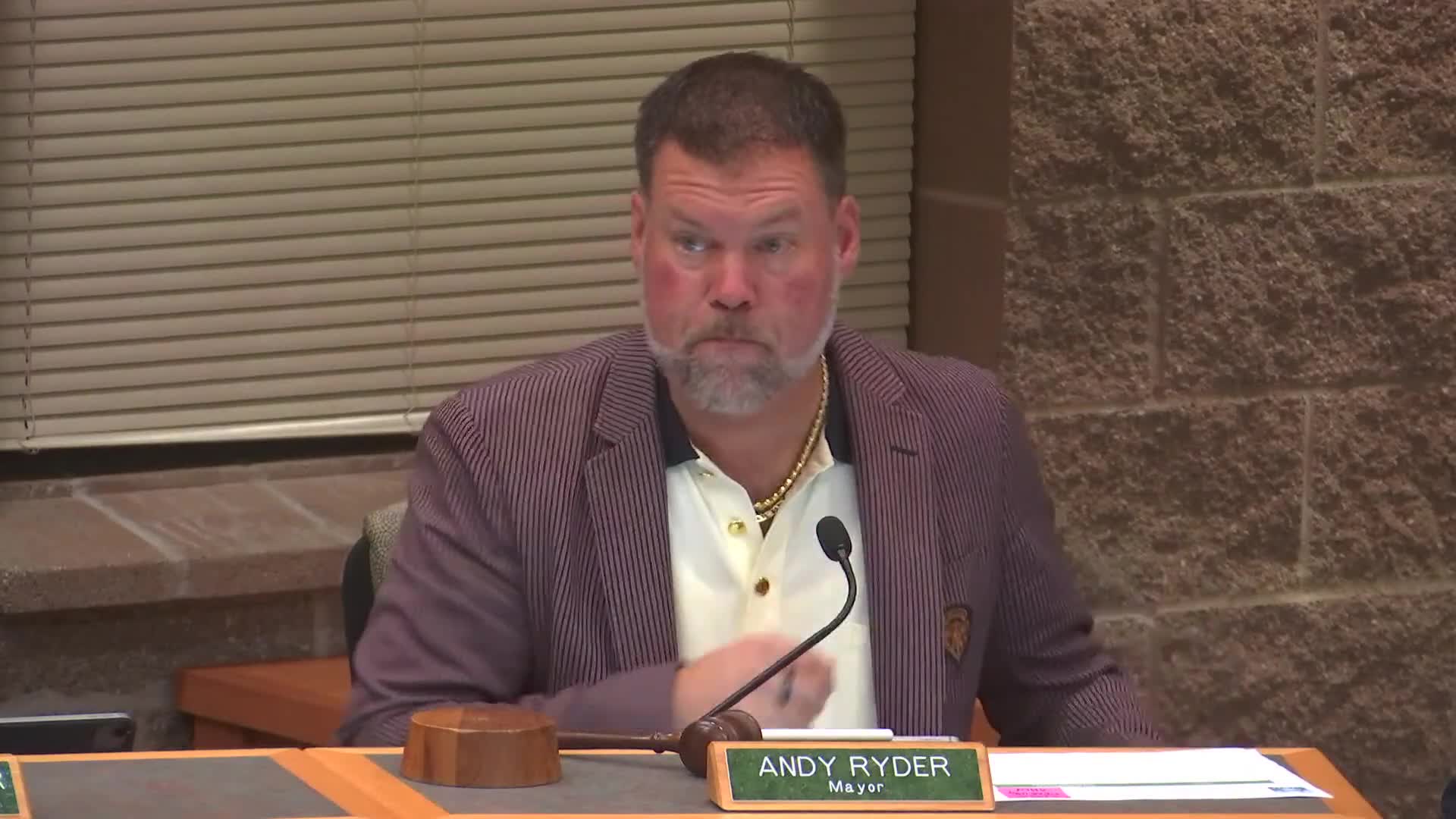
Troy (staff member) told the council the city’s general-fund revenue projection is about $14.7 million lower than what was presented two weeks earlier, and Chelsea (staff member) said the change is driven largely by a reduction in beginning cash/transfers and a smaller-than-expected new-construction assessed valuation from the county. Chelsea said the 2026 projected levies are $253,351 higher than 2025, with the components described as the general levy, new construction, the 1% statutory increase and a refund levy tied to assessment adjustments.
Chelsea noted new-construction additions supplied by the county totaled about $73.9 million for 2026 versus an earlier planning assumption of $175 million, which staff said will reduce anticipated collections. Staff explained the inverse relationship between assessed valuation and the levy rate: assessed-value increases can lower the levy rate and thus blunt revenue gains from those valuation increases.
On sales tax, staff presented a conservative, essentially flat projection for 2026; construction and retail trade—which together account for roughly half of the city’s sales tax—have shown year-to-date declines. Utility-tax projections show increases for electricity and natural gas but continued declines for telephone-related collections. REET is expected to be volatile and is projected at just under $2.4 million for 2026; staff said REET’s historic volatility stems from the value and volume of local real-estate transactions.
Staff also reported a projected $17 million reduction in a broad "other revenue" category, primarily from reduced beginning cash and one-time transfers—the single largest item being $6 million used for the Keough Park development and $3 million for a regional permanent supportive housing project. To balance the 2026 current-expense fund, the proposed budget uses approximately $4.77 million in reserves, including specific amounts for economic-development and policy-implementation reserves.
Councilmembers questioned the timing and completeness of the county assessor’s new-construction figures; several members suggested county assessor understaffing and processing backlogs could have delayed portions of valuation into future reporting periods. Staff said the county would provide updated projections later in November and that the council will consider two actions in the coming weeks: a resolution to authorize the 1% levy increase and an ordinance to set both the general property-tax levy and any voter-approved levies.
No formal council votes were taken on the revenue items at the Nov. 3 hearing; the public hearing was opened and closed in order to receive feedback and allow staff to incorporate updated county numbers in subsequent budget actions.
View the Full Meeting & All Its Details
This article offers just a summary. Unlock complete video, transcripts, and insights as a Founder Member.
30-day money-back guarantee
Sponsors
Proudly supported by sponsors who keep Washington articles free in 2025

