Panel weighs limits and disclosures for private and foreign funding of election administration
November 03, 2025 | 2025 House Legislature MI, Michigan
This article was created by AI summarizing key points discussed. AI makes mistakes, so for full details and context, please refer to the video of the full meeting. Please report any errors so we can fix them. Report an error »
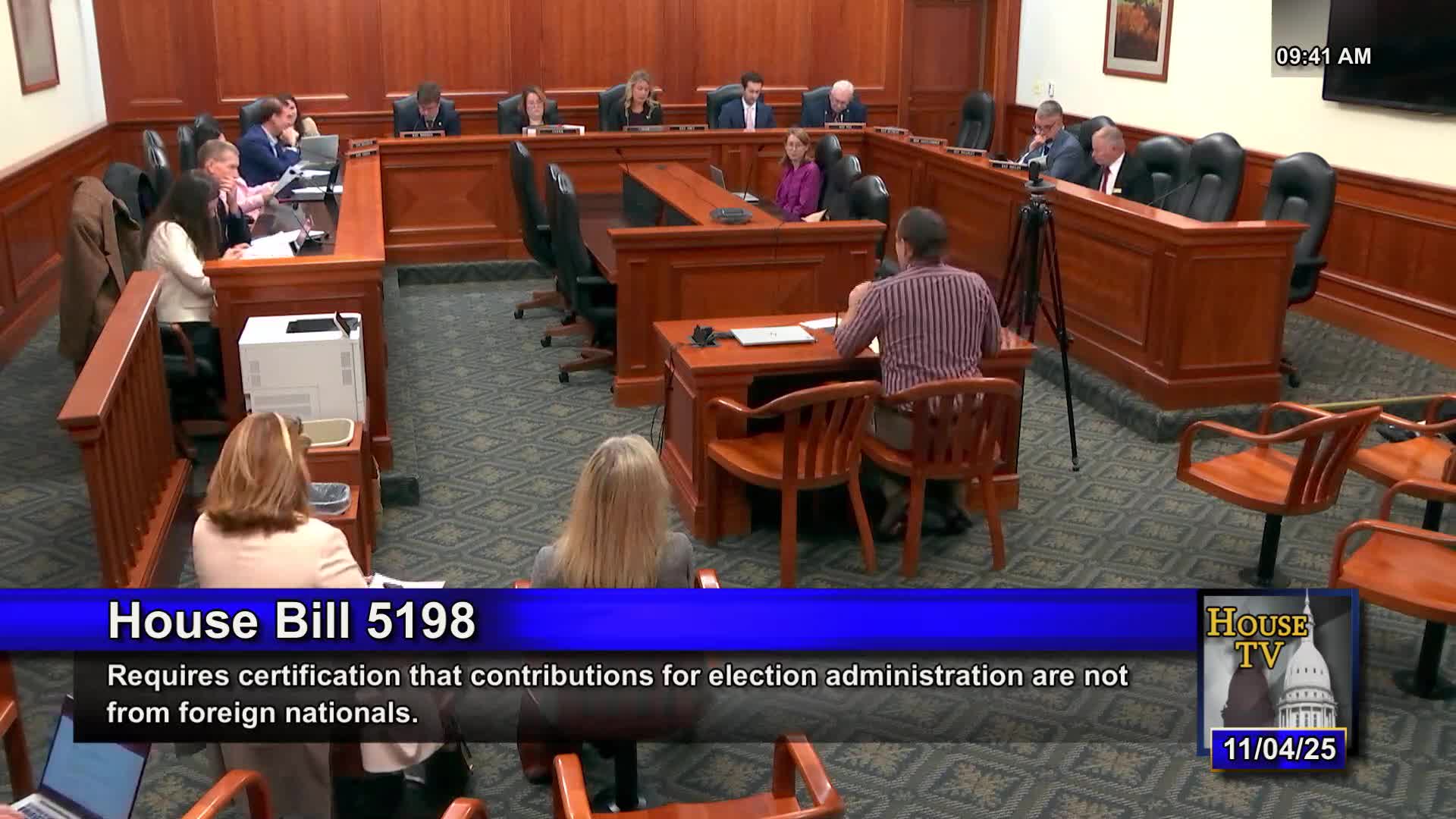
Jason Snead of Honest Elections Project ACTION testified in support and described a national ecosystem of privately funded election programs. He cited the Center for Tech and Civic Life (CTCL), which distributed grants after the 2020 election, and said CTCL and related efforts have prompted a number of states to ban private election financing. Snead told the committee some election offices were offered grants that equaled their annual taxpayer budgets and that "the risk of undue influence from those programs is clear." He also said organizations tied to large foreign donations feed into the same funding pipeline and that HB 51‑98's requirement for certifications filed with the secretary of state would aid enforcement.
Representative Wooden asked whether there is concrete evidence of foreign funding affecting Michigan election administration; Brock said he had no specific Michigan example to cite at the hearing but that the bill establishes penalties for knowing violations and follows measures passed in other states. Committee members discussed constitutional and policy constraints: Snead noted Proposition 2 (2022) includes private‑financing provisions and that the Michigan constitutional framework complicates an outright ban on some forms of private funding, so HB 51‑98 focuses on disclosures and certifications to enforce existing prohibitions.
No committee vote on the bill occurred at the hearing; the committee accepted testimony and moved on.
View the Full Meeting & All Its Details
This article offers just a summary. Unlock complete video, transcripts, and insights as a Founder Member.
30-day money-back guarantee
Sponsors
Proudly supported by sponsors who keep Michigan articles free in 2025

