Kenosha council denies several operator-license applications, refers one back to committee and upholds ordinance in massage-license hearing
November 03, 2025 | Kenosha, Kenosha County, Wisconsin
This article was created by AI summarizing key points discussed. AI makes mistakes, so for full details and context, please refer to the video of the full meeting. Please report any errors so we can fix them. Report an error »
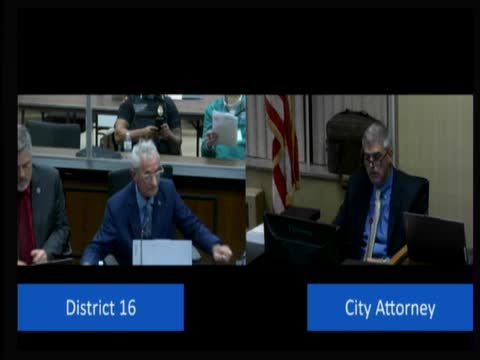
License and permit items were presented under consent and committee recommendations. The council approved routine items by voice vote, but several applications prompted hearings and motions. Notable outcomes:
- C2 (Vincent M. Schmidt): The council considered a motion to deny based on material police records and a false application. A motion to refer the matter back to the licensing-and-permit committee failed on the roll call vote (13–2). The council then concurred with the committee recommendation to deny the application. During discussion an alderperson noted the committee record and demerit points on the application; Schmidt told the council he would need 96 hours to provide further documentation and that some issues related to a medical condition. A council member suggested he consult the city attorney for guidance on what evidence to provide.
- C3 and C5: Motions to deny were moved and seconded; the council carried the denials per concurrence with license-and-permit recommendations.
- C4 (Patrice Lamingo): Applicant addressed the council and said she had more than 20 years in food service; the council concurred with the committee recommendation to grant the operator’s license with 90 demerit points.
- C6 (Tina Weiland): The council voted to send this application back to committee after the alderman who chaired licensing expressed a potential procedural error at committee and requested referral.
- C10 (Serenity and Peace LLC / massage establishment): Council voted to deny the application for violation of ordinance 13.125(e)(1)(a)(4), which the council read into the record: “Only massage therapists or bodywork therapists licensed pursuant to Wisconsin state statute shall be employed at massage therapists or bodywork therapists by the establishment.” The applicant and the building owner addressed the council; the committee record showed the therapist listed on the application had a lapsed license, and the council’s concurrence was to deny and allow reapplication when licensing issues are resolved.
Council members repeatedly referenced committee records, demerit point totals listed on applications and the requirement that applicants list prior citations. In several cases the committee had already held hearings; the council deferred where appropriate and requested applicants consult staff or city attorney on corrective steps.
Records read aloud at the meeting show some roll-call tallies: the motion to refer C2 back to committee failed 13–2; the subsequent concurrence to deny C2 passed (no detailed roll-call in transcript for the final concurrence beyond the public voice vote). Several denials were approved by voice vote; C6 was referred back to committee by motion and carried.
The council’s actions implement the licensing committee’s recommendations and leave open applicants’ options to reapply after correcting application or licensing deficiencies.
View the Full Meeting & All Its Details
This article offers just a summary. Unlock complete video, transcripts, and insights as a Founder Member.
30-day money-back guarantee
Sponsors
Proudly supported by sponsors who keep Wisconsin articles free in 2025

