Commissioners approve multi‑part emergency response to SNAP disruption, authorize donations and legal review
November 04, 2025 | El Paso County, Texas
This article was created by AI summarizing key points discussed. AI makes mistakes, so for full details and context, please refer to the video of the full meeting. Please report any errors so we can fix them. Report an error »
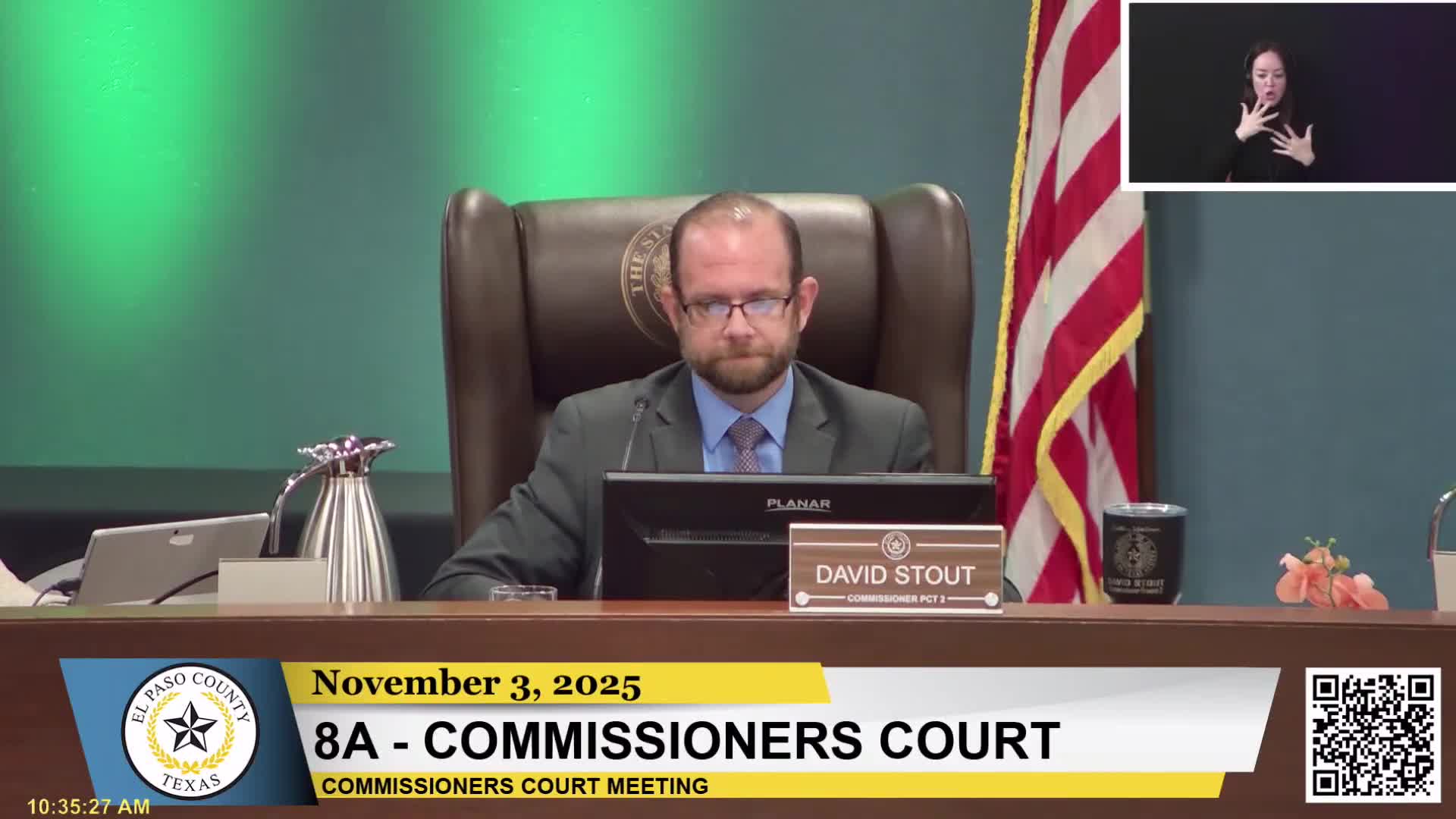
Background: Commissioner Stout opened the item by describing reduced SNAP benefits and the county’s particular exposure because of the region’s high concentration of federal civilian employees. He said the court should explore emergency actions and partnerships so “no one in El Paso goes hungry.” Community speakers, business leaders and nonprofit directors told the court the situation was already affecting households and local businesses.
What community speakers reported: Melissa Santos, director of finance and marketing for Food City, provided store‑level metrics: at two Food City stores SNAP/EBT accounted for 16% and 31% of sales at the named locations; Food City reported a multi‑year decline in SNAP sales and said it had launched a gift‑card program (Food City contributed $1,000 and raised $8,500 in donations) that had helped 233 households but had received about 1,500 applications before the application portal was paused for capacity. Chris Yackel, from El Paso’s Fighting Hunger Food Bank, said the food bank purchased roughly $100,000 of food last week (expected to last about two weeks) and has “maybe a half‑million left” in immediately deployable purchasing funds; the food bank had assembled about 2,000 emergency boxes for impacted families. Nonprofit operators (No Lost Food, Desert Spoon Food Hub) described volunteer and logistics needs and urged a decentralized network of community access points.
Court action: the court approved a motion (read into the record by the county attorney’s office) that included directed legal review and outreach and short‑term program and procurement steps. The motion, carried on a recorded vote, authorized the county attorney to review all legal actions related to a response to food insecurity; directed county government affairs to send a letter to the federal and state delegations and the governor asking for action (including that the state consider using reserves to address the gap); directed county administration to bring back options and to convene an internal/external stakeholder group; authorized the Community Services Department to implement a temporary electric assistance program (TEAP) effective Nov. 1, 2025 through Sept. 30, 2026 or until funds are exhausted; authorized immediate acceptance of donations pursuant to Texas Local Government Code §81.032; and authorized the county administrator to use a purchasing exemption to preserve or protect public health and safety related to food security.
Why commissioners acted: presenters and commissioners framed the measure as an urgent local response to an externally caused interruption of federal food benefits, with local businesses, the food bank and community foundations already deploying limited resources. Court members emphasized the need to support and coordinate existing nonprofit and private sector efforts and to alert the state and federal delegations.
Next steps and resources: the El Paso Community Foundation said it had established a fund and pre‑vetted a list (~6,000 people) and was coordinating gift‑card and direct assistance distribution with partners; Project Bravo and local nonprofits were named as operational partners. County staff will accept donations immediately, convene the stakeholder group and return with additional options and reports to the court. Several private businesses and nonprofits were listed on the record as already providing free meals or care packages (Food City, Weirdo’s Bakery & Cafe, Old Sheepdog Brewery, Mexican Candy Lady, Cafe Piro, Rosie’s, Fight Hunger Food Bank and local school meal programs).
View the Full Meeting & All Its Details
This article offers just a summary. Unlock complete video, transcripts, and insights as a Founder Member.
30-day money-back guarantee
Sponsors
Proudly supported by sponsors who keep Texas articles free in 2025

