Michigan House subcommittee hears testimony alleging harms from pediatric gender‑affirming care
November 03, 2025 | 2025 House Legislature MI, Michigan
This article was created by AI summarizing key points discussed. AI makes mistakes, so for full details and context, please refer to the video of the full meeting. Please report any errors so we can fix them. Report an error »
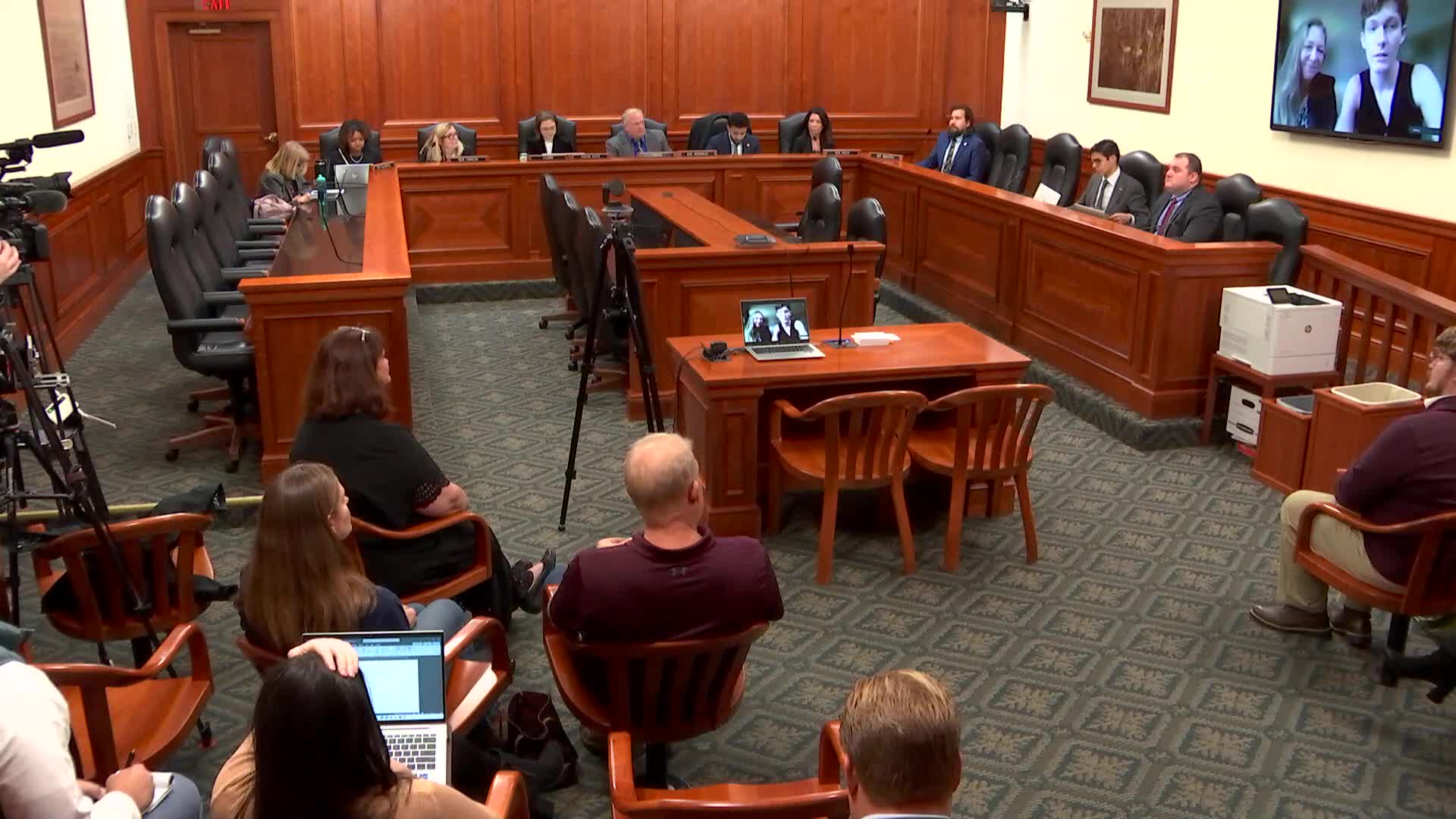
Witnesses who described themselves as former patients and a parent said they began receiving puberty blockers, cross‑sex hormones or surgeries as minors and later experienced serious, lasting health problems. "I started transitioning when I was 13 years old," said Johnny Skinner, now 22, who testified by Zoom that he was referred from a gender therapist to an endocrinologist at Childrens Mott Hospital and began hormones after his first endocrinology visit. Skinner said he and his mother were not told the full nature of diagnoses recorded in his chart and raised questions about how some conditions were coded in records.
The hearing included similar accounts. "They made me into a lifelong medical patient the day they pathologized and medicalized my mental distress," said Prisha Mosley, 27, who testified that high doses of testosterone as a minor caused long‑term endocrine problems and surgical complications. Jay Skeeters, 48, said medical teams performed surgeries on him in infancy after a diagnosis of gonadal dysgenesis; he said he later obtained records showing those decisions and spent years and personal funds reversing some procedures.
Jamie Reed, a former case manager at the pediatric transgender center at Saint Louis Childrens Hospital who testified she helped facilitate care for nearly 1,500 young people over about five years, said the clinics followed the so‑called Dutch protocol (puberty blocker at early Tanner stages, cross‑sex hormones later, surgery in adulthood) and that the protocols original evidence base is limited. Reed called the informed‑consent process "deceptive," said therapists were steered toward providing pre‑drafted letters to qualify youths for medical care, and alleged that some clinical practices produced revenue that shifted pediatric endocrine divisions from operating deficits to surpluses.
Committee members asked witnesses to provide medical records and details about referrals. Representative Paquette said he found repeated use of an "endocrine disorder related to puberty" diagnosis code in one witnesss records and asked whether the patients actually had listed endocrine conditions. Melissa Skinner, the mother of Johnny Skinner, told the panel she was not informed about those diagnoses until after she later sought records. The mother also described being sent from the clinic to a retail shop she identified as "Janets Closet" for form‑fitting garments; she said the items purchased were not worn and later discarded.
Witnesses described a range of medical issues they attribute to treatment: urinary ulcers and bleeding, persistent urinary incontinence, breast pain and fluid leakage, bone and joint problems, sexual‑function problems, metabolic and liver abnormalities, and infertility or impaired fertility. Several witnesses said clinicians had framed treatment as urgent and life‑preserving and cited high suicide‑risk language during family visits.
Reed cited international and national critiques of pediatric gender protocols, including the U.K. Cass review and the closure of the Tavistock clinic, and disputed claims that available studies show a 1–2% regret rate. Reed said some centers lost roughly 30% of patients after medicalization and that harms can emerge years later. She also described practical limits to fertility preservation for prepubertal children and said that, in her experience, hospital billing and procedures could make gender centers financially lucrative for pediatric endocrinology divisions.
Chair Meerman said major Michigan hospitals that previously offered pediatric gender‑affirming care have paused those services, but the committee needs more information on long‑term outcomes, insurance coding and whether care was concealed. The committee indicated it will continue oversight, requested records and invited witnesses to submit documentation.
No formal policy action or legislation was taken during the hearing; the only recorded committee action was approval of prior meeting minutes by unanimous voice approval. The panel adjourned after declaring intent to investigate further.
Don't Miss a Word: See the Full Meeting!
Go beyond summaries. Unlock every video, transcript, and key insight with a Founder Membership.
30-day money-back guarantee
Sponsors
Proudly supported by sponsors who keep Michigan articles free in 2025

