Michigan committee hears bills to criminalize 'fertility fraud' after victims and advocates testify
November 03, 2025 | 2025 House Legislature MI, Michigan
This article was created by AI summarizing key points discussed. AI makes mistakes, so for full details and context, please refer to the video of the full meeting. Please report any errors so we can fix them. Report an error »
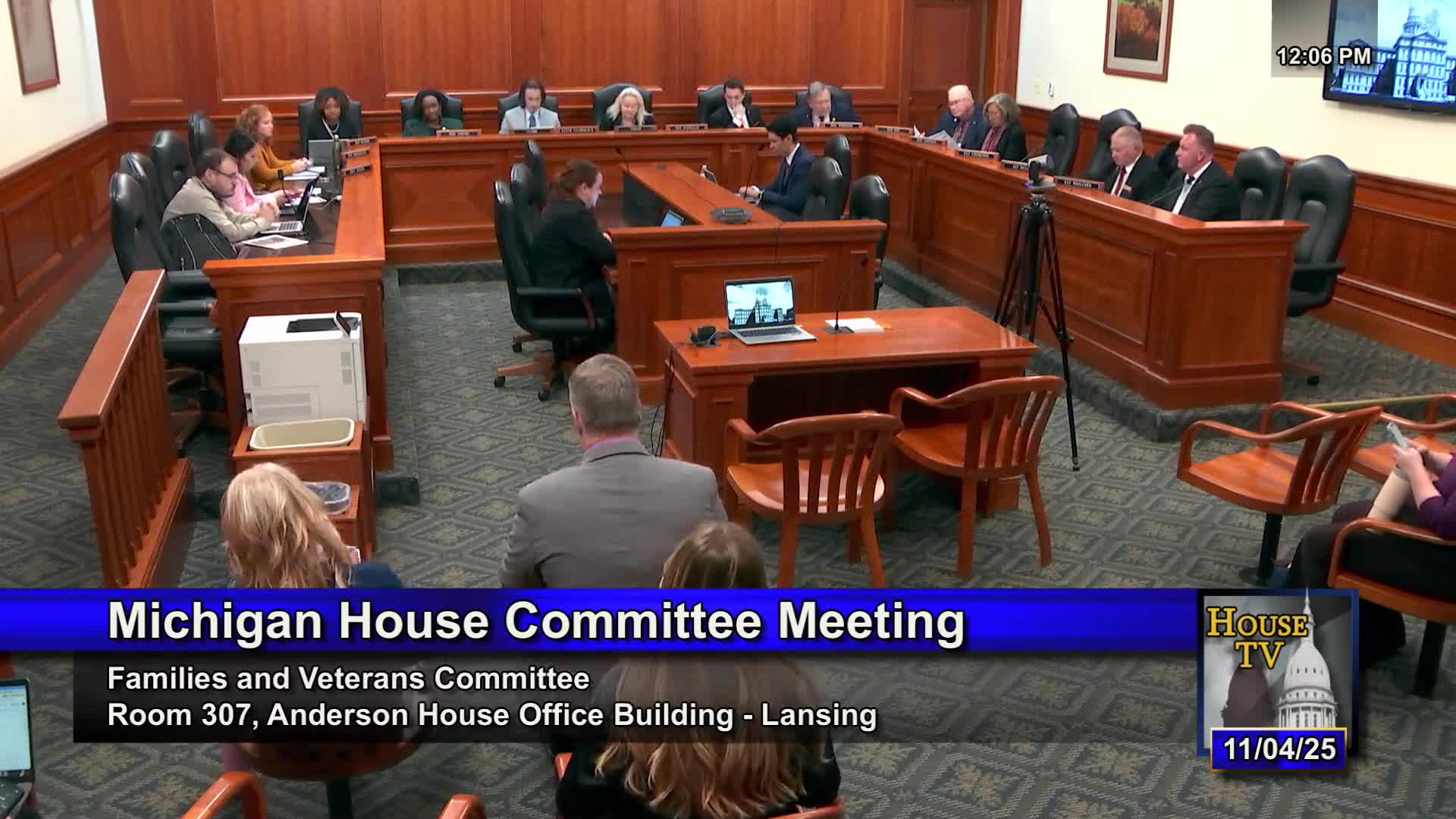
Representative Jack Roth, the sponsor who introduced the package, said the bills were prompted by a constituent’s DNA test that revealed the treating physician had used his own genetic material rather than the donor the patient selected. "We're talking about a facility that does IVF control. This is not your bar travel. This is actually something where you go and expect to get professional services, and if it doesn't happen, that is a problem," Roth said, describing the proposal as imposing "guardrails" to protect families and ensure informed consent for assisted reproduction.
Representative Alicia Saint Germain described HB5038 as the toughest element of the package. She said the bill would amend sentencing guidelines to make "individuals who provide false representation of reproductive procedures" subject to a class E felony with a sentence of up to five years, and that "those who knowingly or recklessly use an embryo that was not agreed to by the patient could be charged as a class C felony with a 15 year penalty." Saint Germain and Roth said they had consulted with the attorney general’s office and prosecutors while drafting the bills.
Several committee members asked detailed questions about scope and mechanics: how a statute of limitations would operate when discovery occurs years later; how prosecutors would determine when a discovery-based limitation begins to run; whether the bills would distinguish intentional fraud from accidental mishandling; and whether penalties are comparable to other states. Sponsors said the bills treat intentional acts as the gravamen of the offenses and that discovery would typically be verified through DNA testing and handled by the county prosecutor’s office.
Multiple witnesses described personal harms they say the bills aim to remedy. Jamie Hall, the constituent who originally brought this matter to Representative Roth’s attention, described learning via DNA testing that the doctor who treated her mother was her biological father and urged the committee to pass laws to prevent similar deception. "I've told my story many times as painful as it is to tell," Hall said.
Cara Dyerin, co‑founder of the nonprofit Right to Know, testified that she and her organization track state legislation addressing misattributed parentage. She said a number of states have enacted measures that vary in penalty and scope, and she emphasized that consumer DNA testing has made discovery far more common. "Every child really deserves to know the truth of their genetic origins, and every parent deserves informed consent," Dyerin said.
Lynn Weiner Spencer, who said she is donor-conceived and trained in nursing and psychology, described discovering her origins at age 35 and assembling a large group of genetically related half-siblings through consumer DNA sites. Spencer said she has 82 DNA-confirmed half-siblings and reported hearing accounts of historical clinic practices that she described as exploitative.
Speaking in opposition, Stephanie Jones, president of the Michigan Fertility Alliance, said the sponsors’ intent is understandable but that the five-bill package is written so broadly and vaguely that it would criminalize conduct outside the control of clinicians and donors, and could have the practical effect of removing donor services from clinics. "We support accountability, and we appreciate the good intent of this bill package, but the practical impact will be catastrophic for Michigan families," Jones said. She raised particular concerns about provisions that, as drafted, could make clinicians criminally liable for inaccurate or incomplete reporting of distant relatives’ medical histories or for vague categories described as a donor’s "social history." Jones urged a narrower approach and said the alliance had proposed a shorter, more narrowly targeted 200‑word provision intended to criminalize conduct by providers in egregious cases.
Committee members pressed both sides on the frequency of modern incidents and on prosecutorial discretion. Sponsors acknowledged that some historical cases involve decades-old practices and that many clinicians today follow chain-of-custody and screening procedures; they argued, however, that gaps remain and that criminal penalties would deter intentional deception. Opponents warned the bills’ broad definitions could create criminal exposure for clinicians based on donors’ imperfect knowledge of family medical history and could suppress patient access to donor-assisted services.
No committee vote on the bills is recorded in the transcript. The committee read two public comment cards and closed the hearing after further questions and exchanges about possible narrower language and next steps.
Don't Miss a Word: See the Full Meeting!
Go beyond summaries. Unlock every video, transcript, and key insight with a Founder Membership.
30-day money-back guarantee
Sponsors
Proudly supported by sponsors who keep Michigan articles free in 2025

