Auditor general finds material failures in Office of Recipient Rights; lawmakers press MDHHS for fixes
November 03, 2025 | 2025 House Legislature MI, Michigan
This article was created by AI summarizing key points discussed. AI makes mistakes, so for full details and context, please refer to the video of the full meeting. Please report any errors so we can fix them. Report an error »
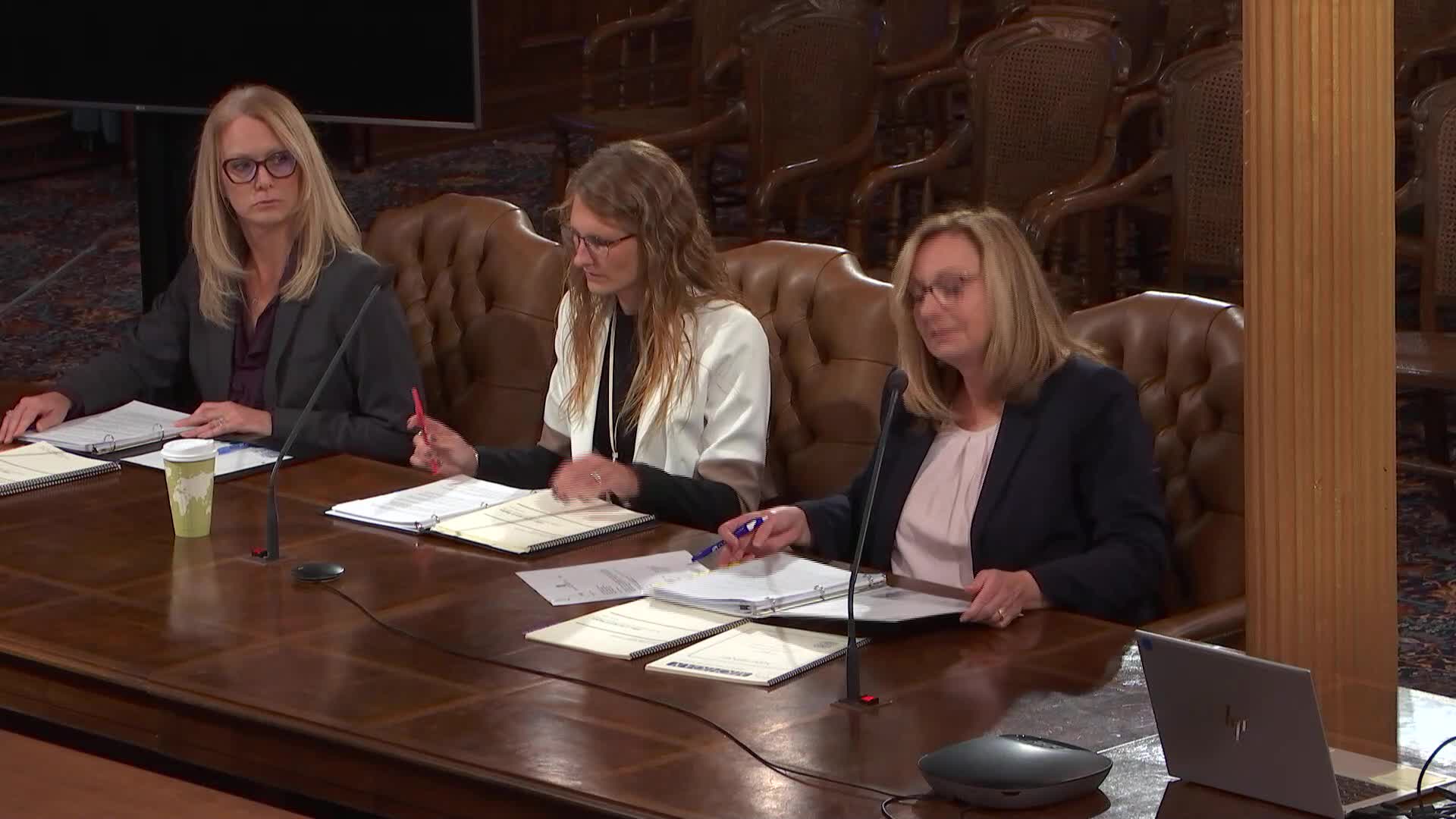
Yvonne Benn, an audit division administrator with the OAG, told the committee the audit covered a 34-month period and included walk-throughs at all five state psychiatric hospitals, review of 240 randomly sampled complaints, and direct observation of ORR procedures. "We concluded ORR's efforts were not sufficient," Benn said.
Heidi Herendeen, the OAG supervisor for the project, described the material conditions. They included: deficiencies in collecting complaints (many complaints arrive via drop boxes that ORR collected only twice weekly, producing delays), untimely initiation and completion of investigations (the audit found nearly 30% of investigations were not completed within the 90-day requirement and an average completion time of 175 days), inconsistent date stamping (more than 10% of sampled complaints lacked date stamps), and monitoring failures including unreliable or missing video and audio evidence at multiple hospitals. "Video and audio evidence may have helped facilitate or further support ORR's investigation conclusions for over 40% we reviewed," the report said, as Herendeen presented.
The report also said ORR's monitoring of CMHSP and LPH recipient-rights systems lacked documentation to support conclusions from on-site and annual reviews. The OAG noted that MDHHS agreed with five findings but disagreed with three (findings 3, 4 and 7); the audit includes auditor comments addressing those disagreements.
Senator Mike Weber, invited to testify, told lawmakers that media reporting and whistleblowers had exposed problems at the Hawthorne Center, the state's former child psychiatric facility, and at facilities where patients were relocated. He described specific incidents raised by families and whistleblowers, including a patient who was taken to an emergency room and later left unsupervised, overcrowded units and alleged staff shortages, and video the senator said showed water leaking onto beds. "We need more accountability. We need more oversight," Weber said.
Committee members pressed auditors and Weber on several issues: why surveillance footage had been missing or deleted, how complaints are received and routed (including the use of drop boxes), whether ORR's authority and duties need statutory clarification, the training and independence of rights advisors and appeals committee members, and whether corrective-action plans had been submitted to the state budget office. Auditors said the agency had not provided OAG a finalized corrective-action plan for publication at the time of the hearing and that some prior 2014 audit findings had recurred in the current report.
OAG officials also told the committee that MDHHS had responded to the audit acknowledging opportunities for process improvements but disputing aspects of the findings. In some cases, OAG said, MDHHS's disagreement required auditor comments because the agency's assertions were inconsistent with the auditors' evidence.
Lawmakers repeatedly noted the audit's finding that surveillance footage and other evidence were sometimes missing when investigators sought it. Representative Regas said the video shown earlier to the committee was "shocking" and asked why facilities' camera systems were not reliably available. Auditors said ORR lacked a formal protocol for state hospitals to notify ORR when video or audio recordings were unavailable, and ORR often learned about missing footage only when a rights advisor requested it.
Members also discussed staffing and resources. Auditors noted ORR had grown from 19 full-time employees in 2017 to 25 and its budget from about $2.7 million to $3.5 million, but committee members said the problems reflected deeper structural issues, including long-standing leadership and oversight failures and the need for statutory clarification.
The OAG report recommended a range of corrective actions including improving daily intake and evaluation of complaints, ensuring investigations are initiated immediately for allegations of abuse, neglect, serious injury or death, strengthening monitoring of surveillance and incident reporting, documenting appeals committee training, and tightening IT user-access controls for ORR's complaint tracking system. Auditors said several issues echo findings from a 2014 OAG review.
No formal committee votes on MDHHS policy or funding occurred at the hearing; members signaled interest in pursuing legislative and oversight steps to address the problems OAG identified and asked MDHHS to provide a formal corrective-action plan to the state budget office as required.
View the Full Meeting & All Its Details
This article offers just a summary. Unlock complete video, transcripts, and insights as a Founder Member.
30-day money-back guarantee
Sponsors
Proudly supported by sponsors who keep Michigan articles free in 2025

