Winchester staff outlines strategic-plan goals emphasizing mobility, neighborhood design districts and housing tools
November 03, 2025 | Winchester City, Frederick County, Virginia
This article was created by AI summarizing key points discussed. AI makes mistakes, so for full details and context, please refer to the video of the full meeting. Please report any errors so we can fix them. Report an error »
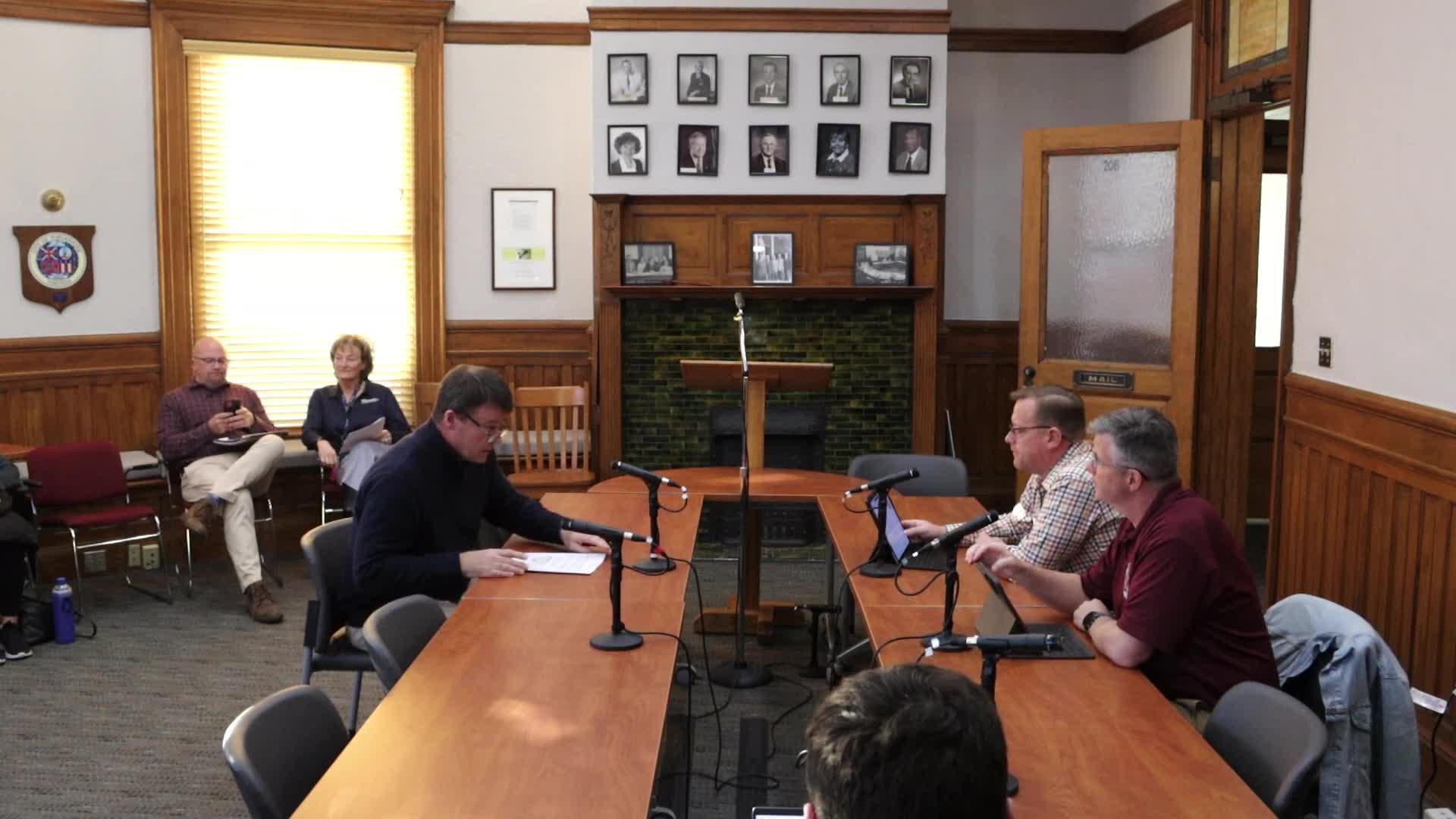
The presentation matters because the goals set priorities for how the city will pursue redevelopment, transportation investments and housing tools over the coming years. Staff said the draft identifies four focus areas: (1) proactive community development through neighborhood design districts (NDDs); (2) mobility for people and safer, more appealing public‑realm spaces; (3) a balanced housing mix; and (4) enhancing building and land condition to reduce blight and support reuse.
Steve Castro, a representative of BikeWalk Winchester, urged the committee during public comment to include an explicit mobility goal that “addresses mobility for all citizens no matter which mode of transportation they use,” and to develop a bicycle and pedestrian master plan with visible strategies and measures. Community Development staff said the city has opened recruitment for a bicycle and pedestrian advisory committee and plans to bring the advisory ordinance to council later this year, with the committee beginning Jan. 1.
On neighborhood design districts, staff reported work completed or underway in Side Hill and Cedar Valley and said the next priorities are Berryville Avenue and Old Town. The Old Town NDD has held initial meetings, staff said, and the next public meeting is scheduled for Nov. 17. Staff described NDDs as tools to encourage compatible redevelopment and identify catalyst sites, and said they can be used to ease the path for private reinvestment on underused parcels while balancing the city’s historic character.
Mobility and multimodal planning were the other central topics. Staff recommended a bicycle and pedestrian master plan that would inform city projects and better position Winchester during the Metropolitan Planning Organization’s regional mobility-plan update, for which funding is available. Staff said a local plan and an advisory committee would allow Winchester to identify crossings, trail connections and design approaches—separately or in combination—suitable for difficult corridors such as Pleasant Valley Road.
On housing, staff reviewed prior work: a 2021 housing study and follow-up efforts with HD Partners in 2022–23. Staff cited a range of tactics tried to date, including accessory-dwelling-unit allowances and zoning adjustments through NDDs, and discussed pursuing partnerships or a land bank to return derelict properties to productive use. As an example, staff noted city-owned property near the new fire station could be held or used to enable workforce housing in the future.
When asked how affordability would be defined, staff said the city generally uses HUD area‑median‑income (AMI) bands and pointed to example project targets ranging from roughly 30% to 80% of AMI. Staff emphasized that HUD and federal standards are used as reference points and that precise targets will depend on project type and funding mechanisms.
Committee members raised enforcement and blight concerns. Staff acknowledged state‑law constraints on local code‑enforcement actions and noted the limits of the local court process, saying those constraints make tools such as a land bank and proactive redevelopment strategies important complements to enforcement.
Members also discussed the balance between historic preservation and facilitating reinvestment. Staff and members referenced the Board of Architectural Review and Friends of Old Town as stakeholders to be coordinated through the Old Town NDD process, with the goal of allowing compatible new development while retaining the city’s character.
The meeting produced no formal adoption of the strategic plan at this session. Committee business included a motion to approve prior minutes that was deferred because the committee could not complete a vote in the available forum; the meeting concluded after a closing motion that carried.
Provenance: Staff presentation and committee discussion began at 00:03:49 (transcript block_16) and continued through the closing motion at 00:36:57 (transcript block_221). Topic‑level excerpts include: “We are very supportive of having a goal in the city's strategic plan that addresses mobility for all citizens no matter which mode of transportation they use,” (Steve Castro, public comment, 00:01:46) and staff’s description of NDD priorities and the bicycle/pedestrian committee recruitment (Community Development staff, 00:03:49).
View the Full Meeting & All Its Details
This article offers just a summary. Unlock complete video, transcripts, and insights as a Founder Member.
30-day money-back guarantee
Sponsors
Proudly supported by sponsors who keep Virginia articles free in 2025

