Police, code compliance review Sheridan parking rules and enforcement challenges
November 03, 2025 | Sheridan, Sheridan County, Wyoming
This article was created by AI summarizing key points discussed. AI makes mistakes, so for full details and context, please refer to the video of the full meeting. Please report any errors so we can fix them. Report an error »
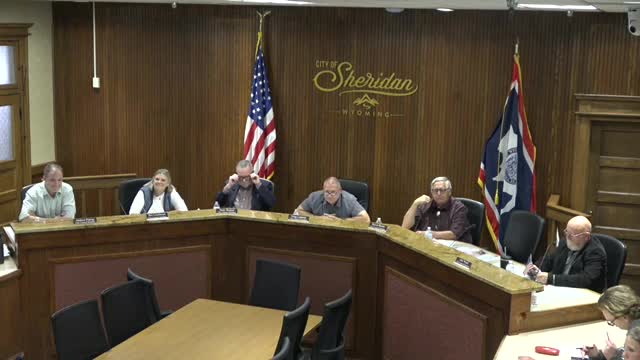
Sheridan’s police and code compliance staff briefed the City Council on Nov. 4 about how city code and state law govern street parking, abandoned vehicles and storage of trailers and recreational vehicles.
Chief of Police Travis Kaltsiska said Article 16 of the city code limits street parking of motor vehicles to 48 continuous hours unless the vehicle is a fully operative motor vehicle belonging to the occupant of the abutting property. He told council that the department treats obviously inoperative vehicles (flat tires, missing engines) as candidates for enforcement but that many parked vehicles are licensed and operable and therefore not immediately removable.
Key points:
- 48-hour rule: Kaltsiska explained that city code (Article 16-4) makes an exception for fully operative, registered motor vehicles parked adjacent to the owner’s property but restricts other vehicles to 48 hours on a public street.
- Trailers and campers: Unattached trailers and campers are limited by code; trailers not attached to a motor vehicle are subject to the 48-hour rule even if adjacent to a property. The department will accept that a trailer is legally parked when legitimately hitched to a motor vehicle.
- Abandoned-vehicle process: The department applies an abandoned-vehicle sticker and typically allows 48 hours before removal, citing state statute that allows removal after notification; practical enforcement has been limited by tow‑company willingness to accept derelict campers and RVs.
- Private-property limits: Code Compliance Officer Shane Sheppardson said the city code treats the presence of unlicensed, derelict or wrecked vehicles on private property as a nuisance (18-8.2) and allows abatement but also permits up to seven vehicles if they are not visible from the public right-of-way (fenced or inside buildings).
- Recreational vehicle rules: One RV may be stored on an owner’s home premises; setback requirements (generally six feet from curb/edge and away from sidewalk) and fire‑safety concerns limit street or boulevard storage.
Enforcement challenges: Officers and code staff said difficulties include complaint-driven workflows (staff cannot monitor every block daily), the expense and logistics of removing derelict RVs that have little scrap value, and ambiguous situations such as vehicles that have been moved a short distance to avoid the 48-hour clock.
Council direction and public requests: Council members who get many constituent complaints asked staff to encourage residents to file complaints with the police department so code staff can document locations and duration. Staff said they will continue to issue stickers, citations and abatement notices where code and state statute permit removal.
Quotes: "If it's not remedied — they haven't repaired it, they haven't licensed it, they haven't moved it — then we can have a tow truck come and tow it off," Chief Kaltsiska said.
Ending: Staff asked residents to report problem locations and said the city is working on operational fixes (coordinating with local tow companies and clarifying abatement steps) to address longstanding campers, trailers and abandoned vehicles.
Chief of Police Travis Kaltsiska said Article 16 of the city code limits street parking of motor vehicles to 48 continuous hours unless the vehicle is a fully operative motor vehicle belonging to the occupant of the abutting property. He told council that the department treats obviously inoperative vehicles (flat tires, missing engines) as candidates for enforcement but that many parked vehicles are licensed and operable and therefore not immediately removable.
Key points:
- 48-hour rule: Kaltsiska explained that city code (Article 16-4) makes an exception for fully operative, registered motor vehicles parked adjacent to the owner’s property but restricts other vehicles to 48 hours on a public street.
- Trailers and campers: Unattached trailers and campers are limited by code; trailers not attached to a motor vehicle are subject to the 48-hour rule even if adjacent to a property. The department will accept that a trailer is legally parked when legitimately hitched to a motor vehicle.
- Abandoned-vehicle process: The department applies an abandoned-vehicle sticker and typically allows 48 hours before removal, citing state statute that allows removal after notification; practical enforcement has been limited by tow‑company willingness to accept derelict campers and RVs.
- Private-property limits: Code Compliance Officer Shane Sheppardson said the city code treats the presence of unlicensed, derelict or wrecked vehicles on private property as a nuisance (18-8.2) and allows abatement but also permits up to seven vehicles if they are not visible from the public right-of-way (fenced or inside buildings).
- Recreational vehicle rules: One RV may be stored on an owner’s home premises; setback requirements (generally six feet from curb/edge and away from sidewalk) and fire‑safety concerns limit street or boulevard storage.
Enforcement challenges: Officers and code staff said difficulties include complaint-driven workflows (staff cannot monitor every block daily), the expense and logistics of removing derelict RVs that have little scrap value, and ambiguous situations such as vehicles that have been moved a short distance to avoid the 48-hour clock.
Council direction and public requests: Council members who get many constituent complaints asked staff to encourage residents to file complaints with the police department so code staff can document locations and duration. Staff said they will continue to issue stickers, citations and abatement notices where code and state statute permit removal.
Quotes: "If it's not remedied — they haven't repaired it, they haven't licensed it, they haven't moved it — then we can have a tow truck come and tow it off," Chief Kaltsiska said.
Ending: Staff asked residents to report problem locations and said the city is working on operational fixes (coordinating with local tow companies and clarifying abatement steps) to address longstanding campers, trailers and abandoned vehicles.
View the Full Meeting & All Its Details
This article offers just a summary. Unlock complete video, transcripts, and insights as a Founder Member.
✓
Watch full, unedited meeting videos
✓
Search every word spoken in unlimited transcripts
✓
AI summaries & real-time alerts (all government levels)
✓
Permanent access to expanding government content
30-day money-back guarantee
