Solvang planners review draft sign ordinance that removes message-based rules, adds objective standards
November 04, 2025 | Solvang, Santa Barbara County, California
This article was created by AI summarizing key points discussed. AI makes mistakes, so for full details and context, please refer to the video of the full meeting. Please report any errors so we can fix them. Report an error »
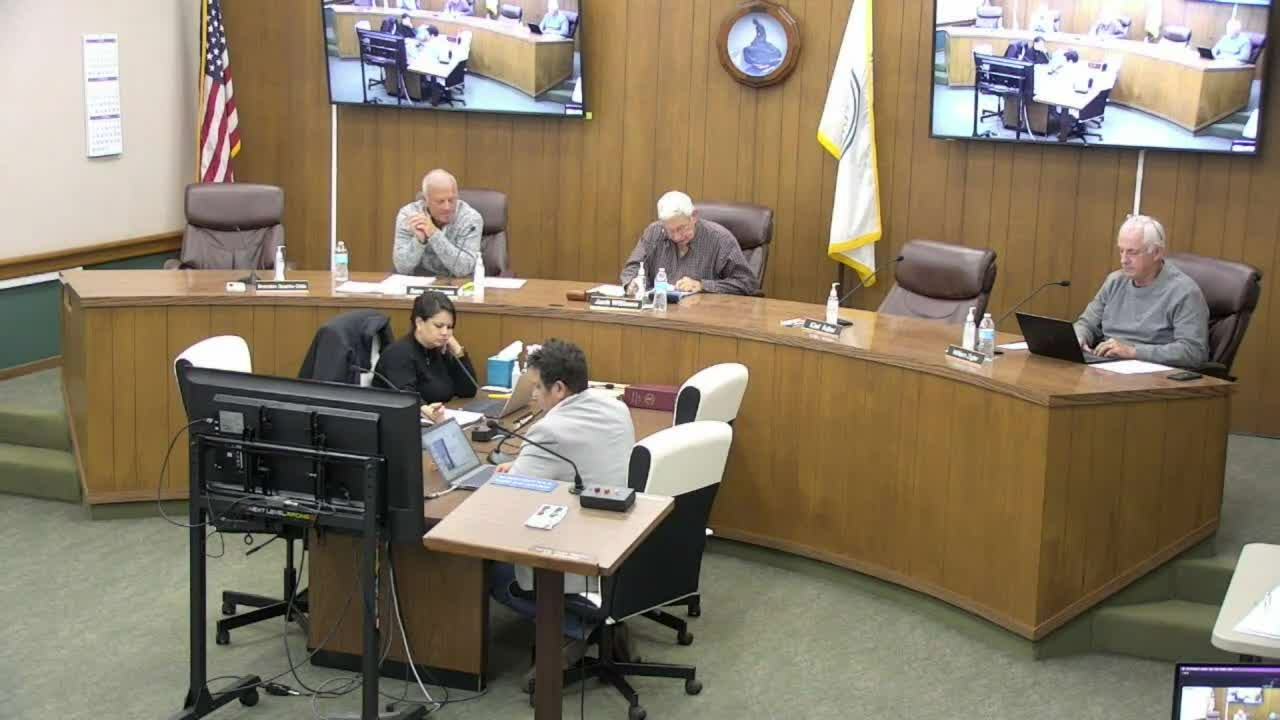
Rafael, planning staff, told the commission the rewrite is intended to modernize Title 11, Chapter 13; ensure "legal defensibility and First Amendment compliance"; adapt to new technology and business needs; and preserve Solvangs aesthetic. He said the draft removes message-based distinctions and instead regulates "time, place, manner" and objective physical attributes such as size, placement and materials, citing the U.S. Supreme Court decision Reed v. Town of Gilbert as the legal benchmark staff used in drafting the changes.
The draft would: create administrative sign permits for routine signs (including many temporary signs and A-frame signs); allow limited over-the-counter approval for suspended (pedestrian-oriented) signs when the hardware does not change; replace content-based limits (color, font, logos) with objective measurement standards; create a defined process for murals with maintenance and lighting rules and a cap of one mural per building or property; and standardize rules for awning, umbrella, monument/freestanding and wayfinding signs. Staff also proposed tying total allowable sign area to linear storefront frontage so businesses may allocate a frontage-based square-footage allowance among wall, suspended and awning signs.
Commissioners pressed staff on multiple technical items in a page-by-page review. Topics discussed included how the draft treats murals and how the city would respond to potentially offensive imagery, with City Attorney Taylor noting that content that falls within recognized First Amendment exceptions (e.g., incitement, true threats, certain hate-symbol categories) can be regulated. Rafael said murals meeting the draft criteria would be handled administratively but that the director could refer controversial applications to the Design Review Committee (DRC).
On temporary signage, staff proposed allowing certain event or business banners for limited durations; commissioners questioned specific durations in the draft (a 30-day pre-event allowance and a 72-hour post-event removal requirement were debated), and asked staff to refine distinct rules for short special events versus long-running seasonal festivals. For A-frame (sandwich) signs, staff proposed an administrative permit with conditions: the sign must be removed at close of business, maintain an accessible ADA path, not be lit or have balloons, and — to prevent effectively permanent messages — the draft suggested requiring a face change every 30 days. Commissioners asked staff to evaluate enforcement practicality and consider alternatives (shorter or variable display windows).
Digital displays, neon and illumination were also discussed. Staff proposed limiting neon signs (a near-total prohibition except for a specific hotel use), standardizing lumen or foot-candle limits for digital displays to avoid glare, and adding illumination limits consistent with Solvangs dark-skies aspirations. Commissioners recommended adding an objective foot-candle standard and reviewing color-temperature impacts as part of the illumination section.
The commission also requested clarifications on several definitions and programmatic mechanisms: the difference between "off-site" and "off-premise" signage, an explicit definition of a "sign program" and how sign programs would operate (site-specific conditions that run with the property and allow administrative tenant-level permits when the program is met), monument versus freestanding sign text corrections, directory/multi-tenant sign allowances, and nonconforming sign face-change rules. Staff acknowledged several typographical and cross-reference errors and said staff will correct them in the next draft.
No formal action was taken on the ordinance draft. The planning commission unanimously approved routine meeting items earlier in the session (agenda and consent items, each recorded as passing 3-0). Rafael said staff will consolidate the commissions edits, produce an updated administrative draft and a reader-friendly sign handbook with graphics, then return the materials to the Planning Commission and prepare an ordinance for City Council review, targeting council input in January 2026 and a potential adoption process beginning in February 2026.
The presentation and discussion covered detailed, technical editorial changes rather than proposed immediate regulation changes; commissioners emphasized enforcement clarity, objective measurement language, and better cross-references. Rafael confirmed enforcement will be coordinated with Code Compliance and that standard permit follow-up inspections and notice-and-repair steps will remain part of the implementation.
Why it matters: the draft shifts regulation away from content-based decisions toward objective standards intended to reduce legal risk, streamline permitting and give businesses predictable allocation of signage. The draft also formalizes procedures the city previously lacked (murals, wayfinding, digital standards) and includes clearer enforcement tools.
Next steps: staff will revise the draft ordinance to address the commissions detailed recommendations (timing limits for temporary/display signs, off-site signage definitions, illumination metrics, sign-program language and typographical cross-references) and complete a companion sign handbook that will accompany the ordinance to council. The commission will see the revised draft before council action.
"We're really trying to ensure legal defensibility and First Amendment compliance," Rafael said as he explained the reasoning behind removing message-based distinctions.
Chair Williams thanked staff for the long effort and for bringing the draft forward for detailed commission review.
View the Full Meeting & All Its Details
This article offers just a summary. Unlock complete video, transcripts, and insights as a Founder Member.
30-day money-back guarantee
Sponsors
Proudly supported by sponsors who keep California articles free in 2025

