Philomath reviews utility rate proposal to fund replacement water plant; public hearing set for Dec. 8
November 04, 2025 | Philomath, Benton County, Oregon
This article was created by AI summarizing key points discussed. AI makes mistakes, so for full details and context, please refer to the video of the full meeting. Please report any errors so we can fix them. Report an error »
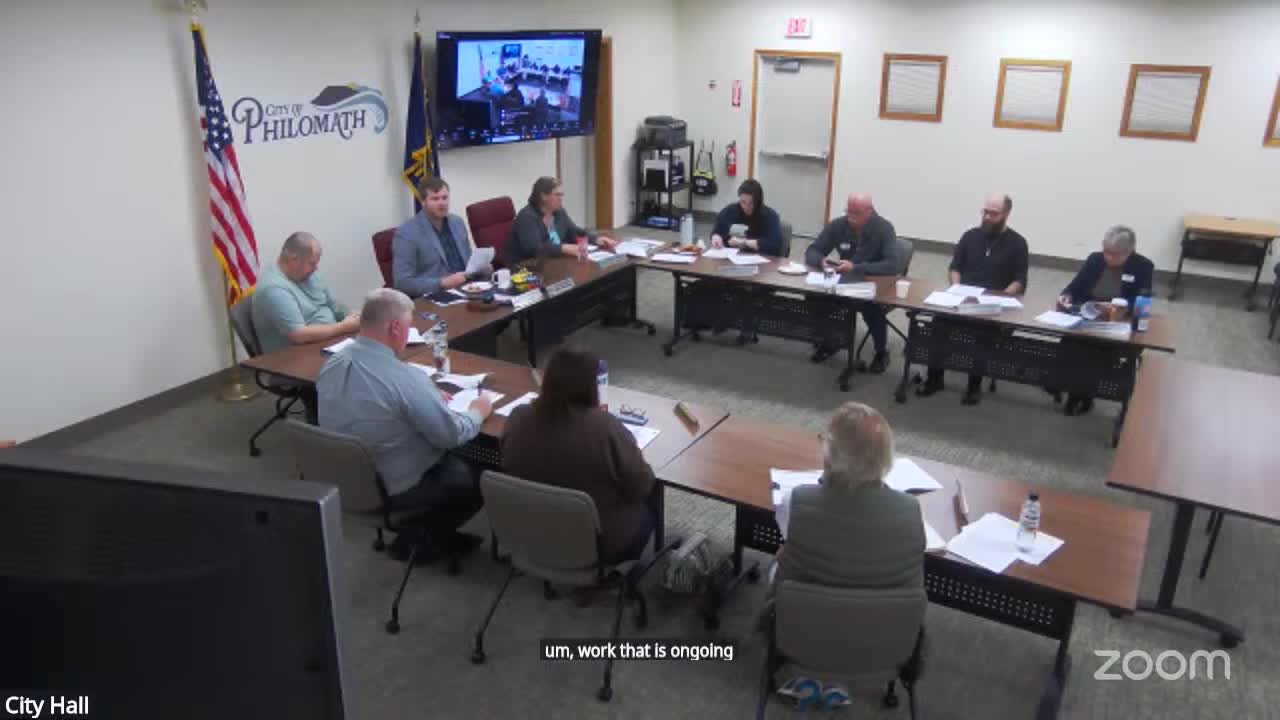
Mayor (presiding) said the session was a follow-up to earlier policy choices and urged an extensive public outreach effort, including a councilor coffee on Nov. 15 and a formal public hearing at the council’s regular meeting on Dec. 8. "I think it's really important for us to try to get the opportunity at least for public input on all of this," the mayor said.
Why it matters: staff and consultants told the council that the plant cost increase and broader inflationary pressure on construction and labor mean the city must adjust rates to generate revenue and service borrowing to build the plant. The packet shows a mix of changes: higher base charges for some customer classes, lower volumetric charges for the lowest consumption tier, inflationary adjustments to sewer, a shift in stormwater billing toward impervious‑surface calculations, and a modest elevation surcharge.
Key numbers and structure: the packet (as discussed in the session) defines water volumetric tiers as tier 1 = 0–6 units, tier 2 = 7–12 units, and tier 3 = 13+ units. Staff highlighted that the proposal would reduce the tier‑1 volumetric rate from $6.55 to $5.70 per unit; if a customer’s water use remains the same, staff estimated that about 69% of bills would decrease in the first year because the lower volumetric charge would offset a higher base charge for many households. Consultants recommended an implementation schedule that spreads adjustments over roughly 18 months (examples discussed: take effect in March, then July, January, July) as a compromise between a single large increase and repeated small increases.
Treatment plant funding gap: staff and the mayor said the replacement plant is primarily a replacement of existing capacity but will include some upsizing for future growth. Philomath received $12 million in state assistance; the plant’s total cost has increased to about $16 million, leaving a roughly $4 million shortfall that staff told the council will be financed and repaid by ratepayer revenue and debt service. "This $4,000,000 needs to come from our ratepayers," the mayor said, urging staff to improve the narrative that the plant replaces an aging asset used by existing residents.
Sewer and stormwater: staff said sewer is in relatively healthy condition; recommendations contain only modest inflationary adjustments because the sewer fund is meeting current needs. Councilors asked that public materials clearly explain that sewer volumetric charges are billed based on a winter‑use average (the city charges sewer on winter water use so summer lawn watering does not increase sewer bills). For stormwater, consultants proposed moving toward an impervious‑surface basis to make charges more proportional to runoff; councilors discussed how that change affects large industrial footprints and school irrigation accounts.
Equity, low‑income, and special rates: councilors flagged problems in the draft packet’s presentation of low‑income rates and asked staff to add the reduced volumetric entries for low‑income customers (the packet had matched the base charge to standard residential base, but the volumetric discount needed to be shown). Councilors also asked staff to provide context on school irrigation and other special classes, which appear low relative to residential tier 1 in the current tables.
Communication and next steps: the council directed staff to refine the packet and public materials, including clearer tables showing base vs. volumetric impacts, sample bill calculators or a simple online calculator, a dedicated web landing page, newsletter copy, an extra bill mailing when the direction is final, and a short explanatory video. Staff said they would avoid releasing final materials until the council confirms a direction; the council scheduled a councilor coffee for Nov. 15 (09:30–11:00) to gather public input and set a public hearing for Dec. 8 at the regular meeting. No formal vote occurred at the Nov. 3 work session.
Points of contention: councilors were divided on whether to phase increases or implement a single larger increase. Some said phasing helps household budgets; others warned that repeated increases can fuel ongoing frustration and suggested a single implementation could shorten the period of public pushback. Councilors also requested clearer, non‑editorial language in materials (for example, replace subjective adjectives such as "modest" with precise dollar amounts — staff agreed to list the elevation surcharge as 75¢ and clarify units).
What the council asked staff to produce: corrected rate tables (including low‑income volumetric entries and tier thresholds), sample bills for common meter sizes (3/4‑inch example), a clear explanation that sewer volume is based on winter usage, clarification of stormwater methodology and industrial impacts, the elevation surcharge wording, an online bill‑impact calculator if feasible, and outreach materials for Nov. 15 and Dec. 8. Staff recommended an 18‑month implementation schedule but will present refined financials and communications in follow‑up materials.
The council did not take a final vote; members asked for corrected tables and a stronger narrative for public materials to explain the treatment plant funding need and why rates must change. The mayor and staff cautioned councilors to frame outreach as listening and educating rather than promising votes or positions.
View the Full Meeting & All Its Details
This article offers just a summary. Unlock complete video, transcripts, and insights as a Founder Member.
30-day money-back guarantee
Sponsors
Proudly supported by sponsors who keep Oregon articles free in 2025

