Austin Fire Department says growth and staffing strain response times; announces traffic-signal technology and expanded prevention outreach
November 03, 2025 | Austin, Travis County, Texas
This article was created by AI summarizing key points discussed. AI makes mistakes, so for full details and context, please refer to the video of the full meeting. Please report any errors so we can fix them. Report an error »
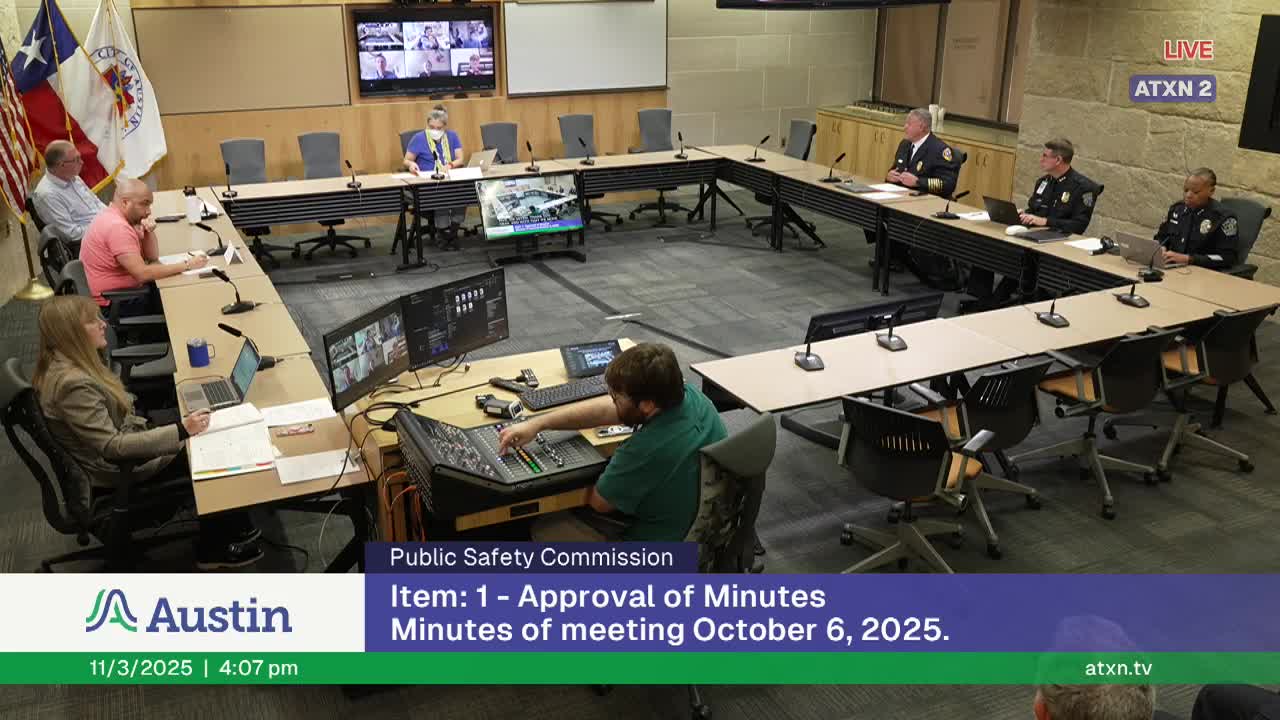
"Our response goal time is 8 minutes, at 90% of the time or less," Byers said, adding that the department is testing an advanced traffic-signal preemption system being rolled out with Austin Transportation to clear routes for emergency vehicles.
The presentation described several other steps the department is taking to bolster response capability. Byers said the department has adjusted which calls are routed to fire units in coordination with Austin-Travis County EMS and the city medical director, a change that could account for a recent dip in total call volume. The department also highlighted automatic-aid arrangements that allow the closest unit from Travis or parts of Williamson County to respond automatically to incidents across jurisdictional lines.
Byers reviewed infrastructure work that city funding has supported: a full rebuild at Station 25, minor but extensive refreshes (paint, cabinetry, fixtures) at other stations and a nonpermitted refresh that began at Station 17. He praised the department's arson investigators for a clearance rate above the national average and cited a recent case that removed an alleged serial igniter from the community.
Fire prevention work and public outreach were emphasized. Byers reiterated the department's free smoke-alarm installation program and urged residents to install working alarms in every bedroom and in hallways that serve sleeping areas. "If you don't have them, we'll get them installed for you, at no charge," he said. He also encouraged residents to sleep with bedroom doors closed to slow smoke and heat.
On staffing, Byers said the department's authorized strength is 1,303 positions and that it currently has about 70 vacancies. He described hiring and recruitment efforts: a recent written exam drew roughly 771 applicants and about 750 completed the full selection process, creating a candidate list that will be used for upcoming academy classes. The department also pointed to youth programs (Austin Fire Explorers) and an adult "Pass the Torch" course to introduce prospective recruits to firefighting work.
Commissioners asked whether the new signal-control tech is a replacement for older systems and whether downtown construction around the Convention Center and I-35 is affecting response times. Byers said older traffic-preemption systems existed in some places, but the new system is more sophisticated: "This one is the most advanced technology wise of the ones that we've had so far," he said, and it is being rolled out in parts of the city. He reported no systemic concerns yet tied to convention-center construction but said the department monitors such projects and temporarily relocates units or uses more maneuverable vehicles if needed.
Wildfire and mitigation work was covered in a separate, biannual update from the department's wildfire division. Presenters said they have completed 26 local Community Wildfire Protection Plans (CWPPs), have 22 CWPPs in progress, completed 352 structure-ignition-zone evaluations in the last six months and partnered on seven prescribed burns covering more than 500 acres. Demand for evaluations rose sharply after the Palisades fire; a three-person team is expanding reach by training volunteers and working with neighborhood organizations.
What happens next: Byers said the department will continue to track the early effects of EMS-call triage and the signal-preemption rollout and will post quarterly backup data for commissioners. The department urged the media to highlight the smoke-alarm program to increase uptake among residents.
Sources: Presentation to the Public Safety Commission by Rob Byers, Austin Fire Department (Nov. 3, 2025).
View the Full Meeting & All Its Details
This article offers just a summary. Unlock complete video, transcripts, and insights as a Founder Member.
30-day money-back guarantee
Sponsors
Proudly supported by sponsors who keep Texas articles free in 2025

