Board reviews first readings of attendance, medication and grading policies; committee recommends several eliminations
November 03, 2025 | MANKATO PUBLIC SCHOOL DISTRICT, School Boards, Minnesota
This article was created by AI summarizing key points discussed. AI makes mistakes, so for full details and context, please refer to the video of the full meeting. Please report any errors so we can fix them. Report an error »
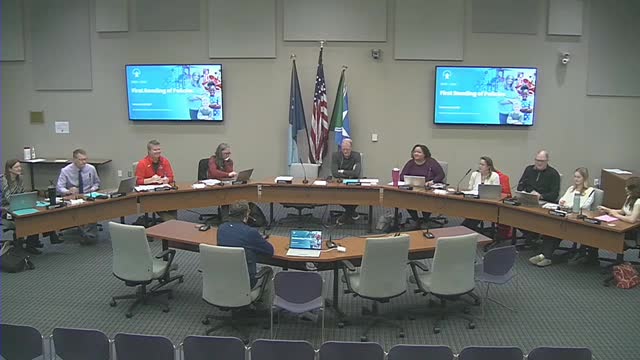
Mr. Lustig reviewed proposed changes to Policy 503 (student attendance), which replaces references in handbooks with a new district attendance manual being developed to support an attendance pilot. Policy 516 (student medication) was reorganized to align with the MSBA model policy; the revisions include updated terminology for emergency devices (changing to “brand delivery system” language used in the draft) and add a requirement that the district provide space for secondary students to access tele‑health or tele‑mental‑health services (the district does not provide the service but must provide a location for students to use such services).
Policy 618 (student evaluation and grading) adds language to reflect standards‑based grading practices in elementary and middle schools and clarifies high school grade scales (no A+; A, A‑, B+ etc.). The policy also proposes a grade scale for classes completed through the district’s credit recovery program so that student transcript and GPA records reflect credit recovery grades.
The committee recommended eliminating Policy 621 (use of copyrighted materials), Policy 623 (public access TV) and Policy 636 (postsecondary courses by outside instructors) on the basis that they are redundant with federal law or obsolete in current practice.
Board members asked for clarification about whether high schools are moving to standards‑based grading; staff explained that high school courses use standards‑based course design but continue to produce A–F transcript grades to accommodate post‑secondary expectations. The items were presented for first reading and will return for action following committee review and any additional clarifying language.
Don't Miss a Word: See the Full Meeting!
Go beyond summaries. Unlock every video, transcript, and key insight with a Founder Membership.
30-day money-back guarantee
Sponsors
Proudly supported by sponsors who keep Minnesota articles free in 2025

