Des Moines reports 2,914 Section 8 households under lease; HUD grant allowed agency to call hundreds from waiting list
November 04, 2025 | Des Moines, Polk County, Iowa
This article was created by AI summarizing key points discussed. AI makes mistakes, so for full details and context, please refer to the video of the full meeting. Please report any errors so we can fix them. Report an error »
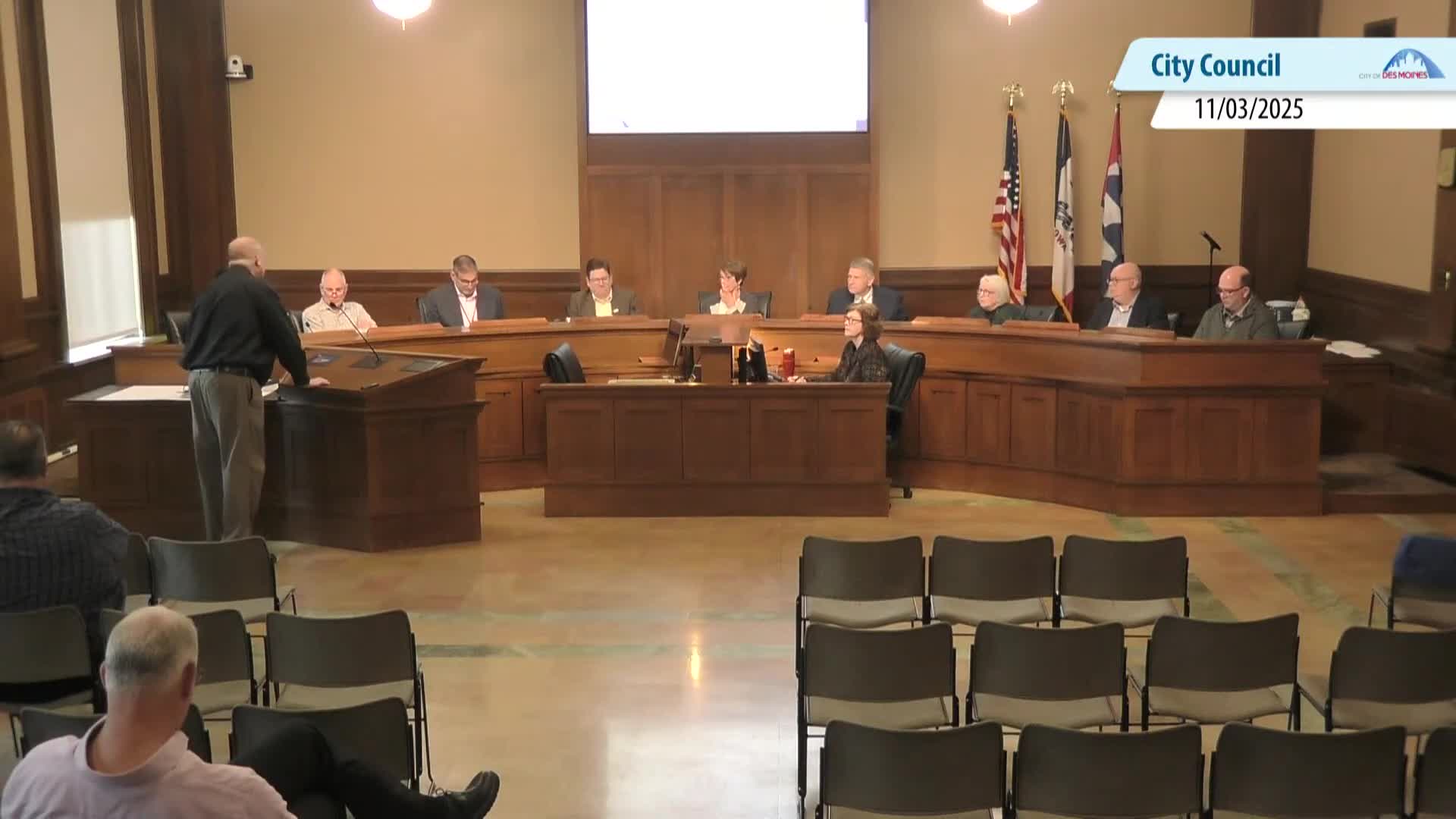
Johansen said the agency manages 410 public-housing units: about 390 units in five apartment buildings and roughly 20 single-family homes. Single-family homes are being disposed of through three pathways: a Section 18 disposition to Habitat for Humanity (nine sold to date with more pending), a Section 32 affordable homeownership program (homes sold at a reduced price with a city-held second mortgage and a limited affordability period) and remaining single-family homes that will be evaluated and offered for homeownership or other disposition.
On the Section 32 homeownership program, Johansen said homes are sold at a reduced price and the agency retains a second mortgage; the affordability period on those sales was described as a seven-year forgivable term. Johansen said the agency will seek HUD approval to add seven vacant homes into the Central Iowa Land Trust as part of an amendment to its Section 32 plan; he cautioned such HUD approval could delay sales by six to nine months.
The housing agency reported 2,914 Section 8 vouchers currently under lease. Johansen listed project-based voucher locations and set-aside programs (family unification, VASH for veterans, emergency housing vouchers from COVID-era allocations and non-elderly disabled vouchers). He said HUD changed its rent methodology to fair-market rents by ZIP code, raising average Assistance Payment levels; Johansen gave the current average housing-assistance payment as about $590 per month and said that amount has risen about $130 since 2022.
Johansen said HUD provided about $2 million in additional funding in June, which allowed the agency to call roughly 600 families off the waiting list. At the time of the presentation, about 382 of those families remained actively searching for housing; Johansen said historical success rates for families issued a voucher are about 78 percent.
On the Family Self-Sufficiency program, Johansen described escrow accounts created when participant incomes rise; those escrow balances are paid to families upon graduation. He said recent escrow payouts to graduates included $6,800, $15,000 and $21,000 checks, with one recipient using the funds for a down payment.
Johansen closed with upcoming initiatives: a Section 18 application for Royal View Manor, an amended Section 32 program to add homes to the Central Iowa Land Trust (pending HUD approval), and participation in regional homelessness initiatives and Blueprint efforts.
View the Full Meeting & All Its Details
This article offers just a summary. Unlock complete video, transcripts, and insights as a Founder Member.
30-day money-back guarantee
Sponsors
Proudly supported by sponsors who keep Iowa articles free in 2025

