District reports Forward Exam gains, highlights literacy work and pilots an ELA screener
November 04, 2025 | McFarland School District, School Districts, Wisconsin
This article was created by AI summarizing key points discussed. AI makes mistakes, so for full details and context, please refer to the video of the full meeting. Please report any errors so we can fix them. Report an error »
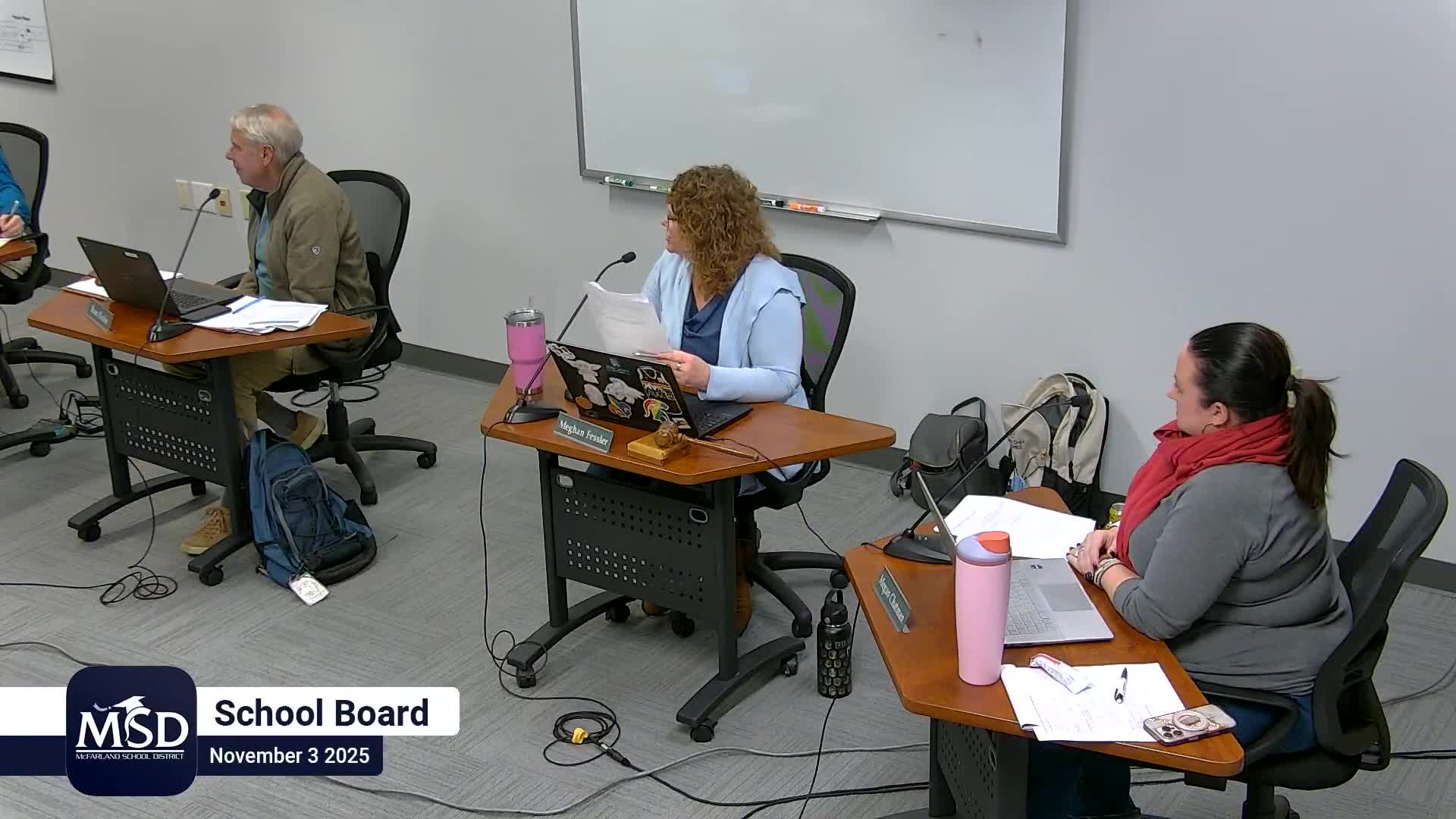
“Our students outperform the state average in all grades and all content areas,” Kintzer said, summarizing the district’s performance and noting particular strengths in social studies (the district ranked first in the county for grades 4, 8 and 10) and strong county rankings in science and math in several grades. She reported year‑over‑year gains in English language arts for grades 3–8 and said the district is monitoring mixed movement in math across cohorts.
Kintzer and building principals described targeted, evidence‑based instruction and assessment changes under way. District priorities include training educators on the science of reading; using the Wonders core curriculum with a mid‑cycle review in primary grades; structured phonics lessons (Letters training) at the early grades; regular universal screening, diagnostics and intervention cycles; and collaborative classroom visits so teachers can observe and borrow high‑impact strategies.
At Indian Mound, Wilbeast and the primary school, principals highlighted efforts to increase small‑group instruction time, scaffolded intervention during dedicated intervention blocks, and explicit strategies to elicit student responses during lessons so learners receive timely feedback. At the high school, administrators said they are piloting a universal ELA screener to better identify Tier‑2 needs and have restructured advisory/homeroom time so staff can pull students for targeted academic support and reassessment.
Kintzer said the district has refined Act 20 processes — including required screeners and personal reading plans — and emphasized that Act 20 work must be both timely and tailored: diagnostic follow‑up is intended to identify a student’s exact skill gaps so the district can match specific interventions and measure progress. Kintzer described a mix of interventions: some delivered by interventionists, some as classroom‑based supports, all tied to short diagnostic cycles and progress monitoring.
On the ACT, Kintzer noted a pattern in which scores decline between the preACT administered to ninth‑ and tenth‑grade cohorts and the ACT given in eleventh grade. She and high‑school staff discussed reasons that can include differences in item complexity and pacing; the high school is integrating ACT‑style practice and piloting curricular adjustments to support retrieval of previously taught material.
Why this matters: The district’s summary shows overall student performance that compares favorably to statewide results, but administrators flagged persistent gaps for specific student groups — notably students with disabilities and students from economically disadvantaged backgrounds — and emphasized that improving instruction-in-place and measured intervention delivery are the next steps to reduce those gaps.
What’s next: Kintzer said the district will continue to expand teacher professional learning (explicit instruction, science of reading), refine universal screening and diagnostics, and monitor the high‑school ELA screener pilot. Building leaders will report outcomes from mid‑cycle curriculum reviews and intervention cycles to the district team and board.
View the Full Meeting & All Its Details
This article offers just a summary. Unlock complete video, transcripts, and insights as a Founder Member.
30-day money-back guarantee
Sponsors
Proudly supported by sponsors who keep Wisconsin articles free in 2025

