Ashland County planning committee refines comprehensive‑plan survey, sets Jan. release and Nov. 20 follow‑up
November 03, 2025 | Ashland County, Wisconsin
This article was created by AI summarizing key points discussed. AI makes mistakes, so for full details and context, please refer to the video of the full meeting. Please report any errors so we can fix them. Report an error »
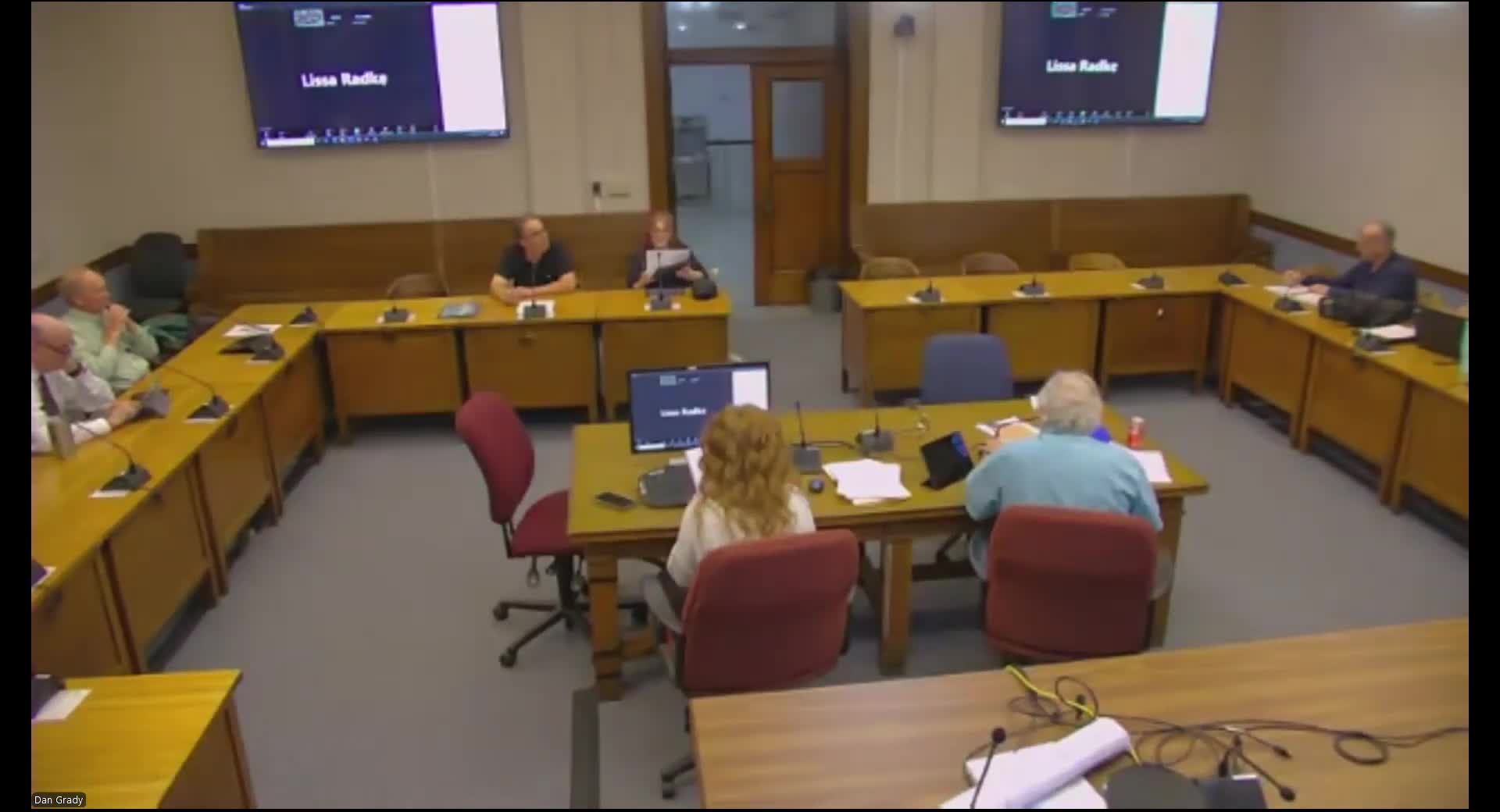
Northwest Regional Planning staffer Emily presented the draft and led the committee through the housing, transportation, utilities, natural‑resources and economic‑development sections. On housing, the committee agreed to simplify question 19 to read: “How would you describe housing availability in Ashland County? Sufficient, insufficient, or unsure?” Emily explained the simpler wording allows later cross‑tabulation by demographic questions included later in the survey.
The committee discussed how to capture differences between in‑town and rural housing markets and whether labels such as “low and middle income” or “workforce housing” should be used. Members recommended retaining broad language in the main perception question and relying on the survey's demographic items (municipality and income brackets) to analyze geographic and income‑group differences. For types of housing (question 20) and strategies to improve supply (question 21), the committee preserved lists that include single‑family homes, duplexes/townhomes, apartments, senior housing and options such as converting vacant commercial/industrial buildings into housing; it recommended clarifying that the question concerns new housing to be created or prioritized during the next 10 years.
On transportation, members added ferry terminals and water‑transport infrastructure (noting one terminal sits in Ashland County) to the infrastructure and investment lists and asked that the transportation questions distinguish between infrastructure (roads, bridges, ferry terminals) and services (public transit, paratransit, medical transport). The committee also agreed to separate the questions about respondents' mode of travel to work and mode for regular activities (shopping, errands), and to allow ranking where the survey now offers “select up to three,” so priorities can be ordered rather than simply checked.
Committee members discussed short‑term rentals at length. After debate on definitions, the group agreed to clarify that the question targets short‑term nightly rentals (Airbnb/VRBO) and suggested adding a parenthetical timeframe (for example, “short‑term rentals (30 days or less)”) while acknowledging that, under Wisconsin statute, a short‑term rental can be defined as seven days or less.
Members revised utility and services wording to reflect local variation in systems and ownership. On water and wastewater the committee recommended using broader phrasing (for example, “sewer/septic or sanitary waste systems”) so respondents on municipal sewers, private septic systems or holding tanks could answer accurately; they also recommended separating satisfaction with service quality from satisfaction with cost so the plan can clearly distinguish performance and affordability concerns.
Natural‑resource and recreation questions were adjusted to name Lake Superior separately from inland lakes and to include marina/boat‑landing and ferry infrastructure. Economic development questions were reworded from “new businesses” to “added or enhanced businesses” and to explicitly include manufacturing/fabricating and value‑added forestry where appropriate.
Committee members asked Northwest Regional Planning to produce the survey in a digital form with a QR code and to provide printable Word/PDF copies for seniors and residents without reliable internet access. The committee agreed to release the survey after the holidays (staff proposed a January launch) and to keep it open about four to six weeks. Members also suggested distribution channels that include the county website, newsletter, tax‑bill inserts and local media to broaden outreach.
Chair George Boussay called for a roll‑call vote to schedule a follow‑up comprehensive‑plan review meeting on Nov. 20, 2025, at 2 p.m.; the motion passed (yes: George Boussay, Pat Kenny, Paul Wilharm, Lisa Radke, Charlie Ortman; no: Elizabeth Franek; abstain: Dan Grady; Bradley Ray and Gary Mertig were excused). Earlier in the meeting the committee approved the day's agenda and the minutes of the Sept. 30 meeting by voice votes.
The committee asked Northwest Regional Planning to incorporate the agreed edits into a digital draft and return with a final digital survey and outreach plan for the Nov. 20 meeting. Staff said the online survey will include skip logic and that the digital version will accommodate the ranking questions the committee requested.
The meeting also included informal community updates and brief “fun facts” at the start, and the session ended after procedural discussion of meeting cadence and adjournment.
Don't Miss a Word: See the Full Meeting!
Go beyond summaries. Unlock every video, transcript, and key insight with a Founder Membership.
30-day money-back guarantee
Sponsors
Proudly supported by sponsors who keep Wisconsin articles free in 2025

