Residents, environmental advocates urge caution as Land Use Committee holds SEPA threshold and transportation code hearings
October 31, 2025 | Seattle, King County, Washington
This article was created by AI summarizing key points discussed. AI makes mistakes, so for full details and context, please refer to the video of the full meeting. Please report any errors so we can fix them. Report an error »
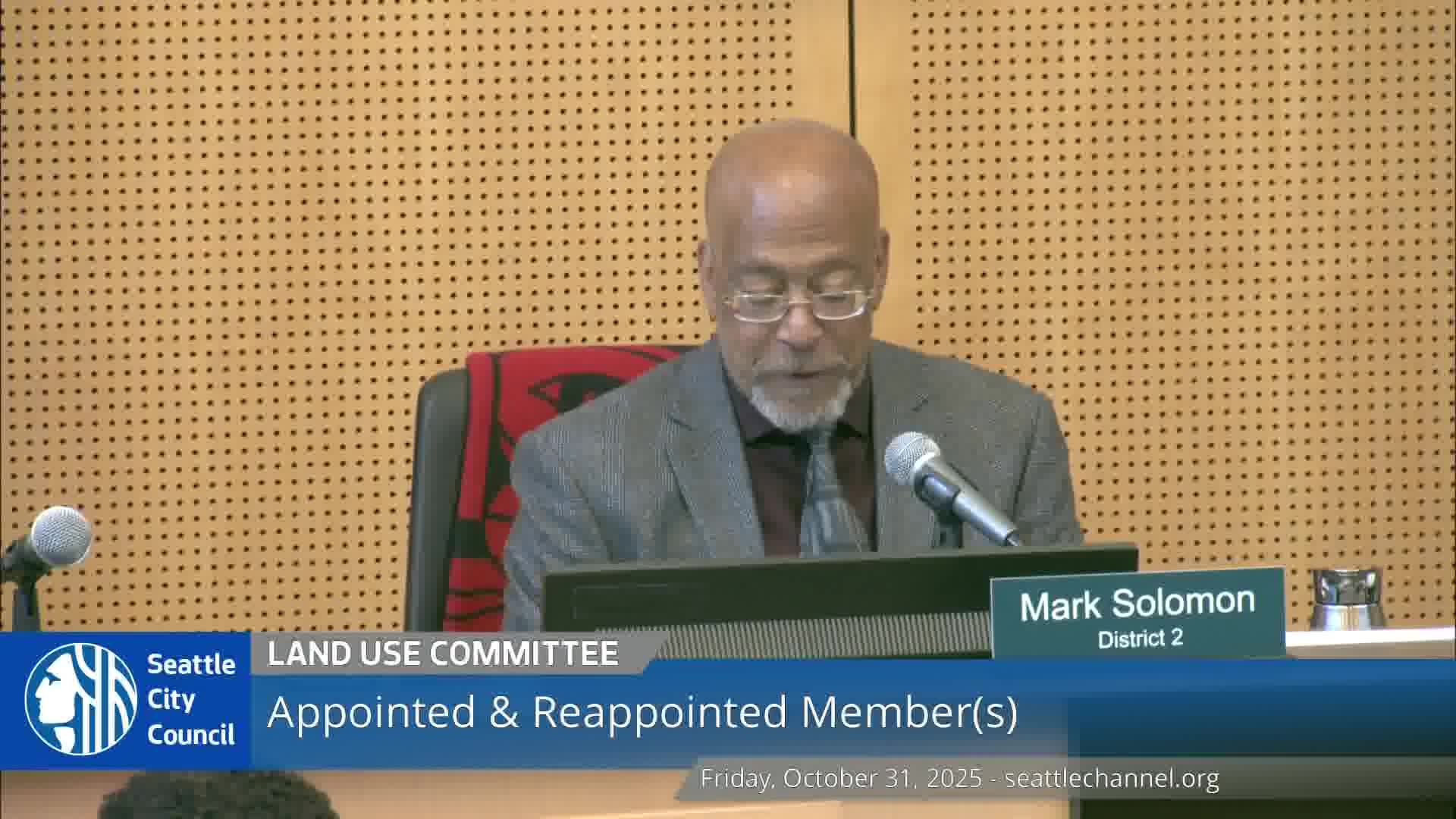
Multiple in‑person speakers raised environmental and cultural‑resource concerns. Sandy Schettler told the committee the proposal would weaken protections, saying, “the bill before you today more than doubles the number of parking spaces exempt from environmental review from 40 to 90” and warned the city could trade its tree canopy for increased paved surfaces. Dave Glover said the environmental impact statement (EIS) relied on for the city's comprehensive plan is out of date and noted specific omissions, saying the EIS "does not mention the killer whales of Puget Sound" and questioned how groundwater and toxic contaminants were addressed. Martha Brown asked the committee to preserve SEPA review for impervious‑surface increases, tribal consultation on culturally modified trees and stormwater impacts, and suggested the city align exemption thresholds with the number of housing units studied in the plan EIS. Jennifer Godfried focused on the southern resident orcas and urged removal of certain retail and parking exemptions she said are not found in SB 5412.
A remote commenter, Toby Thaler, recommended a legislative review of the city's SEPA and GMA compliance processes and stronger monitoring of mitigation measures, saying the city's SEPA reviews are "flawed in 3 major ways" including inadequate assessment of likely significant adverse impacts.
SDCI presenters outlined the ordinance and the policy rationale. SDCI staff said the package implements changes the state asked jurisdictions to consider following recent state legislation (referred to during the hearing as SB 5412) and the city's comprehensive‑plan growth framework. Major elements described by staff included: shifting from many site‑by‑site (center‑by‑center) thresholds to citywide thresholds tied to comprehensive‑plan growth targets; exempting residential development from SEPA review while the city has not yet met its citywide growth target; increasing nonresidential size thresholds (retail up to 30,000 square feet; other nonresidential up to 65,000 square feet); raising a stand‑alone parking‑lot threshold to 90 spaces; and adjusting grading thresholds (for example, raising some soil‑disturbance triggers).
SDCI also said it has updated code language to strengthen archaeological and cultural‑resource procedures in certain areas, including a Meanderline buffer that flags parts of the Duwamish corridor with elevated potential for buried cultural resources and would allow more upfront investigation and stop‑work protections if resources are found. Staff described transportation code changes intended to clarify thresholds for Transportation Management Plans (TMPs) and to require Construction Management Plans (CMPs) for larger projects so SDOT can coordinate traffic and pedestrian safety mitigation.
Committee members asked SDCI several questions. Council member Juarez pressed for clearer coordination among SDCI, SDOT and WSDOT on state right‑of‑way issues such as encampments and cleanup; SDCI said referral practices with WSDOT will be reviewed and that tribes were notified and had provided comments on recent SEPA proposals. Council member Rink asked specifically about the policy rationale for raising the parking‑lot exemption to 90 spaces; SDCI replied that the number reflects the maximum threshold permitted under state guidance and noted the intent is not to promote stand‑alone parking but to align parking triggers with associated uses so parking alone does not unintentionally force a SEPA review when other code protections apply.
No committee vote was taken on council bill 121093 or the companion transportation code amendments at this meeting; SDCI noted votes will occur in a later meeting, likely before the end of the year. Public testimony and staff remarks focused on three recurring themes: (1) the adequacy and currency of the comp‑plan EIS and whether it addresses impacts to marine species and water quality; (2) the effect of higher SEPA exemption thresholds on stormwater, tree canopy and cultural‑resource protections; and (3) how code changes will be coordinated and enforced across city agencies and with tribal governments and state agencies. The Council's committee briefing record and staff materials were cited by presenters and will inform subsequent committee deliberations and any proposed code language sent forward for a vote.
Don't Miss a Word: See the Full Meeting!
Go beyond summaries. Unlock every video, transcript, and key insight with a Founder Membership.
30-day money-back guarantee
Sponsors
Proudly supported by sponsors who keep Washington articles free in 2025

