Panama City tables major water and wastewater connection fee increase; seeks affordability measures
October 31, 2025 | Panama City, Bay County, Florida
This article was created by AI summarizing key points discussed. AI makes mistakes, so for full details and context, please refer to the video of the full meeting. Please report any errors so we can fix them. Report an error »
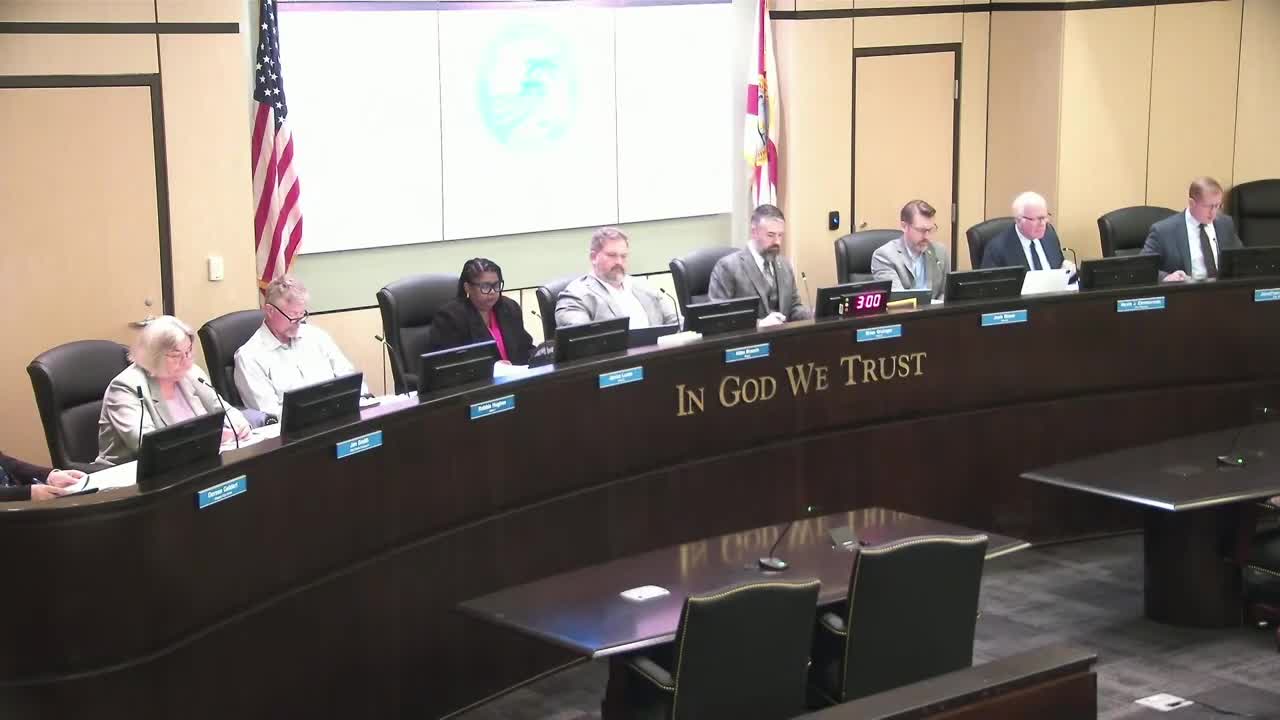
The proposal, included in Ordinance 32‑74, drew extended public comment from builders and residents who said the change would sharply raise costs for single‑family homes and could harm affordability. Brian Knox, a local builder who represents the Bay Building Industries Association, told commissioners the proposed increase amounts to about a 70% jump for a typical three‑bedroom, two‑bath home. “Whether it’s phased in or we look at other ways that we can spread this out so it’s not an immediate hit to builders and home buyers, I really would like us to have a conversation,” Knox said.
Other commenters asked for exemptions for infill lots, credits when a demolished house is replaced on an existing service connection, and more notice and consultation with the building industry. Resident Derek Thomas argued the fee schedule disproportionately burdens single‑family homeowners while large multi‑unit projects drive most new demand.
Commission discussion focused on implementation mechanics. Commissioners asked staff whether existing homes that are rebuilt receive credit for prior fixtures (staff confirmed credits apply for fixtures) and whether there is a 25% surcharge for out‑of‑city connections (staff said the monthly service surcharge is applied, but the proposed connection fees as drafted do not add a 25% connection surcharge).
Multiple commissioners also urged using the city’s SHIP (State Housing Initiatives Partnership) allocation or similar targeted grants to offset connection costs for low‑income or affordable housing developments. Commissioner Granger asked staff to produce options for payment plans or phased schedules to reduce the up‑front impact on buyers and suggested a pilot that would allow payment over several years with a modest service fee.
Rather than adopt the ordinance on its final reading, the commission unanimously approved a motion to table the item until the November meeting and directed staff to return with proposals that address: phased implementation, infill‑lot exemptions or credit rules, options for spreading fees over time, and use of SHIP or other local funding to offset costs for affordable housing. The tabling motion passed 5‑0.
What’s next: Staff will draft possible payment programs, evaluate options for exemptions or credits for infill and previously platted lots, and outline how SHIP or other grant funds could subsidize connection fees. The ordinance remains on the docket, with a new vote expected after staff returns with those options.
View the Full Meeting & All Its Details
This article offers just a summary. Unlock complete video, transcripts, and insights as a Founder Member.
30-day money-back guarantee
Sponsors
Proudly supported by sponsors who keep Florida articles free in 2025

