Council adopts citywide parking/commuter MOU to meet AQMD rules despite police concerns over take‑home vehicles
October 31, 2025 | Los Angeles City, Los Angeles County, California
This article was created by AI summarizing key points discussed. AI makes mistakes, so for full details and context, please refer to the video of the full meeting. Please report any errors so we can fix them. Report an error »
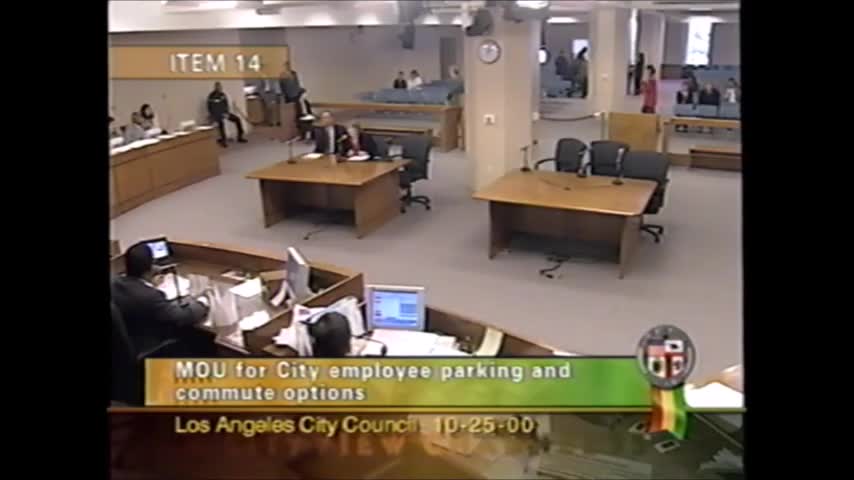
The Joint Labor‑Management Committee negotiated terms that include higher parking fees (from $25 to $40 at covered sites), an expanded list of covered locations, and a larger transit subsidy (increasing to $50). Personnel staff said the agreement succeeds a 1987 MOU and was negotiated over a multi‑year process; the MOU was reviewed and approved by AQMD.
Representatives of the Los Angeles Police Protective League and other public‑safety unions urged the council to exempt certain emergency take‑home vehicles from the monthly charge, arguing that those cars and motorcycles are on call and required for rapid emergency response (they cited bomb squad, Metropolitan Division, SWAT and some motorcycle units totaling several hundred vehicles). Union representatives warned that imposing the fee on those units would harm morale and recruitment and could leave vehicles parked at stations rather than at officers’ homes, potentially delaying emergency response.
City negotiators and Personnel staff said the JLMC treated home‑garage vehicles consistently across city bargaining units and that many other city emergency response units would also be covered. Councilmembers debated whether to delay action to allow Transportation Committee review of the concerns; a motion to continue failed (3–7) and the council ultimately approved the MOU (recorded as 9 ayes, 1 no). Staff noted implementation tasks (controller programming, payroll pretax changes) with a target implementation early in the next year and cautioned that changing the agreement now could jeopardize AQMD acceptance and subject the city to fines.
The council directed staff to implement the MOU, complete payroll and controller programming, and coordinate with the affected departments on operational details and any permitted exemptions based on compelling public‑safety rationale.
View the Full Meeting & All Its Details
This article offers just a summary. Unlock complete video, transcripts, and insights as a Founder Member.
30-day money-back guarantee
Sponsors
Proudly supported by sponsors who keep California articles free in 2025

